
 en
en  English
 中文简体
中文简体 عربى
عربى
Content
- 1 What Is a Battery ESS Container
- 2 IP67 Protection: Why Enclosure Rating Matters for Outdoor Deployment
- 3 Peak Shaving and Valley Filling: Reducing Demand Charges
- 4 AC Power Grid Expansion Without Infrastructure Overhaul
- 5 Factory Backup Power and Industrial Power Guarantee
- 6 Off-Grid Emergency Power Supply for Remote and Critical Sites
- 7 Key Specifications to Evaluate When Selecting a Battery ESS Container
What Is a Battery ESS Container
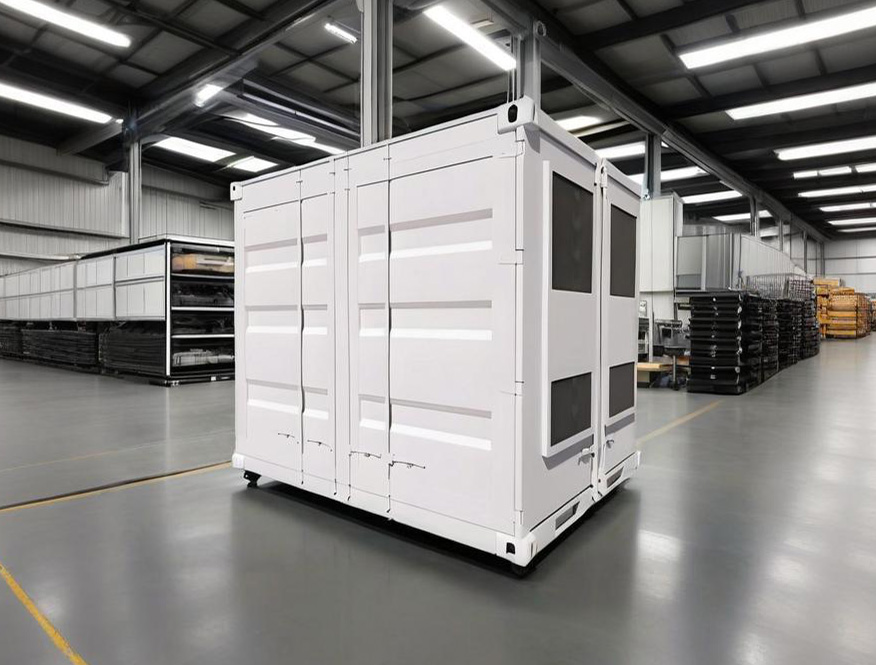
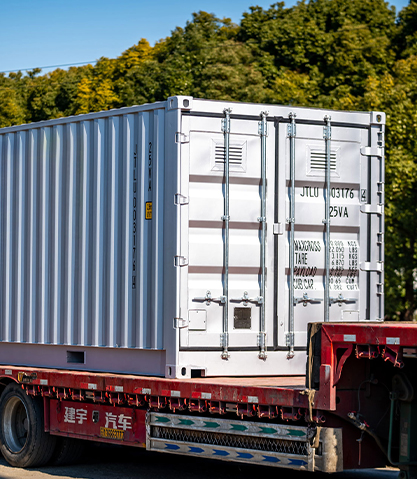
A battery ESS container — short for Battery Energy Storage System container — is a fully integrated, self-contained energy storage unit housed within a standardized enclosure, typically built to ISO shipping container dimensions. Inside, it combines lithium battery modules, a battery management system (BMS), a power conversion system (PCS), thermal management equipment, fire suppression systems, and monitoring electronics into a single deployable unit. The containerized format allows the entire system to be transported, installed, and commissioned as a single assembly, eliminating the civil engineering complexity associated with building-integrated battery rooms.
The industrial and commercial energy storage system built around this container architecture is designed to serve energy-intensive environments where power reliability, cost management, and grid interaction are all operational priorities. Unlike residential battery systems that operate at kilowatt-hour scale, industrial battery ESS containers are specified in hundreds of kilowatt-hours to multiple megawatt-hours, with power output ratings from several hundred kilowatts to several megawatts. This scale makes them relevant to manufacturing facilities, logistics parks, data centers, commercial complexes, and utility-scale applications where energy management has a direct and measurable impact on operating costs and business continuity.
IP67 Protection: Why Enclosure Rating Matters for Outdoor Deployment
One of the most practically significant specifications of an industrial battery ESS container is its ingress protection rating. The IP67 protection level — defined under IEC standard 60529 — certifies that the enclosure is completely dust-tight (the "6" digit) and can withstand temporary immersion in water up to one meter depth for up to 30 minutes (the "7" digit) without allowing water ingress that could damage internal components.
For energy storage systems deployed in outdoor environments, on industrial sites, or in locations subject to severe weather, this rating is not a premium feature but a baseline operational requirement. Battery electronics, BMS circuit boards, and power conversion equipment are all highly sensitive to moisture and particulate contamination. An unprotected or insufficiently sealed enclosure in a coastal industrial zone, a high-humidity tropical environment, or a dusty manufacturing complex will experience accelerated component degradation, increased fault rates, and shortened service life — negating much of the economic case for the investment.
IP67 certification provides documented assurance that the enclosure design has been tested and verified to exclude both dust and water intrusion under defined conditions. For procurement teams specifying energy storage systems, this rating supports due diligence requirements, insurance compliance, and warranty validation across a wide range of installation environments.
Peak Shaving and Valley Filling: Reducing Demand Charges
The most economically compelling application for industrial and commercial battery ESS containers in grid-connected facilities is peak shaving and valley filling. In most commercial and industrial electricity tariff structures, energy costs are divided into two components: consumption charges (paid per kilowatt-hour consumed) and demand charges (paid based on the highest power draw recorded within a billing period, typically measured in 15- or 30-minute intervals). Demand charges can account for 30–50% of a large facility's total electricity bill, and they are triggered by short, predictable periods of high load — startup of large motors, simultaneous operation of production lines, or HVAC peak loads on hot days.
A battery ESS container addresses this directly. The system charges during off-peak periods — overnight or at midday when grid power is cheap and facility demand is low — then discharges during peak demand windows to supplement grid supply and flatten the facility's load profile. The reduction in peak demand draw translates directly into lower demand charges on the monthly utility bill. Depending on the tariff structure and the size of the demand reduction achieved, payback periods for battery ESS containers used primarily for peak shaving typically range from three to seven years, with the system continuing to generate savings for 15–20 years of service life.
Valley filling complements peak shaving by maximizing the use of low-cost off-peak energy. The system stores cheap electricity during periods of low grid demand and high renewable generation, then dispatches it during expensive peak periods. In markets with time-of-use tariffs or dynamic pricing, this arbitrage function can generate significant additional savings beyond the demand charge reduction alone.
AC Power Grid Expansion Without Infrastructure Overhaul
Connecting additional loads to an existing facility — new production equipment, electric vehicle charging infrastructure, or expanded HVAC systems — frequently pushes the site's total demand beyond the capacity of the existing grid connection. The conventional solution is to upgrade the grid connection: a process that involves utility coordination, new transformer installation, cable replacement, and permitting that can take 12–24 months and cost hundreds of thousands of dollars depending on the scale of the upgrade required.
A battery ESS container enables AC power grid expansion by serving as a virtual capacity addition. The system stores energy during periods when site demand is within the existing connection limit, then releases it when new loads push demand above that limit. From the utility's perspective, the site's peak draw remains within the contracted connection capacity. From the facility's perspective, the effective available power is higher than the physical grid connection would otherwise permit. This approach — sometimes called grid connection deferral or soft grid expansion — is increasingly adopted by industrial facilities and EV fleet operators as a faster and lower-cost alternative to physical grid upgrades, particularly where the additional load is intermittent rather than continuous.
Factory Backup Power and Industrial Power Guarantee
For manufacturing facilities, food processing plants, pharmaceutical production lines, and data centers, power interruptions are not merely inconvenient — they are operationally catastrophic. A grid outage lasting minutes can destroy batches of temperature-sensitive product, corrupt in-progress data operations, require lengthy equipment restart procedures, and create safety risks in facilities with continuous process requirements. Industrial power guarantee is therefore a core operational requirement, not an optional enhancement.
A battery ESS container provides factory backup power with response times measured in milliseconds — far faster than diesel generator sets, which typically require 10–30 seconds to reach full output. The instant switchover capability of battery-based systems ensures that sensitive loads experience no perceptible interruption during grid disturbances. When paired with a diesel generator for extended outage coverage, the battery ESS handles the critical millisecond-to-second bridge period while the generator starts, eliminating the gap that causes process upsets and equipment faults.
Industrial and commercial power guarantee applications also benefit from the battery ESS container's ability to provide voltage and frequency regulation during grid anomalies — brownouts, frequency deviations, and voltage sags — that do not constitute full outages but can still damage sensitive equipment or trigger protective shutdowns on precision manufacturing systems.
Off-Grid Emergency Power Supply for Remote and Critical Sites
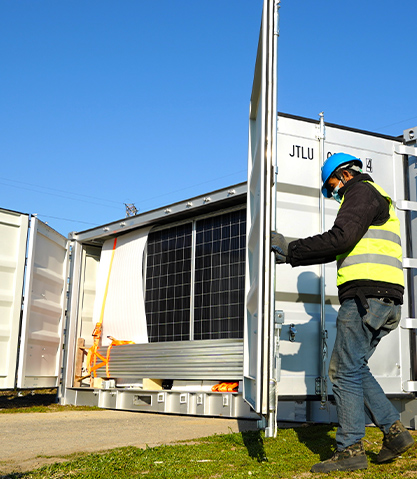
Not all industrial energy storage applications are grid-connected. Remote mining operations, telecommunications infrastructure, island communities, and disaster relief deployments all require reliable power supply entirely independent of the AC grid. The battery ESS container is well suited to off-grid emergency power supply applications because its containerized format allows deployment in locations without permanent electrical infrastructure, and its IP67 rating ensures reliable operation across demanding environmental conditions.
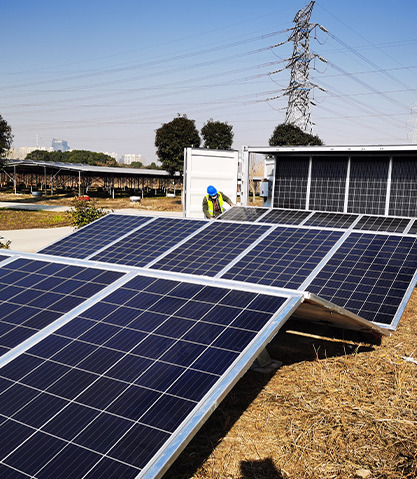
In off-grid configurations, the battery ESS container typically operates in conjunction with diesel generators or renewable generation sources — solar PV, wind turbines, or both. The battery system absorbs excess renewable generation that would otherwise be curtailed and dispatches it when renewable output is insufficient, reducing generator runtime and fuel consumption significantly. In solar-plus-storage off-grid systems, well-sized battery ESS containers can enable 24-hour operation from solar energy for much of the year, with the generator serving as a backup during extended low-irradiance periods rather than running continuously.
For emergency response and disaster recovery deployments, the containerized format is particularly valuable. The entire system can be transported by truck, ship, or heavy-lift helicopter to disaster-affected areas, connected to local generation, and operational within hours of arrival — providing reliable power to field hospitals, emergency communications centers, and water treatment facilities without any permanent infrastructure requirement.
Key Specifications to Evaluate When Selecting a Battery ESS Container
Selecting the right battery ESS container for a specific application requires evaluating several interdependent technical parameters. The table below outlines the most critical specifications and the questions each parameter answers for the procurement decision:
| Specification | Typical Range | Key Question Answered |
|---|---|---|
| Energy Capacity | 100 kWh – 5 MWh+ | How long can it sustain required loads? |
| Rated Power Output | 100 kW – 2 MW+ | What peak demand can it offset? |
| Round-Trip Efficiency | 88% – 95% | How much stored energy is recovered? |
| Cycle Life | 4,000 – 10,000+ cycles | What is the usable service life? |
| Operating Temperature | -20°C to +55°C | Is it suitable for the deployment climate? |
| Protection Level | IP67 (dust and water) | Can it operate in outdoor or harsh environments? |
| Response Time | <20 ms (full output) | Will it bridge outages without process disruption? |
Beyond raw specifications, integration capability matters equally. The system should support standard communication protocols — Modbus, CAN bus, or IEC 61850 — to interface with existing SCADA, EMS, and building management platforms. Remote monitoring, over-the-air firmware updates, and predictive maintenance capabilities through cloud-connected BMS platforms are increasingly standard features that reduce operational overhead across multi-site deployments. When all these parameters align with the specific application requirements — whether peak shaving, grid expansion, backup power, or off-grid emergency power supply — a battery ESS container delivers measurable, sustained value across its entire operational life.