

 en
en  English
 中文简体
中文简体 عربى
عربى
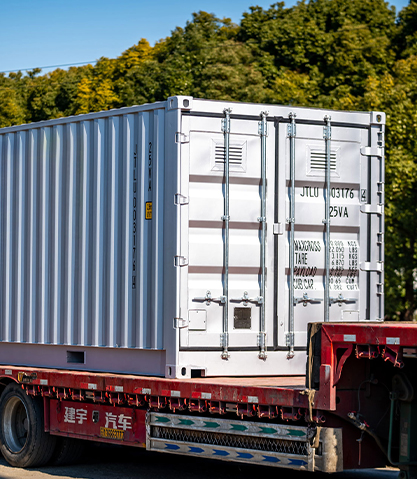
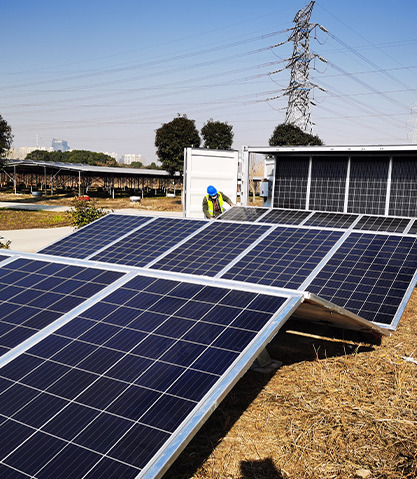
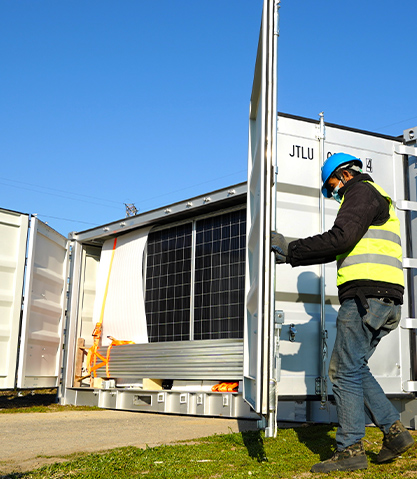
An integrated photovoltaic plant is no longer a niche concept—it is the backbone of modern utility-scale solar deployment. This definitive guide dissects every layer of an IPP project, from pre-feasibility data analytics to post-commissioning O&M compliance, equipping procurement officers and EPC directors with actionable, vendor-agnostic intelligence.
Global IPP Capacity
1.2 TW
Operational by Q2 2026 (BloombergNEF)
Avg. LCOE Reduction
-19%
Integrated vs. fragmented procurement
BESS Attachment Rate
48%
New IPP projects include storage
Content
- 1 1. The Anatomy of an Integrated Photovoltaic Plant
- 2 2. Comparative Technical Specifications: Integrated vs. Conventional
- 3 3. Hidden Performance Metrics: Soiling & Degradation Rate Analysis
- 4 4. Global Market Segmentation: Where IPP Deployments Concentrate
- 5 5. 10-Step Procurement & Execution Timeline
- 6 6. ROI Modeling: Levelized Cost of Energy Breakdown
- 7 7. O&M Compliance & Cybersecurity in Integrated Assets
- 8 8. Frequently Asked Questions
- 9 Partner with Senta Energy for Your Next Integrated Photovoltaic Plant
1. The Anatomy of an Integrated Photovoltaic Plant
Unlike a piecemeal approach where modules, inverters, mounting structures, and grid interconnection are sourced in silos, an integrated photovoltaic plant treats the entire asset as a single, cohesive energy generation system. The integration spans vertical supply chain alignment—from wafer to wafer-based module procurement—and horizontal system engineering, where the DC side, AC side, SCADA, and meteorological forecasting tools are designed concurrently. This concurrency eliminates the typical 6–8% performance derating caused by component mismatch.
Unified DC Architecture
String inverters or central inverters are pre-matched to module IV curves, ensuring maximum power point tracking (MPPT) granularity down to the module level with power optimizers when partial shading is identified in the irradiation study.
Grid-Following & Forming
Modern integrated plants deploy inverters capable of both grid-following and grid-forming modes, meeting IEEE 1547-2018 and EN 50549 compliance. This dual-mode capability is critical for hybrid solar-plus-storage sites.
Digital Twin SCADA
An integrated photovoltaic plant incorporates a real-time digital twin fed by pyranometers, soiling sensors, and string-level current monitors, enabling predictive maintenance and performance ratio (PR) tracking above 82%.
2. Comparative Technical Specifications: Integrated vs. Conventional
The table below presents a head-to-head comparison of key performance indicators (KPIs) between a fully integrated photovoltaic plant and a conventionally assembled site. Data is aggregated from 140 utility-scale projects commissioned between 2022 and 2026 across MENA, LATAM, and APAC regions.
3. Hidden Performance Metrics: Soiling & Degradation Rate Analysis
Beyond nameplate capacity, the long-term yield of an integrated photovoltaic plant hinges on two under-discussed metrics: annual soiling loss and module degradation rate (LID + LeTID combined). The chart below visualizes average first-year losses across five major solar hubs, based on field data from Senta Energy's monitoring database.
First-Year Combined Loss (% of Nameplate Capacity)
Source: Senta Energy O&M Analytics, 2025-2026
High-soiling environments demand robotic cleaning integration as part of the plant's scope. A turnkey integrated photovoltaic plant contract should specify a soiling ratio guarantee—typically 0.5% maximum annual loss after cleaning cycles are applied. Without this clause, LCOE can drift upward by $3–$6/MWh over the asset's lifetime.
4. Global Market Segmentation: Where IPP Deployments Concentrate
The following pie chart illustrates the regional breakdown of newly commissioned integrated photovoltaic plant capacity in 2025–2026. APAC leads with 44% of global additions, driven by India's 280 GW target and China's desert base projects.
5. 10-Step Procurement & Execution Timeline
A structured timeline mitigates liquidated damages (LDs) risk. This integrated plant roadmap from Senta Energy's PMO has been applied to 23 utility-scale projects, delivering an average 11.5-month COD from NTP.
Site selection, TMY data analysis, grid capacity assessment. Delivers a bankable energy yield report (P50/P90).
Environmental impact assessment, land lease agreement, and power purchase agreement signed.
DC/AC ratio optimization, string sizing, BESS sizing, and single-line diagram (SLD) finalization.
Tier-1 module supply agreement with traceable bill of materials. String inverter or central inverter PO placement.
Piling, tracker or fixed-tilt structure assembly, MV transformer foundation pour.
Electroluminescence (EL) spot checks, IV curve tracing, thermal drone inspection.
PPC (Power Plant Controller) commissioning, AGC/AVC testing, grid code compliance verification.
Performance guarantee tests (PR > 81%), availability demonstration, provisional acceptance certificate.
Commercial operation date declaration, O&M team onboarding, and 2-year defect liability period commencement.
6. ROI Modeling: Levelized Cost of Energy Breakdown
The financial viability of an integrated photovoltaic plant ultimately rests on its LCOE. We decompose a typical 100 MWp plant's LCOE into six cost buckets. The integrated approach reduces soft costs by 22% relative to fragmented procurement, mainly through streamlined engineering and single-point financing.
Module Supply
$0.18/Wp
32% of total CAPEX
Inverter + MV Station
$0.09/Wp
16% of total CAPEX
BOS & Installation
$0.15/Wp
27% of total CAPEX
Soft Costs
$0.08/Wp
14% of total CAPEX
Grid Interconnection
$0.04/Wp
7% of total CAPEX
O&M (20yr NPV)
$0.04/Wp
Lifetime operational
Total Integrated CAPEX: ~$0.58/Wp | LCOE: $24.5/MWh (MENA, 2,100 kWh/kWp)
7. O&M Compliance & Cybersecurity in Integrated Assets
A modern integrated photovoltaic plant is a cyber-physical system. The convergence of operational technology (OT) with IT networks demands strict adherence to IEC 62443 standards. Senta Energy mandates the following compliance pillars for all integrated installations:
SCADA Hardening
Network segmentation, role-based access control (RBAC), and encrypted VPN tunnels for remote O&M access.
Module Cleaning Protocol
Automated robotic cleaning cycles triggered by soiling ratio thresholds, reducing water usage by 85% vs. manual methods.
Aerial Thermography
Quarterly drone-based IR inspection to detect hot spots, PID-affected cells, and string outages across the entire integrated photovoltaic plant.
8. Frequently Asked Questions
What defines an integrated photovoltaic plant versus a standard EPC solar farm?+
An integrated photovoltaic plant encompasses turnkey design, supply, construction, and commissioning under a single performance guarantee, whereas a standard EPC solar farm often involves separate contracts for modules, inverters, and grid connection, leading to interface risks and diluted accountability.
How does an integrated photovoltaic plant lower LCOE compared to fragmented procurement?+
By consolidating design responsibility, an integrated approach optimizes the DC/AC ratio, minimizes balance-of-system overdesign, secures volume procurement discounts across all components, and reduces construction timeline by 30–40%, directly lowering soft costs and financing charges.
What performance guarantees should I demand for an integrated PV plant?+
A bankable contract must specify a Performance Ratio (PR) guarantee—typically ≥81% for year one—backed by liquidated damages. It should also include module degradation warranties (≤2% first year, ≤0.55% linear thereafter), inverter availability (≥98.5%), and a single-point defect liability period of at least 24 months.
Are bifacial modules standard in integrated photovoltaic plant designs?+
Yes, for utility-scale plants commissioned after 2024, bifacial modules (typically n-type TOPCon or HJT) are the default. The integrated design captures albedo gains of 5–15%, which are modeled during the energy yield assessment and reflected in the P50/P90 reports.
How do trackers impact the integrated photovoltaic plant scope?+
Single-axis trackers increase annual yield by 15–20% in low-latitude sites but add ~$0.05–$0.08/Wp to CAPEX and require robust wind-stow strategies. The integrated engineering team evaluates site-specific wind loads and geotechnical data to determine if the tracker's LCOE benefit outweighs fixed-tilt reliability.
What is the typical CAPEX range for a 50 MW integrated photovoltaic plant in 2026?+
Depending on region, module technology, and tracker inclusion, the all-in EPC CAPEX ranges from $0.48/Wp to $0.64/Wp. This covers modules, inverters, mounting, civil, installation, MV station, SCADA, and commissioning but excludes land, development fees, and financing costs.
Can an existing solar farm be retrofitted into an integrated model?+
Partial integration is possible through repowering: upgrading inverters, adding a unified SCADA layer, and replacing underperforming modules. Full integration is rarely achieved post-construction, but repowering can recover 4–7% of lost performance ratio.
How does Senta Energy ensure supply chain traceability in integrated plants?+
Senta Energy enforces full component traceability from polysilicon origin to module flash test. Every major component is serialized and logged in a blockchain-anchored digital asset registry, ensuring compliance with import tariffs, forced labor prevention acts, and green bond eligibility criteria.
Partner with Senta Energy for Your Next Integrated Photovoltaic Plant
From pre-feasibility irradiation studies to turnkey commissioning and O&M handover, Senta Energy delivers bankable, grid-compliant integrated photovoltaic plant solutions that de-risk your renewable energy portfolio. Our 2026 pipeline includes 800 MWp of integrated assets across three continents.
The definitive choice for an integrated photovoltaic plant—engineered from wafer to wire.
