

 en
en  English
 中文简体
中文简体 عربى
عربى
Imagine you are designing an off-grid power system for a mountain cabin that sees long overcast winters. You have a limited roof area, and you need to decide between monocrystalline and amorphous solar panels. You have heard the saying that amorphous panels perform better in low light, but you also know that monocrystalline modules achieve much higher efficiency. Which factor should actually guide your purchase decision?
Here is the direct answer: monocrystalline panels are the better default choice for almost every fixed installation. They generate more power per square meter, carry longer warranties, and usually offer a lower cost per watt over their lifetime. Amorphous silicon panels only make sense when flexibility, ultra-light weight, or tolerance to very diffuse light outweigh the need for compact, high-efficiency generation.
Key takeaway: For rooftop, ground-mount, and most commercial PV systems, monocrystalline technology delivers higher power density, better long-term reliability, and lower total system cost per kWh. Amorphous thin-film remains a niche product for curved or portable surfaces where rigid glass panels are unsuitable.
Content
What Makes Monocrystalline and Amorphous Panels Different?
Monocrystalline solar cells are cut from a single continuous silicon crystal. The ordered crystal structure gives the material high purity and low defect density, which translates into commercial module efficiencies of 17% to 24%. Some high-end monocrystalline modules now exceed 24% efficiency, making them the standard for residential and utility solar.
Amorphous silicon is a thin-film technology. A layer of silicon only about one micrometer thick is deposited onto glass, metal, or flexible polymer. Because the silicon atoms are not arranged in a regular crystal lattice, the material is called “amorphous.” This reduces efficiency to roughly 6% to 10%, but it also gives the panel a lighter weight, a thinner profile, and the ability to flex when mounted on a curved substrate.
Monocrystalline characteristics
High power density
Monocrystalline panels produce the most watts per square meter, so they occupy less roof space for a given system size.
Long degradation warranty
Leading monocrystalline products carry 25-year performance warranties and often retain more than 85% of their output after that period.
Better high-temperature behavior
Although all silicon panels lose output as temperature rises, monocrystalline modules typically have a temperature coefficient of -0.30% to -0.40% per °C, which is predictable and manageable in hot climates.
Amorphous silicon characteristics
Light, flexible, and bendable
Amorphous modules can be laminated onto plastic or metal foil, allowing curved or rollable solar products that conventional panels cannot match.
Lower sensitivity to high heat
Amorphous silicon has a lower negative temperature coefficient, often around -0.20% per °C, so its power loss at 60°C case temperature is smaller relative to monocrystalline.
Better diffuse-light response
At very low irradiance levels, amorphous silicon retains a higher fraction of its rated power than crystalline silicon. This makes it useful for indoor rechargeable devices or heavily shaded locations, though absolute output is still low.
Head-to-Head Technical Comparison
The table below summarizes the typical specifications you should compare when evaluating monocrystalline and amorphous modules. Figures represent current market ranges for commercial products, not laboratory record cells.
The efficiency and area columns are crucial. A 5 kW monocrystalline array can often be installed on a standard residential roof, while the same power in amorphous panels would require two to three times more surface area. That extra area means more racking, more wiring, and longer installation time, which often cancels the lower module price of thin-film products.
Hidden Metrics: Temperature and Low-Light Tradeoffs
A simple efficiency value does not tell the whole story. The operating temperature of a solar panel can reach 60°C or higher on a sunny day, and low light levels occur at dawn, dusk, and during cloud cover. The two technologies react differently to these conditions.
The bar chart below shows the relative power output of monocrystalline and amorphous silicon modules at three operating temperatures, normalized to their respective rated power at 25°C. Amorphous modules lose less output at high temperatures because of their lower temperature coefficient, but the absolute power per module is still far below that of a monocrystalline module of the same physical size.
Notice that the amorphous bars are shorter because the absolute output per module is lower. Even though amorphous panels retain a slightly larger percentage of their output at high temperature, a monocrystalline panel will still produce more total wattage in nearly every real-world condition. The only exception is very weak, diffuse light at extreme angles, where amorphous cells can match the energy yield of a crystalline panel of the same area, but that advantage rarely justifies the large area penalty.
The photovoltaic market has moved heavily toward monocrystalline technology over the past decade. Polycrystalline, once a low-cost alternative, has largely been replaced by cheaper monocrystalline PERC cells. The following chart illustrates an approximate breakdown of global module shipments in 2025.
- Monocrystalline: ~84%
- Polycrystalline: ~11%
- Amorphous & other thin-film: ~5%
Amorphous silicon maintains a small but steady niche in portable chargers, building-integrated PV, and specialty consumer electronics. For fixed grid-tied or off-grid power generation, monocrystalline dominates because the cost of balance-of-system components – racking, wiring, and installation labour – scales with area, making high-efficiency modules more economical overall.
Selection Guide: How to Choose for Your Project
Use this step-by-step framework when comparing monocrystalline and amorphous modules for any real installation.
1. Measure available area
Calculate the usable roof or ground area. If you have less than 30 m² for a 5 kW system, monocrystalline is the only practical option.
2. Assess climate and shading
For hot tropical climates, compare temperature coefficients carefully. For heavily shaded or indoor locations, amorphous may perform better in diffuse light, but it will still need more surface area.
3. Evaluate system integration
For a plug-and-play off-grid setup, you can pair high-efficiency monocrystalline panels with an integrated solar power box that includes charging control and inverter functions. This simplifies wiring and saves space.
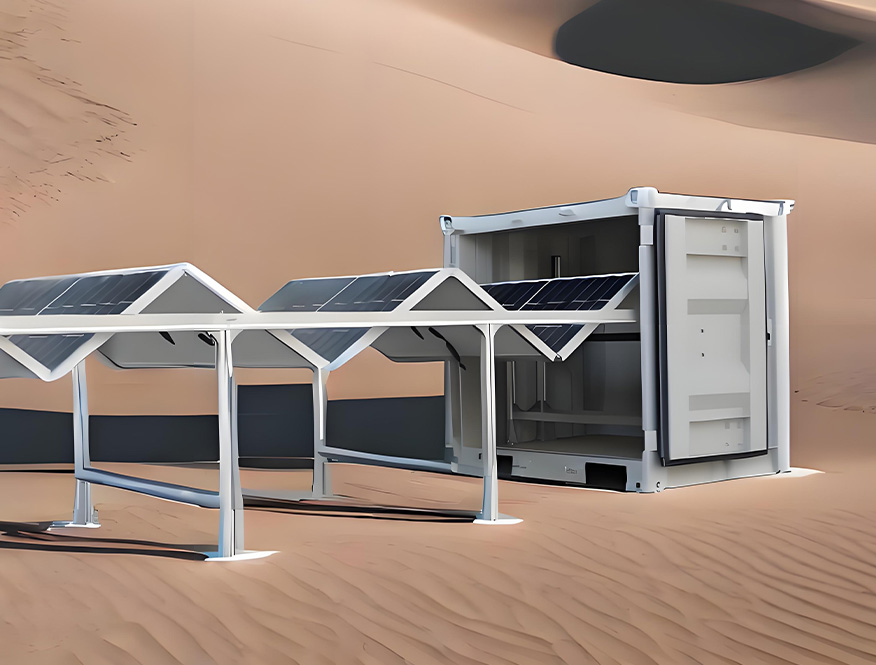 Solar Power Box-OV Suppliers, CompanyAs Solar Power Box-OV Suppliers and Solar Power Box-OV Company in China, Senta Energy Co., Ltd. offer custom Solar Power Box-OV.View Product →
4. Consider portability
If the system must be relocated frequently, a foldable solar power container provides a self-contained solution. Foldable structures usually integrate monocrystalline modules because they require less exposed area when deployed.
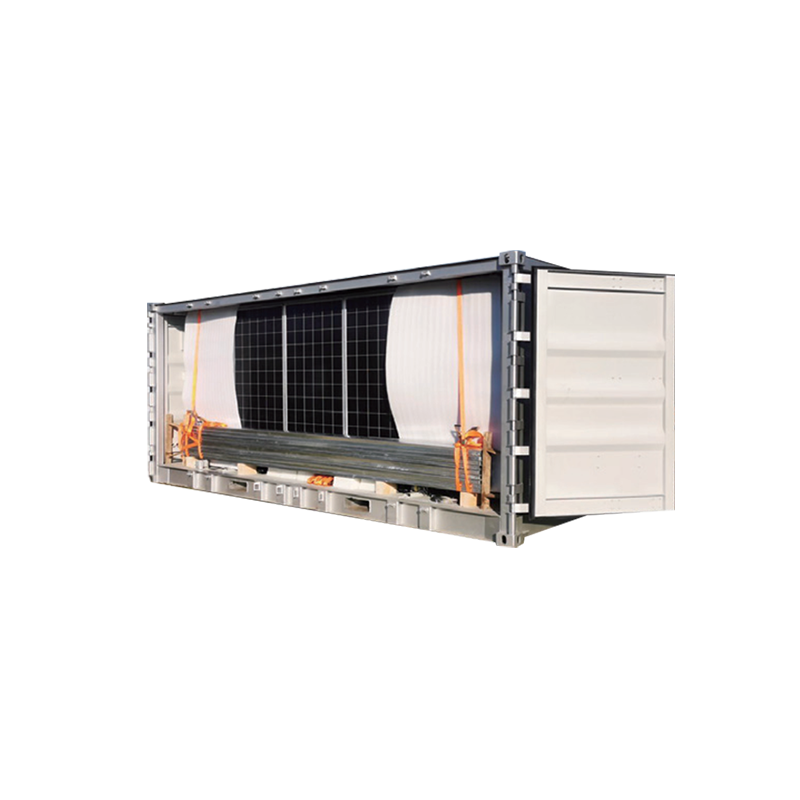 Foldable Solar Power Container Manufacturers, Suppliers, Factory - Senta Energy Senta Energy - Foldable Solar Power Container Suppliers and Manufacturers in China, Custom Foldable Solar Power Container. The foldable s...View Product →
5. Calculate lifecycle cost
Compare total cost over 20 years, not just module price per watt. Amorphous panels may have a lower upfront cost per watt, but faster degradation and larger area usually raise the total installed cost. A 3 kW solar array kit is a practical benchmark for small cabins and can help you compare invoices directly.
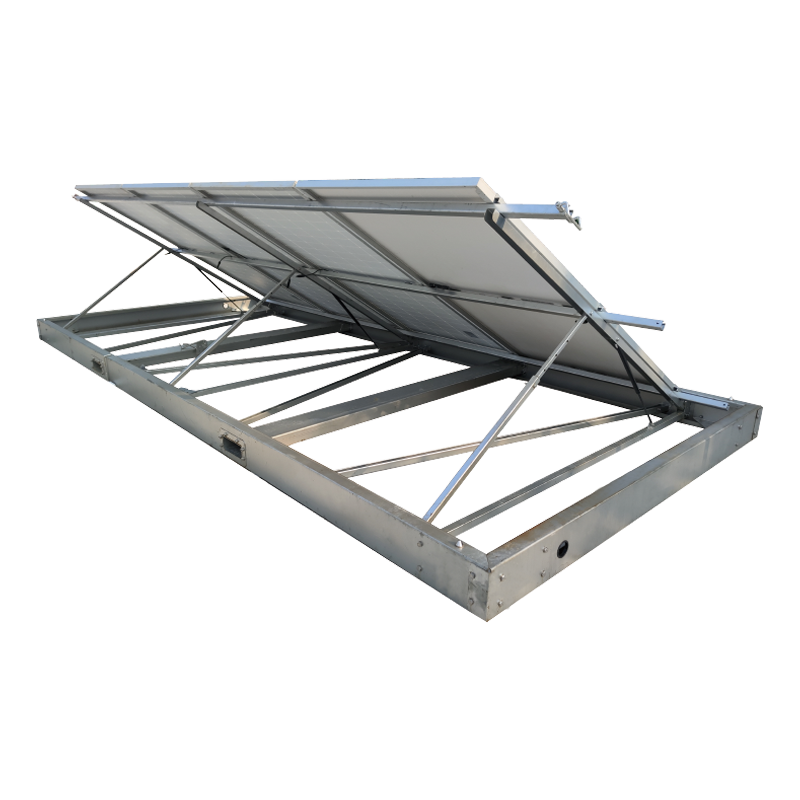 3KW Power LSA-L-Type Solar Array Manufacturers, Suppliers, Factory - Senta EnergSenta Energy - 3KW Power LSA-L-Type Solar Array Suppliers and Manufacturers in China, Custom 3KW Power LSA-L-Type Solar Array. Our Power ...View Product →
For remote cabins, mobile clinics, or emergency relief units, the decision often comes down to how quickly the system can be installed. If you want a single-unit energy source, a dedicated system such as the off-grid self-contained power supply can be ordered with monocrystalline panels and integrated batteries. This approach reduces design effort and field wiring errors.
Maintenance and Compliance Considerations
Both monocrystalline and amorphous panels require routine cleaning and electrical inspection, but the operational differences affect maintenance planning.
- Cleaning: Monocrystalline panels with a glass surface shed rain well, but dust build-up can cause hot spots. Amorphous panels laminated on flexible plastic are more prone to scratching and should be cleaned with soft cloths and mild soap.
- Temperature management: Leave at least 10 cm of airflow behind all fixed modules. For amorphous panels used in building-integrated installations, the lower temperature coefficient eases ventilation requirements.
- Electrical safety: Amorphous modules often have lower short-circuit current but higher voltage per cell, so string sizing and fuse coordination must be checked with the inverter manufacturer.
- Standards compliance: Verify that modules meet IEC 61215 for crystalline silicon or IEC 61646 for thin-film. For portable power systems, also check the enclosure rating. More details on efficient energy storage in an integrated unit are discussed in our article on solar power box energy storage efficiency.
Finally, remember that warranties differ dramatically. A reputable monocrystalline module typically carries a 12-year product warranty and 25-year linear performance warranty. Amorphous modules often provide only a 1- to 5-year warranty because the thin-film layer is more sensitive to moisture and voltage-induced degradation. For a long-lived asset like a solar array, the warranty is a critical indicator of expected service life.
