

 en
en  English
 中文简体
中文简体 عربى
عربى
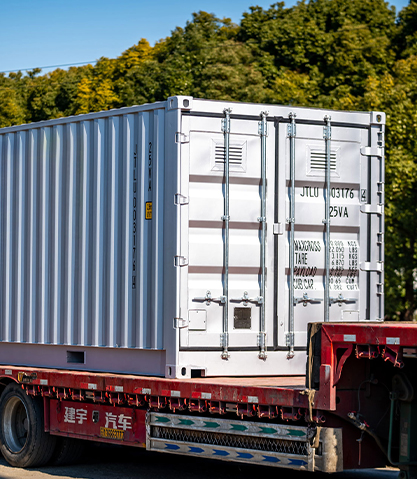
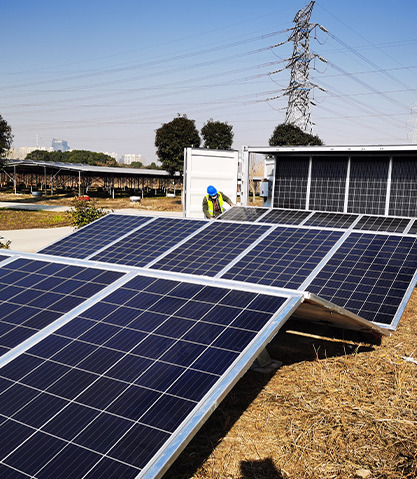
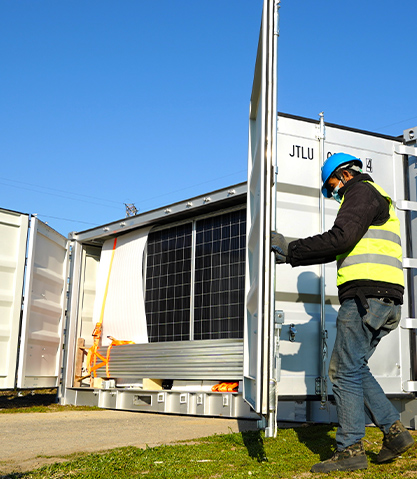
In a remote mining camp, a disaster relief site, or a curved building facade, the choice between monocrystalline and amorphous solar panels often comes down to a single constraint: how much surface area can you spare? A 10% efficiency gap is not just a number on a spec sheet. It determines whether you need 20 panels or 40, how much structural steel you must install, and whether your battery bank can recharge before the next cloudy day.
Bottom line: Monocrystalline silicon remains the default for space-constrained, high-yield installations, with 18–22% efficiency and 25–30 year warranties. Amorphous thin-film gives you 6–10% efficiency, but it wins in high heat, low light, and flexible or lightweight applications. The right choice is not about which panel is "better"—it is about which constraint your project can tolerate.
Content
- 1 Why Monocrystalline and Amorphous Panels Behave So Differently
- 2 Data Comparison: What the Spec Sheets Do Not Tell You
- 3 Hidden Metric: Temperature Derating Changes the Winner
- 4 Industry Application Distribution: Where Amorphous Still Wins
- 5 ROI Analysis and Selection Guide: A Step-by-Step Process
- 6 Maintenance and Compliance: Extending Life and Meeting Standards
Why Monocrystalline and Amorphous Panels Behave So Differently
The difference starts at the atomic level. Monocrystalline panels are cut from a single silicon crystal grown using the Czochralski process. That uniform lattice lets electrons move with very few collisions, which is why commercial monocrystalline modules reach 18–22% efficiency. Amorphous silicon, by contrast, is a thin film of silicon atoms with no ordered structure. Its disordered lattice has a higher bandgap (around 1.7 eV), which actually absorbs visible light more effectively per unit thickness, but the same disorder increases electron recombination.
Monocrystalline Silicon
- Single-crystal structure, 18–22% module efficiency
- Temperature coefficient around -0.35 to -0.45 %/°C
- 25–30 year performance warranty typical
- Requires 5–6 m² per kWp
- Rigid, glass-covered, heavier
Amorphous Thin-Film
- Disordered silicon layer, 6–10% module efficiency
- Temperature coefficient around -0.20 to -0.30 %/°C
- 10–20 year useful life, with initial Staebler-Wronski degradation
- Requires 10–16 m² per kWp
- Flexible, lightweight, can be applied to curved surfaces
The Staebler-Wronski effect is a critical detail for amorphous panels. Within the first 100–1,000 hours of light exposure, efficiency can drop by 10–20% from the initial rating, then stabilize. Reputable manufacturers rate modules after stabilization, but you should still ask for the degraded power output, not the flash-test number.
Data Comparison: What the Spec Sheets Do Not Tell You
The table below compares real-world parameters that drive system sizing and cost. Data reflects typical commercial products, not laboratory champions.
Hidden Metric: Temperature Derating Changes the Winner
A panel rated at 200 W at 25°C does not deliver 200 W at 65°C. The bar chart below shows relative power output at different cell temperatures, indexed to 25°C. Amorphous silicon holds up better in heat, but its starting efficiency is so much lower that absolute output per square meter often still favors monocrystalline.
Legend: dark blue = monocrystalline, light blue = amorphous. Even at 65°C, a 20% monocrystalline module produces more absolute power per square meter than a 10% amorphous module, because the efficiency gap is too large. However, if your mounting area is unlimited and you face partial shading or extreme heat, amorphous can recover some ground.
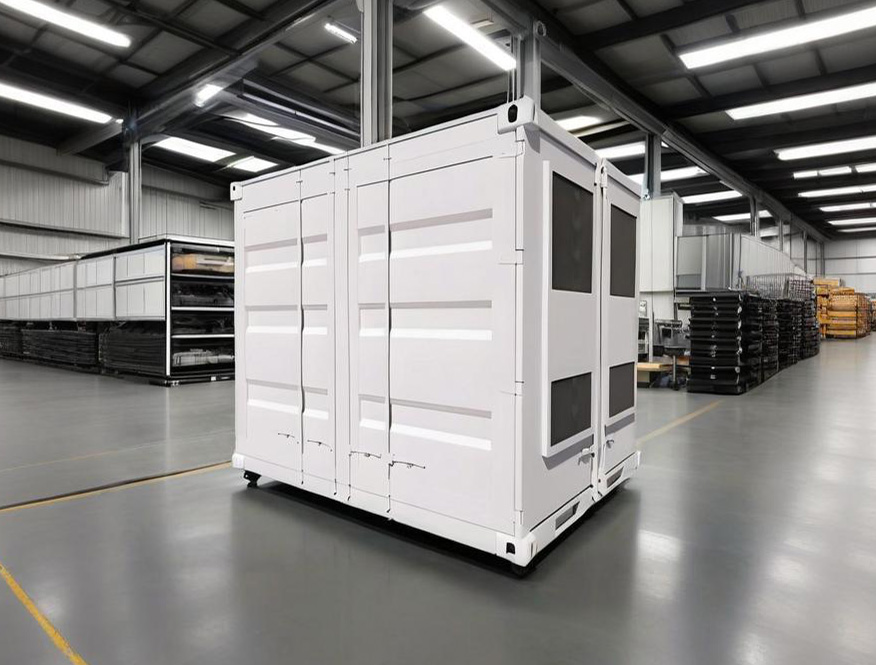 Senta Energy Containerized Battery Energy Storage SystemA containerized industrial and commercial battery storage system for peak shaving, backup, and solar-plus-storage pairing; three models cover 1 to 5.9 MWh.View Product →
Industry Application Distribution: Where Amorphous Still Wins
Amorphous silicon holds a small but persistent niche. Global thin-film production is about 5% of the solar market, and amorphous silicon represents roughly 2–3% of total module shipments. Its applications cluster in four areas.
- Building-integrated photovoltaics (40%): flexible, lightweight, curves and facades
- Portable and consumer electronics (25%): solar chargers, wearable devices
- Off-grid and remote (20%): low-light environments, hot climates
- Utility-scale ground mounts (15%): niche deployments where land is cheap
For containerized solar power systems, the choice often leans monocrystalline because every square meter of container roof is precious. But amorphous panels have a role on irregular surfaces, such as the curved roof of a solar living container or a portable folding array where weight matters more than area.
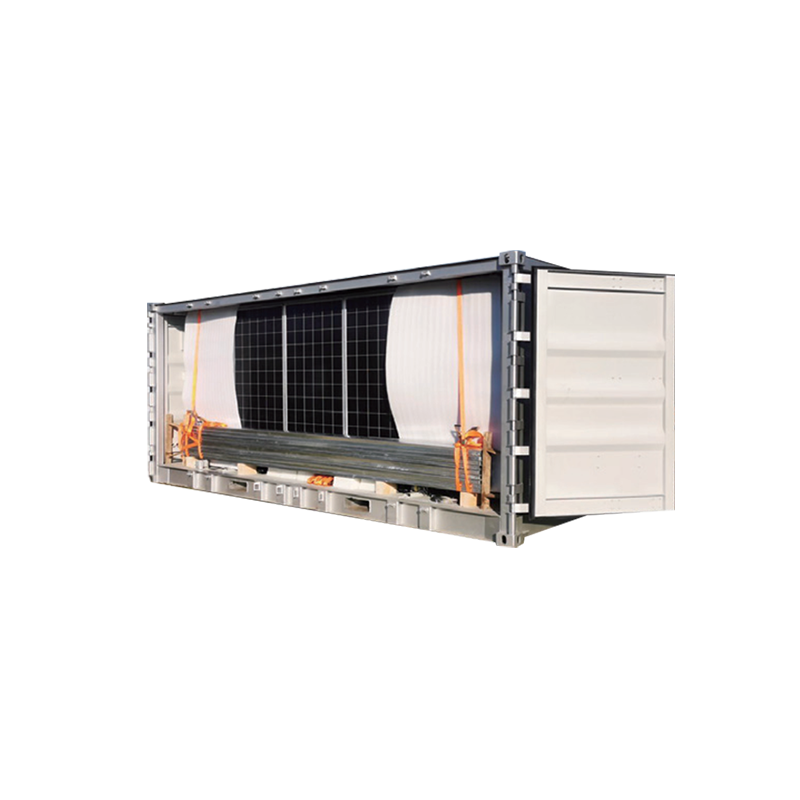 Foldable Solar Power Container for Remote DeploymentA transportable solar generation and storage container for remote or backup power, with a foldable PV array and energy-storage cabin; model 20HQ100K shown.View Product →
ROI Analysis and Selection Guide: A Step-by-Step Process
Do not choose a panel technology in isolation. Run this sequence to get a defensible decision.
Step 1: Measure area and load
Calculate available mounting area and required daily kWh. If area is limited, monocrystalline’s 18–22% efficiency reduces racking, cable, and labor costs.
Step 2: Profile temperature and shade
If cell temperatures regularly exceed 60°C or partial shading is unavoidable, amorphous’s lower temperature coefficient and better low-light response may improve yield.
Step 3: Calculate 25-year LCOE
Use degraded output, not nameplate. For amorphous, apply a 10–15% Staebler-Wronski discount and shorter replacement cycle.
Step 4: Add transport and installation
Thin-film laminates are lighter and can be rolled, which reduces shipping volume for remote projects. Monocrystalline glass modules need more careful packing.
For self-provided power supply projects where grid connection is impossible, the panel decision is only one part of the system. The inverter, battery, and mounting structure must match the selected technology. You can review a typical self-provided power supply configuration to see how these choices interact.
Maintenance and Compliance: Extending Life and Meeting Standards
Both technologies need a maintenance plan, but the risks differ. Monocrystalline panels are robust but vulnerable to micro-cracks during transport and thermal cycling. Amorphous panels are less prone to micro-cracks but suffer from the Staebler-Wronski effect and are more sensitive to moisture ingress in flexible laminates.
- Cleaning: every 6–12 months, depending on soiling. Avoid abrasive tools on amorphous films.
- Monitoring: track performance ratio and compare against degraded nameplate. A 0.5% annual drop is normal for monocrystalline; amorphous may drop faster in the first year.
- Compliance: IEC 61215 and IEC 61730 apply to both. For flexible amorphous modules, check additional standards for mechanical durability.
- End-of-life: both are recyclable, but amorphous thin-film uses less silicon and more glass or polymer substrate. Plan for take-back programs.
One practical note: if you deploy amorphous panels in a containerized system, ensure adequate ventilation. Their higher area per kW means more panels and more heat buildup inside the enclosure. A well-designed foldable photovoltaic container can manage this with active cooling and modular arrays.
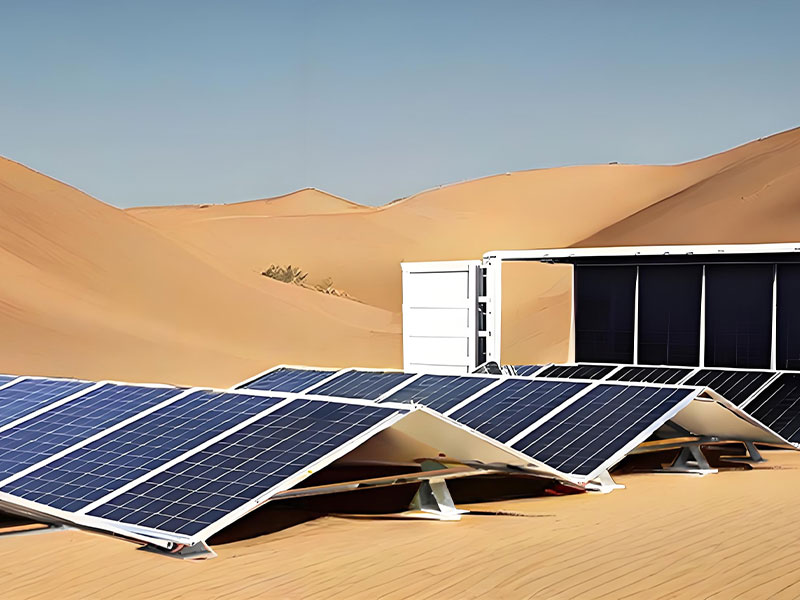 Solar PV Container with Foldable Rail-Mounted ArraysA modular, pre-wired container photovoltaic system with foldable frames for rapid trailer or flatbed deployment, serving remote, temporary, and emergency power needs.View Product →
The monocrystalline versus amorphous decision is a trade-off between area and resilience. If your project has limited roof or ground space, monocrystalline’s 18–22% efficiency and 25–30 year lifespan usually deliver the lowest cost per kWh. If you are dealing with extreme heat, low light, curved surfaces, or weight-constrained transport, amorphous thin-film can be the smarter engineering choice—provided you size the array for its 6–10% efficiency and account for initial degradation.
For system integrators, the answer is rarely one or the other. A containerized microgrid might use monocrystalline on the roof and amorphous laminates on vertical or curved surfaces. What matters is matching the technology to the specific constraint, then verifying the real degraded output and lifecycle cost before signing the purchase order.
