

 en
en  English
 中文简体
中文简体 عربى
عربى
Content
- 1 Low Voltage vs High Voltage: The Bottom Line Up Front
- 2 Core Principles: How Voltage Classes Differ
- 3 Data Comparison: Low Voltage vs High Voltage
- 4 Hidden Trade-offs: Efficiency and Cost Analysis
- 5 Industry Application Distribution
- 6 Selection Guide: A Step-by-Step Approach
- 7 Maintenance and Compliance Essentials
- 8 Final Thoughts
Low Voltage vs High Voltage: The Bottom Line Up Front
If you are specifying a solar-plus-storage system, the choice between low voltage and high voltage is not about one being universally better. It is a trade-off between safety, conductor size, distance, and cost. Low voltage (≤1,000 V AC or ≤1,500 V DC) is safer to handle, requires less insulation, and suits short-distance, smaller-power applications. High voltage (>1,000 V AC) reduces current for the same power, allowing thinner cables, lower line losses, and longer transmission distances—but it demands stricter safety measures and more expensive switchgear.
Quick takeaway: For residential rooftops and small commercial buildings, low voltage is the practical default. For utility-scale solar farms, industrial plants, and long feeders, high voltage wins on efficiency. In mobile and containerized energy systems, both voltages coexist: low-voltage batteries feed local loads, while high-voltage DC links connect solar arrays to inverters and storage.
Companies like Senta Energy build integrated solar containers and battery storage systems that leverage both voltage classes. The following sections break down the technical, economic, and safety factors so you can make a confident selection.
Core Principles: How Voltage Classes Differ
Voltage classification varies by standard body. The IEC defines low voltage as up to 1,000 V AC or 1,500 V DC, while the U.S. National Electrical Code (NEC) sets the low-voltage threshold at 600 V. Medium voltage typically spans 1 kV to 35 kV, and high voltage starts above 35 kV in some definitions, though many industry discussions treat anything above 1,000 V AC as high voltage. For practical solar and storage projects, the key divide is between systems under 1,000 V and those above.
Low Voltage Characteristics
- Safety: Lower shock hazard; less need for arc-flash PPE and complex lockout procedures.
- Components: Readily available breakers, fuses, and connectors at lower cost.
- Efficiency: Higher current for a given power, leading to larger copper cables and higher resistive losses over distance.
- Typical use: Residential PV (up to 600 V DC), small commercial battery systems, and portable power stations.
High Voltage Characteristics
- Safety: Requires stringent insulation, grounding, and arc-flash protection; only qualified personnel should service.
- Components: Specialized switchgear, transformers, and certified DC connectors—often at a premium.
- Efficiency: Lower current reduces I²R losses, enabling longer cable runs and smaller conductor cross-sections.
- Typical use: Utility-scale solar farms (1,500 V DC), industrial microgrids, and long-distance power transmission.
Senta Energy's product line reflects this duality. Their low-voltage wall-mounted battery, the LFP-510kWh LV, is designed for easy integration in commercial buildings where safety and simplicity matter. For larger projects, the LFP-3000-HV stack-mounted battery operates at higher voltage to reduce cabling costs and improve round-trip efficiency.
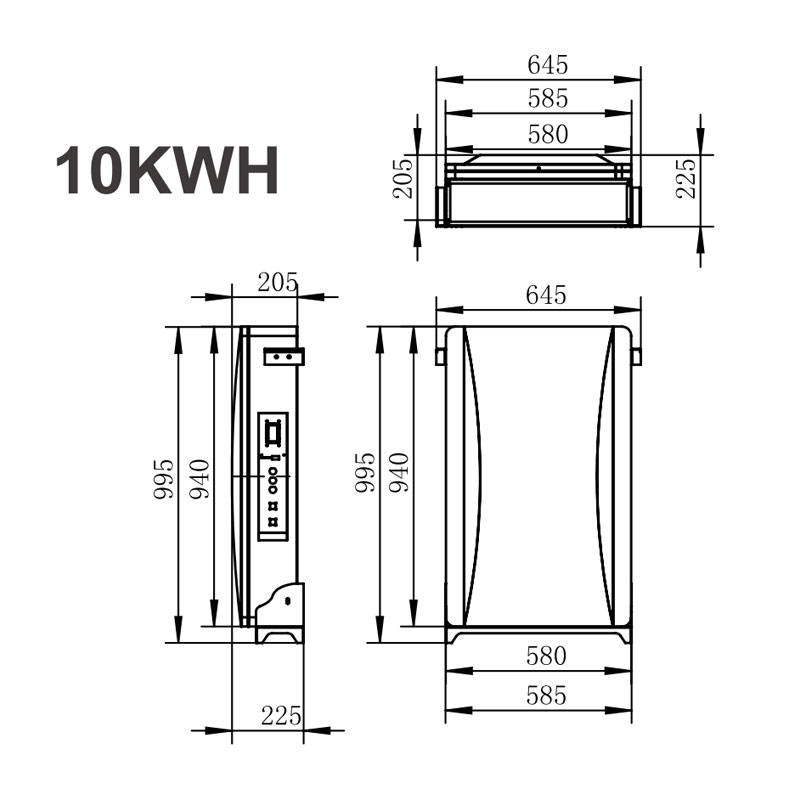 LFP 5-10kWh Low-Voltage Wall-Mounted BatteryA wall-mounted LiFePO4 battery for residential and light commercial storage, scalable to 160 kWh with smart BMS and inverter compatibility.View Product →
 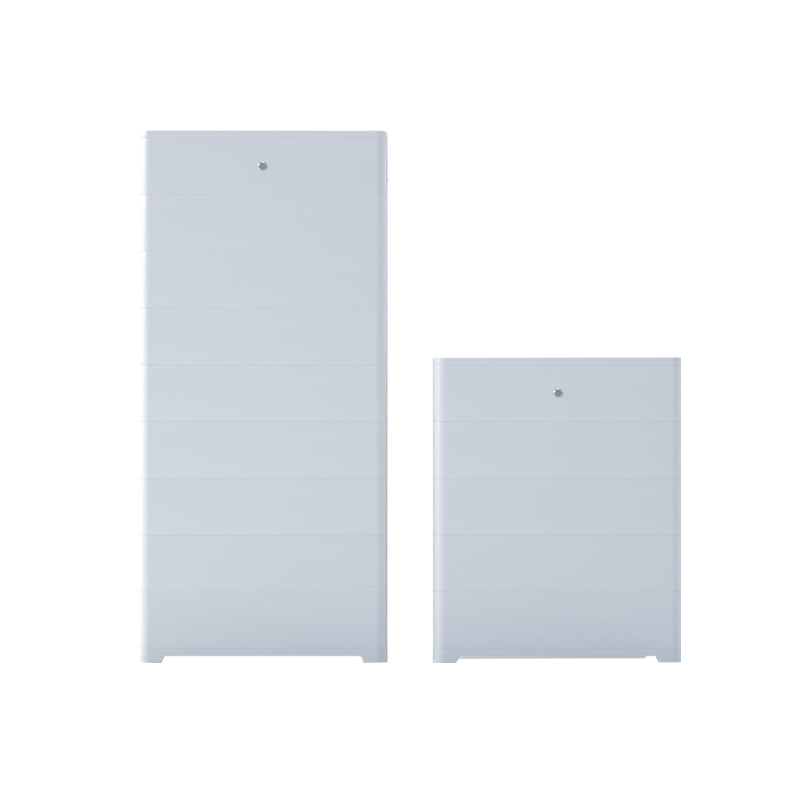 LFP 3000/HV Stack-Mounted High-Voltage BatteryA modular high-voltage LFP battery for commercial and industrial storage, offering scalable capacity, smart BMS monitoring, and solar or wind integration.View Product →
Data Comparison: Low Voltage vs High Voltage
The table below summarizes the practical differences. Note that values are typical ranges; actual performance depends on system design and component selection.
For a 100 kW load, a 400 V system draws 250 A, requiring heavy cables. A 1,500 V system draws only 67 A, allowing much smaller conductors. That is why high voltage is standard for utility-scale solar and large battery containers.
Hidden Trade-offs: Efficiency and Cost Analysis
To visualize the impact, consider a 500 kW power transfer over 1 km. The chart below shows approximate line losses for different voltage levels, assuming the same conductor material and cross-section.
While high voltage reduces losses, it also increases the cost of transformers, switchgear, and safety training. The break-even point often falls between 200 kW and 500 kW for runs under 500 meters. For smaller or shorter systems, low voltage remains more economical.
Industry Application Distribution
Across global solar and storage installations, low voltage dominates the distributed segment, while high voltage rules the utility and industrial segments. The pie chart below reflects a rough market share by capacity.
This distribution is shifting as more commercial and industrial users adopt high-voltage DC coupling to cut cabling costs. Senta Energy addresses both ends with modular containers that can be configured for self-provided power supply, from 3 kW portable kits to 200 kW+ foldable solar containers.
Selection Guide: A Step-by-Step Approach
Choosing the right voltage class involves five practical steps. Use the cards below to walk through the decision.
Step 1: Define Power and Distance
Calculate peak power and cable run length. If power exceeds 200 kW or distance exceeds 500 m, evaluate high voltage.
Step 2: Check Safety and Compliance
Review local codes (IEC, NEC, UL). High voltage requires arc-flash studies, certified components, and trained staff.
Step 3: Evaluate Total Installed Cost
Compare conductor, switchgear, and installation labor. High voltage saves on copper but may add transformer costs.
Step 4: Consider Scalability
If future expansion is likely, high voltage provides more headroom. Modular systems like Senta's battery ESS container can scale without rewiring.
Step 5: Assess Maintenance Capability
Low voltage is easier for on-site staff to maintain. High voltage often requires specialized service contracts.
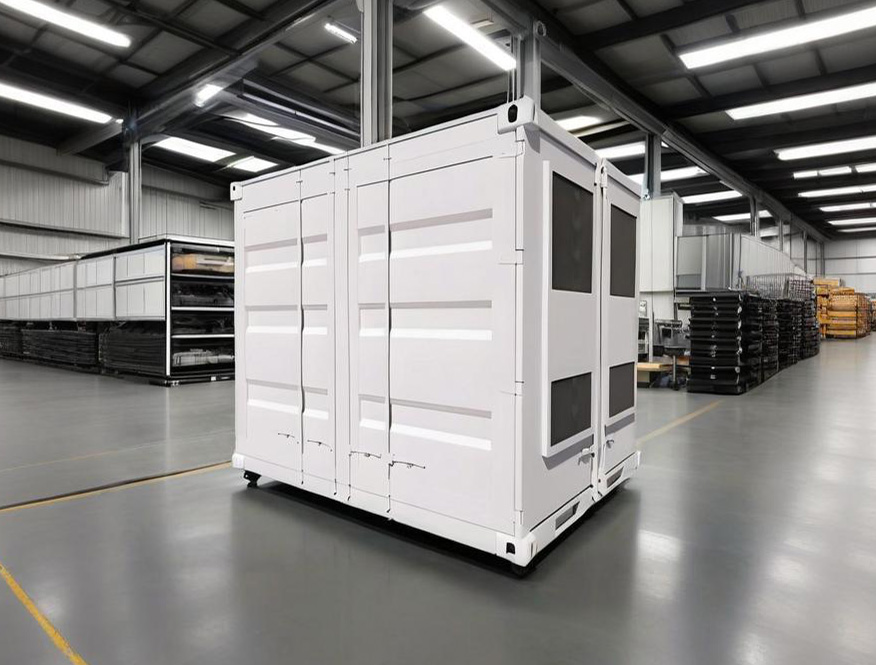 Containerized Battery ESS for Industrial and Commercial StorageA containerized BESS line for peak shaving, backup, and off-grid power, with scalable MWh-class models and IP67 protection.View Product →
Maintenance and Compliance Essentials
Both voltage classes demand regular inspection, but the focus differs. For low voltage, check terminal torque, insulation integrity, and ventilation. For high voltage, prioritize arc-flash boundaries, grounding systems, and partial discharge testing. Compliance with IEC 60364, NEC 690, and UL 9540 is critical for energy storage systems.
Senta Energy's containers are designed for global deployment, with documentation and support for local certification. Their project solutions cover disaster relief, military affairs, and port shore power, where both voltage classes may be used depending on site infrastructure. For daily upkeep, refer to industry guidance on solar power container maintenance.
Always follow the manufacturer's manual and local electrical codes. When in doubt, consult a licensed electrical engineer to perform a voltage drop and short-circuit study.
Final Thoughts
Low voltage and high voltage are not competitors; they are tools for different jobs. Low voltage offers safety, simplicity, and lower component cost for distributed systems. High voltage delivers efficiency and longer reach for large-scale and industrial applications. In modern solar-plus-storage designs, the two often meet: high-voltage DC arrays feed inverters, while low-voltage batteries serve local loads.
Senta Energy’s portfolio spans this spectrum—from the LFP-510kWh LV wall-mounted battery for low-voltage commercial storage to the LFP-3000-HV stackable battery and containerized ESS for high-voltage utility projects. By matching voltage class to project requirements, you can optimize safety, cost, and performance without compromise.
