

 en
en  English
 中文简体
中文简体 عربى
عربى
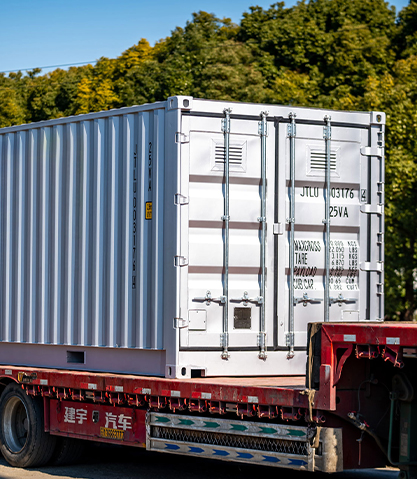
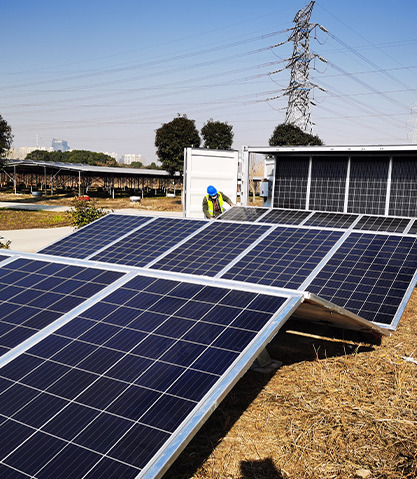
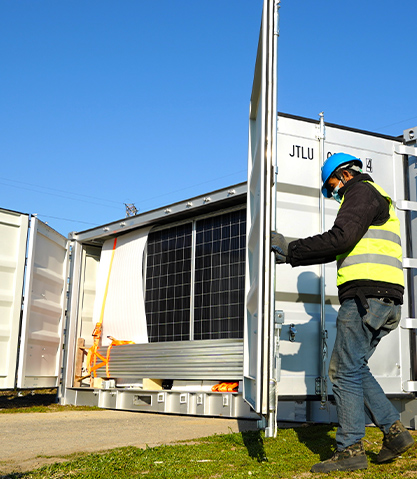
A container camp 120 km from the nearest substation needs 60 kW of continuous power and roughly 180 kWh a day. Two quotes land on the same desk: a 100 kVA diesel generator set, and a solar array paired with hybrid inverters and a 200 kWh battery bank. The generator is cheaper to buy by a wide margin. Whether it is cheaper to own depends on numbers that rarely appear on the quotation form.
Inverters and generators are not two versions of the same product. One converts chemical energy into rotation and then into alternating current; the other converts direct current from solar modules or batteries into a synthesised AC waveform. That single difference drives everything else: load acceptance, part-load efficiency, maintenance intervals, noise, and how much fuel logistics will cost over five years.
The short answer
For intermittent daily loads, long fuel chains, or sites with noise and emission limits, an inverter-plus-storage system usually delivers a lower cost per kWh over five years. For heavy continuous loads with cheap fuel nearby and no space for a battery bank, a diesel generator remains the rational choice. Most real projects in remote industry, construction and emergency response end up running both, with the inverter carrying the base load and the generator covering winter autonomy and load peaks.
Four variables decide the outcome: average and peak load, the hours of autonomy required, the delivered price of fuel, and local rules on noise, exhaust and fuel storage. Everything below hangs off those four.
Content
How Inverters and Generators Convert Energy
A diesel generator couples an engine to an alternator. An inverter has no rotating mass at all: it switches DC at high frequency and filters the result into a sine wave. That distinction produces five practical differences worth understanding before you compare price tags.
- Frequency is mechanical in a genset. A four-pole alternator turning at 1,500 rpm produces 50 Hz, and frequency falls the moment load exceeds available torque.
- Frequency is electronic in an inverter. Output is generated by control logic, so voltage and frequency stay inside tight tolerance regardless of load, and no warm-up or cooldown cycle is needed.
- Block load acceptance differs sharply. A genset typically accepts a step load of 60–70% of rating before a visible voltage and frequency dip; a modern inverter rides through 110–150% for several seconds and then falls back thermally.
- Part-load efficiency punishes oversizing. A genset near 75–80% load consumes about 0.25–0.35 L of diesel per kWh. Below 30% load, litres per kWh can climb by half again, and unburnt fuel causes wet stacking and carbon build-up.
- Standby behaviour is opposite. A genset running at no load still burns 3–8 L per hour; an inverter in standby draws 20–60 W.
Efficiency figures are often quoted in a way that misleads. An engine and alternator convert roughly a third of the fuel energy into electricity at the terminals. An inverter converts 96–98% of the DC energy it receives, but that energy had to be harvested or stored first, and a lithium battery returns 85–92% of what goes in. The honest comparison is cost and reliability per delivered kWh, not conversion efficiency in isolation.
Load step response
Genset: 60–70% block load, 2–5 Hz frequency dip. Inverter: 110–150% surge for 3–10 seconds, then controlled fallback.
Idle and standby losses
Genset: fuel burn with no useful output. Inverter: negligible standby draw, no maintenance clock running.
Fuel independence
A genset is only as reliable as its supply chain. A PV and battery system needs no delivery, no storage permit and no road access.
Equipment in this class combines PV maximum power point tracking, battery charging and AC output in a single enclosure, which removes separate charge controllers and changeover hardware from the bill of materials.
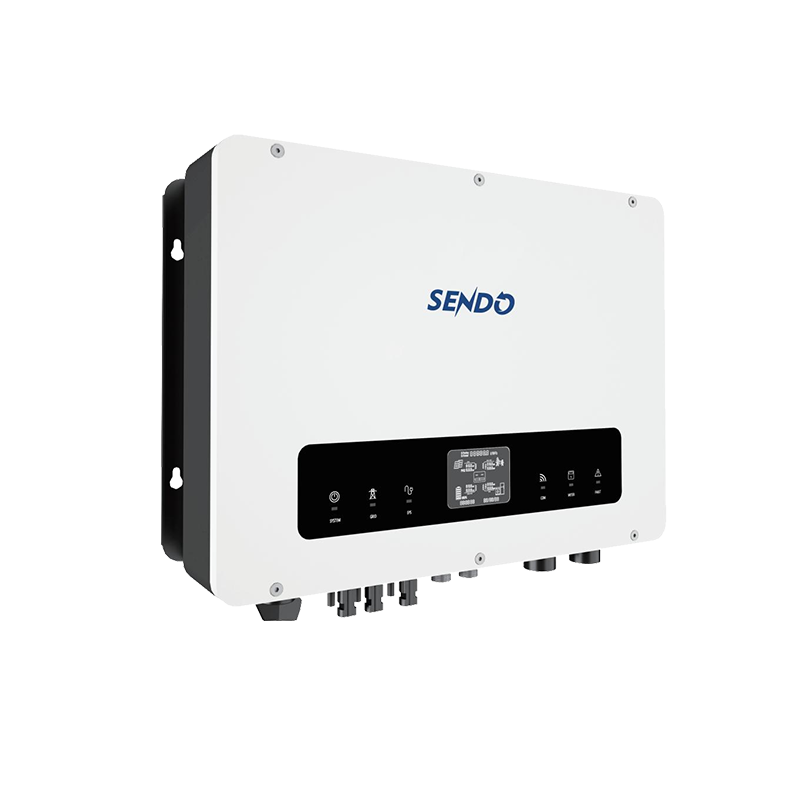 EPH 4-12KTL Three Phase Hybrid InverterThe EPH 4-12KTL Three Phase Hybrid Inverter is a cutting-edge energy management solution designed for both residential and commercial applications. It leverages advanc...View Product →
Inverter vs Generator: Side-by-Side Comparison
The comparison below reflects typical 50–500 kW off-grid and hybrid projects. Treat the ranges as planning figures to test supplier quotes against, not as guaranteed site values.
On many sites the two technologies are not alternatives but layers. A genset sized for peak and winter duty, paired with an inverter and battery that carry the daily base load, keeps the engine running in its efficient 60–80% band whenever it starts, which is exactly where fuel consumption per kWh is lowest.
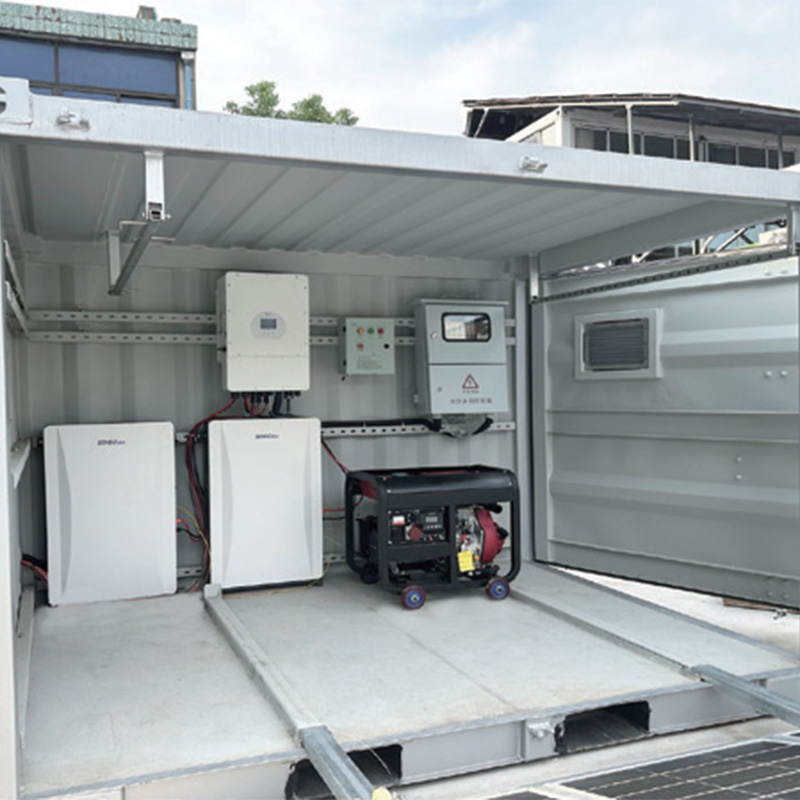 Diesel GeneratorDiesel generator is an important part of the power generation and energy storage cabin. It can be freely selected as a backup power generation.View Product →
The Metric Most Quotes Hide: Part-Load Fuel Burn
Fuel consumption per kWh is not constant. It improves as load rises toward 75–80% of rating and then worsens again as the engine approaches its limit. A site averaging 25% load on a 200 kW set can burn well over half again as much fuel per delivered kWh as the same set running at 75%. The chart below indexes fuel per kWh against a 75% load baseline.
Two more hidden variables matter. First, inverter oversizing: a DC-to-AC ratio of 1.2 to 1.4 raises yield in cloudy conditions but clips output at midday, so the array should be modelled hourly rather than on a monthly average. Second, battery round-trip losses of 8–15%, which quietly add to the cost of every stored kWh. For industrial users with time-of-use tariffs, storage can still pay for itself through peak reduction, as described in this analysis of peak shaving with battery ESS containers.
Where Hybrid Power Systems Are Actually Deployed
Deployment patterns across off-grid projects show where inverter-led systems have displaced diesel entirely and where generators still hold the base. The distribution below reflects the application mix typical of containerised solar and storage suppliers.
- Remote industrial and mining sites — 30%
- Construction and infrastructure works — 22%
- Disaster relief and rescue — 18%
- Agriculture and cold chain — 16%
- Ports and shore power — 14%
Emergency response is the clearest case for inverters. Fuel convoys cannot reach a flooded valley, but a foldable PV container can be airlifted or trucked in and energised the same day, which is why these deployments are usually planned around disaster relief and rescue power solutions rather than gensets. Ports show the opposite logic: shore power needs large, stable three-phase supply with grid synchronisation, so the inverter works alongside the grid rather than replacing an engine.
Sizing Checklist: Five Steps Before You Choose
- Build an hourly load profile for a full day and a full season, not an annual average. Peak demand, motor start-up currents and night-time base load each drive a different part of the design.
- Set autonomy in hours, not days. Two to three days of battery autonomy is standard for critical sites; longer autonomy is usually cheaper to cover with PV overbuild or a small backup genset.
- Price the fuel chain end to end. Add road access, storage bunding, spill plans, security and delivery risk to the diesel price per litre before comparing lifetime cost.
- Check part-load behaviour. If average load sits below 30% of the genset rating, that set is oversized. Either move base load to the inverter or specify a smaller engine.
- Verify local rules. Anti-islanding settings, transfer switching, exhaust stack height, night noise limits and fuel bunding requirements decide what you are allowed to install, not what you would prefer.
Where large three-phase loads must run in parallel with an existing grid, an on-grid unit sized to the site transformer is the usual answer, and the inverter specification should be confirmed against the local grid code before the switchgear is ordered.
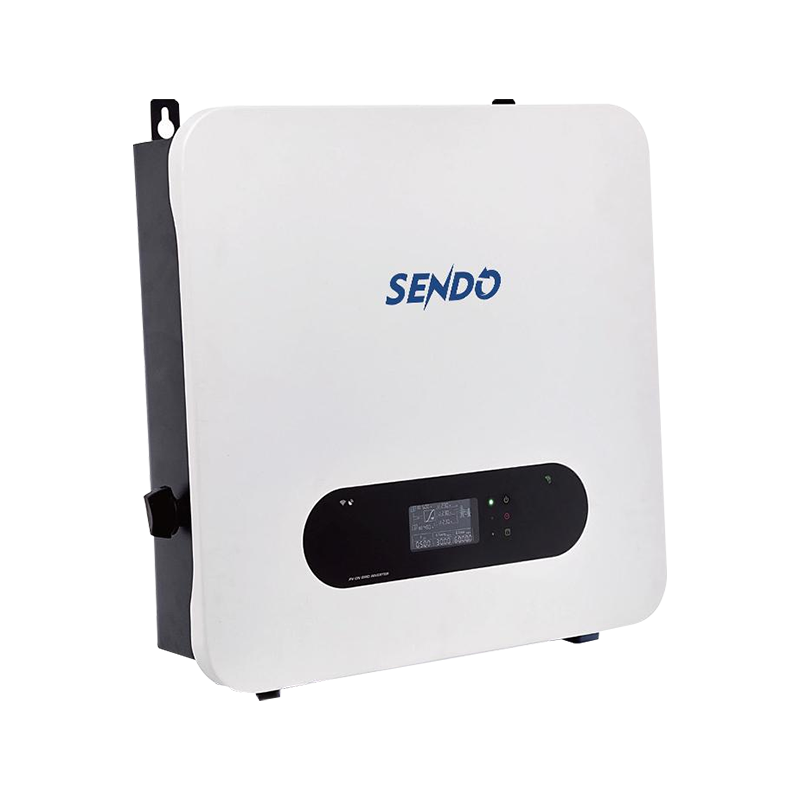 TP4-10KTL/TP10-25KTL Three Phase On Grid InverterThe TP4-10KTL/TP10-25KTL Three Phase On-Grid Inverter is a high-performance, reliable solution for medium to large-scale solar installations. Designed to efficiently c...View Product →
Maintenance, Fuel Storage and Compliance
Generator-side discipline
- Diesel degrades within 6–12 months. Plan fuel polishing, water removal and tank rotation, or the engine will fail exactly when it is needed.
- Exercise every set at 50% load or higher for at least 30 minutes a month to burn off deposits and confirm the cooling system.
- Bundle fuel storage to 110% of tank volume, keep the exhaust clear of air intakes, and confirm the site's noise and emission permits before commissioning.
Inverter and battery-side discipline
- Dust is the main cause of derating. Clean filters and heatsink surfaces on the same schedule as the genset's monthly check.
- Re-torque DC terminals at the first annual service; loose lugs are a common source of nuisance faults and hot spots.
- Keep lithium batteries between roughly 20% and 90% state of charge for daily cycling, and provide fire detection in the battery room.
Hybrid control layer
Commissioning should document five tests: step-load response, black start, dead-bus transfer, minimum genset loading, and failsafe behaviour on loss of communication between the energy management system and the inverters. Without those records, warranty disputes on hybrid sites are difficult to resolve.
The decision rarely comes down to which machine is technically superior. It comes down to load shape, fuel logistics and local regulation. Get those three right and the inverter and the generator stop competing and start covering each other's weaknesses.
