

 en
 English
 中文简体
 عربى

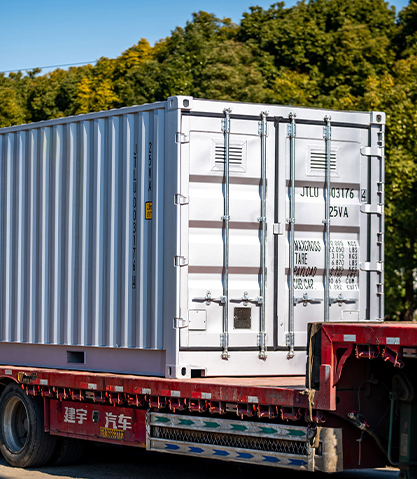
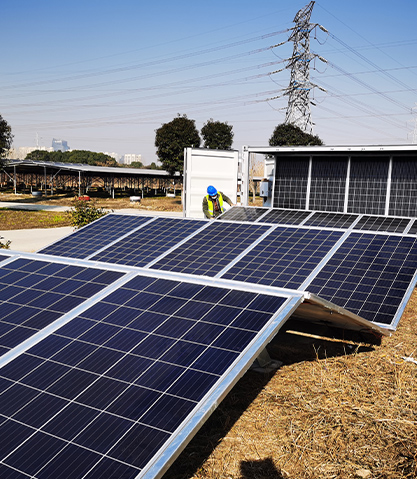
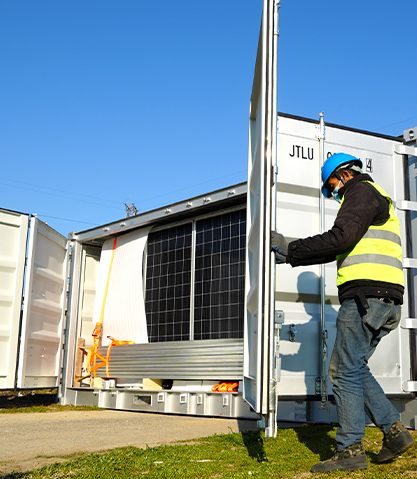
A 2,000 W inverter generator and a 1,800 W portable power station will both keep a refrigerator, a router and a few LED lamps alive through an evening outage. The split shows up around hour nine: the generator is still running on its second tank of petrol, while the power station has already spent its stored 1.5 kWh and is waiting for sunrise or a wall socket.
Most buyers frame this as a fuel-versus-battery argument. In practice it is a load-duration argument: how many watts you need, for how many hours, and in what kind of space. Get those three numbers right and the decision usually makes itself.
- Indoor or overnight use with continuous loads under about 1.5 kW: a portable power station. No exhaust, roughly 45 dB, safe in a bedroom, a van or a clinic.
- Sustained loads above 2 kW, or outages that outlast one battery cycle: an inverter generator, ideally paired with a small station as a buffer.
- Daily loads above 5 kW: neither of the above. That is containerised solar-plus-storage territory, where 20–200 kWh systems are delivered as transportable units.
- One rule that never bends: no fuel generator indoors, in a garage, or under a tarp, whatever the load size.
Content
What Each Machine Is Actually Doing
A portable power station is a lithium battery pack, a battery management system, a pure sine wave inverter and an MPPT charge controller in one enclosure. The number on the box is DC capacity; the inverter converts at roughly 88–92% efficiency, so a 1,024 Wh unit realistically delivers about 900 Wh of AC energy before idle losses. Recharging comes from a wall outlet in one to two hours, a vehicle socket, or 200–800 W of folding solar panels over four to eight hours.
A generator is an engine coupled to an alternator. The inverter type rectifies the raw AC to DC and rebuilds a clean waveform, which keeps total harmonic distortion under about 3% and lets it run laptops and control boards safely; a conventional synchronous unit can sit at 15–25% THD. The trade is mechanical: fuel, oil, filters, and carbon monoxide at the point of use.
The battery path
- LiFePO4 cells rated 3,000–6,000 cycles to 80% state of health.
- Surge capability of roughly twice rated output for a few seconds, enough to start a fridge compressor.
- Zero maintenance beyond charge discipline and occasional firmware checks.
- Output falls as stored energy empties; the last 10% is often reserved by the BMS.
The fuel path
- Petrol or diesel, typically 2–10 kW, refuelled in two minutes.
- Consumption of about 0.5–1.1 L/h at half load, and it does not drop proportionally at light load.
- Oil changes at 50–100 running hours, plus air filters and spark plugs.
- Exhaust, heat and noise at the operating point; CO risk if sited badly.
If the real load is a laptop, a camera kit, a 12 V fridge and a couple of lamps, a compact battery bank does the same job at a fraction of the weight and needs no fuel logistics at all.
 Portable LiFePO4 Battery Bank for Off-Grid PowerCompact LiFePO4 power bank with AC, DC and USB outputs, rechargeable by solar, mains or 12V car; suited to laptop, fridge and camping loads.View Product →
Side-by-Side Data, Including the Rows Buyers Skip
The comparison below is where most purchase mistakes happen. Capacities are quoted in different units (watt-hours versus litres of fuel), so the only fair benchmark is runtime at a defined load.
Hidden Metrics: Where the Nameplate Numbers Drift
Delivered energy is always lower than rated energy. Four factors do most of the damage on the battery side: depth of discharge (many units reserve 10%), inverter efficiency, a standby draw of 8–15 W that quietly eats 200–360 Wh over 24 hours, and cold derating of 10–20% at 0 °C.
Generators have their own hidden curve. Fuel burn is not linear: a 2 kW unit at quarter load may still consume 60% of its half-load rate, so oversized units waste fuel all night. Altitude costs roughly 3% of output per 300 m above 500 m, and carburetted engines lose more. Diesels prefer running above 30–40% load; long idle stretches cause wet stacking and glazed cylinders.
Where Each Option Actually Gets Deployed
Across backup, field and off-grid work, battery-based systems now take the larger share of small-load deployments, while fuel units hold the heavy-duty ground.
Once demand passes a few kilowatts and runs every day, the calculation changes again. A mine camp, a port berth or a clinic that needs 30–80 kWh per day is better served by an integrated solar-plus-storage unit than by a stack of portable boxes or a generator running around the clock. Prefab units also shorten site work considerably, as outlined in this comparison of prefabricated versus custom-built solar installations.
For that tier, a foldable photovoltaic container ships with the array folded into the enclosure, unfolds on site and starts charging the internal battery the same day — no separate racking, no civil works, and it can be relocated when the project moves.
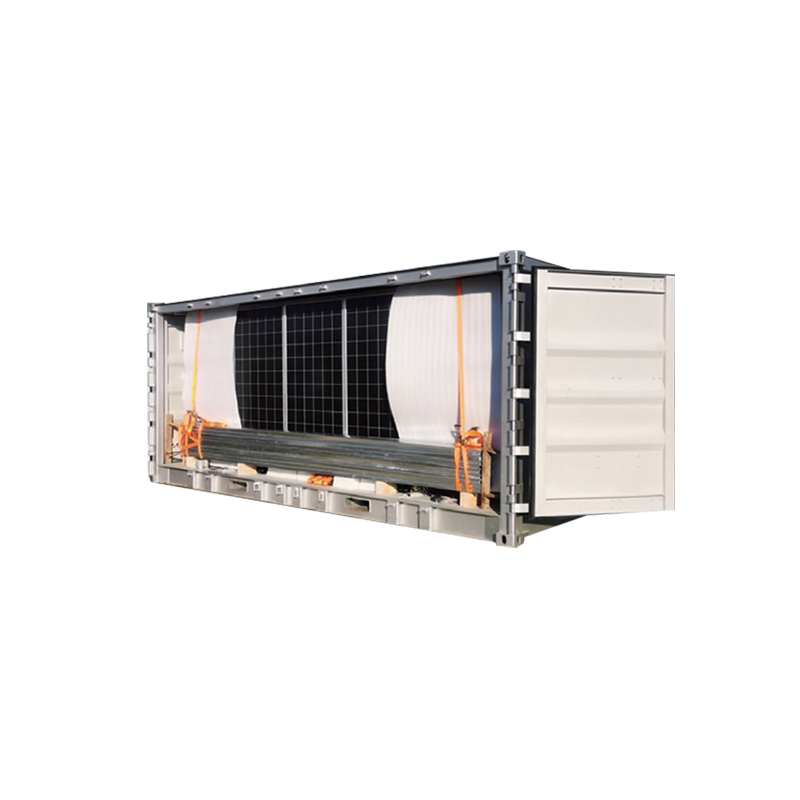 Foldable Solar Power Container for Remote Energy SupplyFoldable photovoltaic container with integrated storage for remote or backup power; unfolds on site and can supply cabins or release stored electricity when needed.View Product →
Cost Over Five Years, and a Working Selection Sequence
Using indicative 2026 pricing: a 1.5 kWh station at roughly USD 900, charged from the grid at USD 0.18/kWh, works out to about USD 0.38 per delivered kWh once capital is spread over 3,000 cycles. A 2 kW inverter generator burning 0.6 L/h at 1.4 kW costs about USD 0.60/kWh in fuel alone, plus USD 0.05–0.10 for oil and filters, plus the noise and siting burden. The generator is not always the cheaper option — it is the one with a longer uninterrupted runtime.
Load audit
List every device in watts and mark which ones start with a motor. A fridge may pull 3–5 times its running watts for two seconds.
Energy audit
Convert to watt-hours per day. This number, not the peak wattage, decides how much battery or fuel you buy.
Recharge path
If sunlight or mains power returns daily, a battery works. If neither exists, fuel logistics decide the design.
Siting and noise
Check local limits — many residential zones cap continuous noise near a property line at 55 dB, which rules out most open-frame units.
A mixed architecture is often the honest answer: a battery carries the base load and the quiet hours, and a fuel unit covers the peaks or the third consecutive cloudy day. Units like the diesel generator listed in our supporting facilities are normally used this way — as a backstop rather than a primary supply.
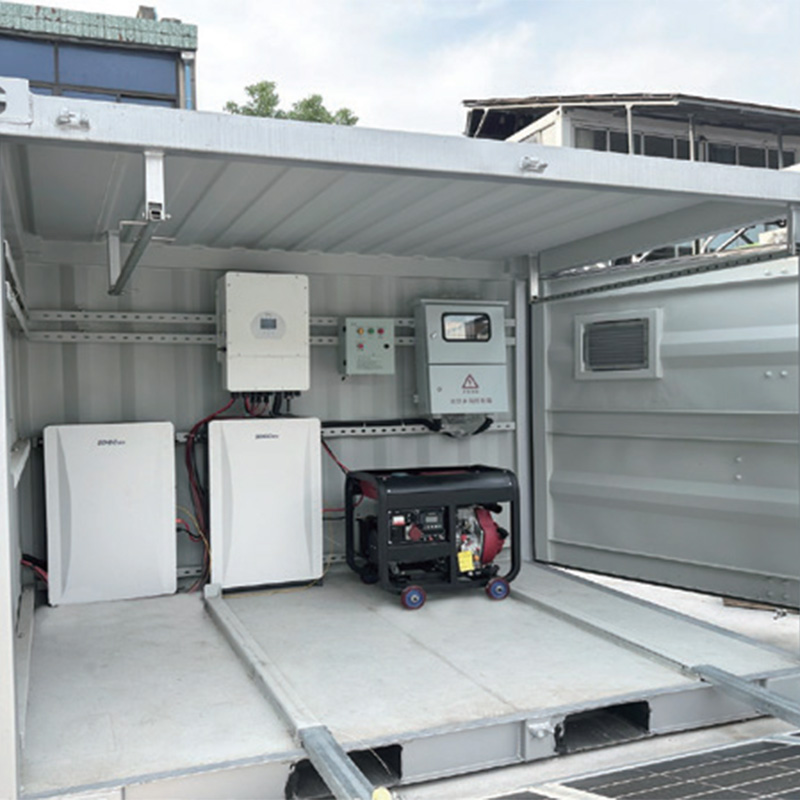 Diesel Generator for Backup Power in Off-Grid SystemsDiesel generator listed as a supporting facility and selectable backup source for power generation and storage cabins; suited as a backstop for mixed off-grid architectures.View Product →
For permanent off-grid sites, the buying logic shifts from appliances to infrastructure. Projects in the self-provided power supply category typically combine PV, storage and a backup source sized together, so that one weak link does not take the whole site down.
Maintenance, Safety and Compliance
- Store lithium packs at 40–60% state of charge between 15 and 25 °C, and top them up every three months. Leaving a pack at 100% in a hot shed is the fastest way to lose capacity.
- Exercise a generator under at least half load once a month; run the carburettor dry before long storage and treat petrol older than six months as a fault waiting to happen.
- Site any fuel unit outdoors, at least 5–6 m from doors, windows and air intakes, with the exhaust pointing away from occupied space. Fit a CO alarm inside regardless.
- Check transport rules before shipping: lithium packs need UN38.3 test summaries and state-of-charge limits by air, while petrol is a Class 3 flammable and is normally drained for freight.
- For containerised systems, confirm earthing, ventilation and emergency shutdown layout against local electrical codes, and keep the commissioning report on site for inspection.
- Keep a written log of cycles, service hours and fuel batches. Two years in, that log is what tells you whether the asset is healthy or quietly degrading.
Buy for the 90% case, not the disaster you imagine. If most of your outages last four to eight hours and happen at night, a portable power station will be quieter, safer and cheaper to run than a generator you have to wheel outside in the rain. If your loads are heavy, continuous, or the grid is simply absent for weeks, fuel capacity and service access matter more than a low noise figure — and above that, an integrated solar-plus-storage unit stops being a compromise and starts being the correct tool.
