

 en
en  English
 中文简体
中文简体 عربى
عربى
Content
- 1 What Are Solar Power Boxes and How Do They Work
- 2 Solar Power Box-OV Series: Design Philosophy and Key Capabilities
- 3 Applications Across Intelligent Energy, Buildings, and Planting Environments
- 4 Comparing Solar Power Box Configurations by Application Scale
- 5
- 6 What to Evaluate When Selecting a Solar Power Boxes Manufacturer
What Are Solar Power Boxes and How Do They Work
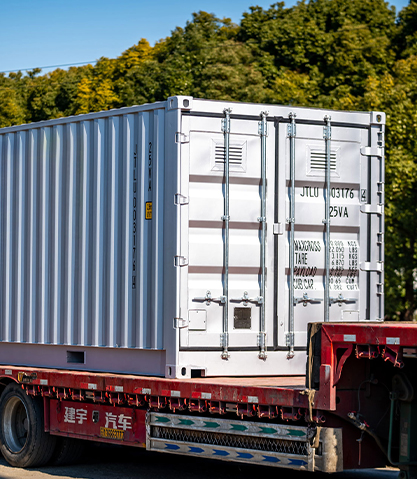
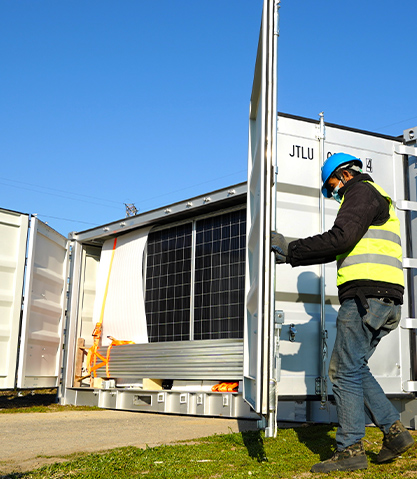
A solar power box is an integrated energy management unit that consolidates the core electrical components of a photovoltaic system into a single, protected enclosure. Rather than sourcing and installing separate inverters, charge controllers, circuit breakers, monitoring modules, and distribution boards from multiple vendors, a solar power box delivers all of these functions in a pre-engineered, factory-tested assembly. This integration reduces installation time, minimizes wiring complexity, and ensures that all internal components are matched and calibrated to work together from the moment the unit is commissioned.
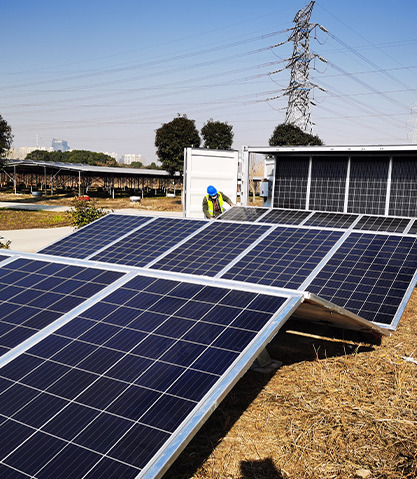
At a functional level, the solar power box receives DC power generated by the photovoltaic array, conditions and converts it to usable AC or regulated DC output, manages battery charging and discharging cycles, protects connected loads from overvoltage and fault conditions, and communicates operational data to monitoring platforms via wired or wireless interfaces. Advanced units incorporate maximum power point tracking (MPPT) algorithms that continuously adjust the operating point of the solar array to extract the maximum available energy under varying irradiance and temperature conditions — a critical capability for maximizing annual energy yield across real-world weather cycles.
Solar Power Box-OV Series: Design Philosophy and Key Capabilities
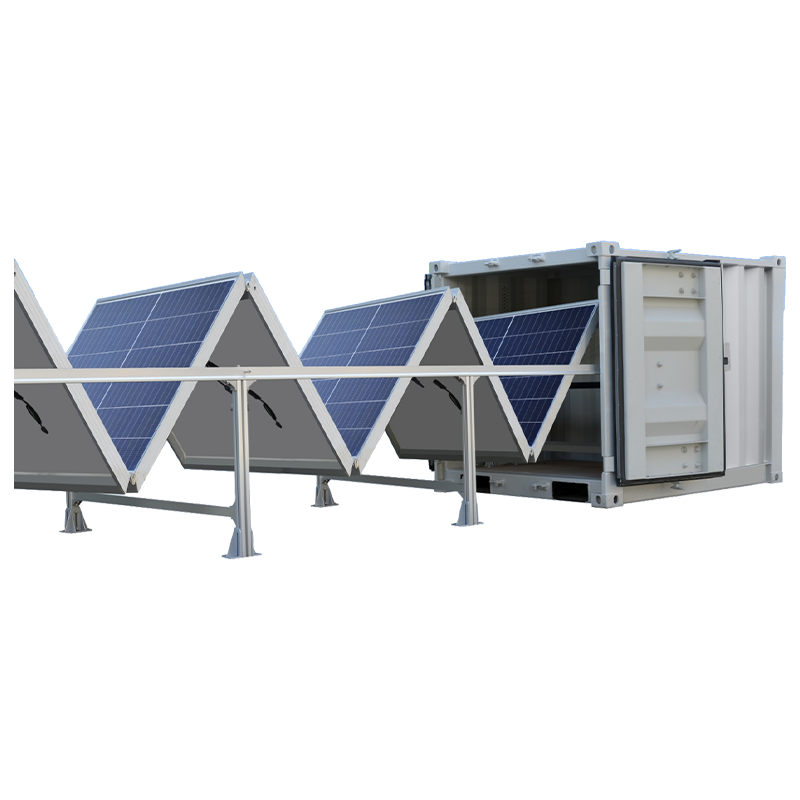
The Solar Power Box-OV series represents a purpose-engineered product line developed to address the specific demands of intelligent energy applications across residential, commercial, and agricultural environments. The OV designation reflects the series' focus on optimized voltage architecture — a design approach that aligns the internal power conversion stages with the operating voltage ranges of modern high-efficiency solar modules, including those with open-circuit voltages exceeding 48V DC in string configurations.
Where many generic solar power boxes are designed around a single application profile, the Solar Power Box-OV series is engineered for lifecycle versatility. The internal architecture supports multi-mode operation — grid-tied, off-grid, and hybrid — allowing the same hardware platform to be configured for urban rooftop systems connected to the utility grid, rural off-grid installations where grid access is unavailable, and hybrid deployments that combine grid connection with battery backup for energy resilience. This configurability extends the useful life of the investment and reduces the need for hardware replacement when energy requirements or grid conditions change.
Core Technical Features of the OV Series
- Multi-string MPPT inputs: Independent MPPT channels allow arrays with different orientations, tilt angles, or partial shading profiles to be connected without mutual performance degradation
- Wide battery chemistry compatibility: Supports lead-acid, lithium iron phosphate (LFP), and lithium ternary chemistries with chemistry-specific charge profiles configurable via the control interface
- Intelligent load management: Programmable output priority settings allow users to define whether solar, battery, or grid power is used first, optimizing for self-consumption, cost savings, or backup reserve depending on the application
- Remote monitoring and firmware updates: Cloud-connected operation with real-time data logging, fault alerting, and over-the-air firmware update capability for long-term system optimization without on-site service visits
- IP65 or higher enclosure rating: Sealed against dust ingress and water jets, enabling direct outdoor installation in exposed locations without additional protective housing
Applications Across Intelligent Energy, Buildings, and Planting Environments
The practical deployment range of solar power boxes extends well beyond simple household energy generation. As a manufacturer integrating independent research and development, production, sales, and service, the goal is to provide global users with comprehensive solutions across three distinct intelligent application domains: intelligent energy management, intelligent buildings, and intelligent planting. Each domain has specific power quality, reliability, and monitoring requirements that influence how solar power boxes are specified and configured.
Intelligent Energy Management
In intelligent energy applications — including microgrids, distributed generation projects, and community energy storage systems — solar power boxes serve as the interface between generation assets, storage systems, and consumption loads. The ability to communicate with energy management systems (EMS) via Modbus, CAN bus, or RS485 protocols allows the solar power box to participate in demand response programs, peak shaving strategies, and time-of-use optimization routines that significantly reduce grid electricity costs for commercial and industrial users. For projects targeting whole-lifecycle intelligent energy solutions, the box's data logging capabilities provide the operational history needed for performance analysis, warranty claims, and financial reporting.
Intelligent Buildings
Modern intelligent buildings integrate solar generation with building automation systems (BAS) to coordinate energy flows across HVAC, lighting, elevator, and EV charging subsystems. Solar power boxes in this context must meet stringent power quality standards — low total harmonic distortion (THD), fast transient response, and seamless transfer between grid and battery modes — to ensure that sensitive building systems operate without interruption. The Solar Power Box-OV series is designed to support seamless switchover times under 20 milliseconds, meeting the requirements of most commercial building loads and ensuring continuity for security, access control, and communications infrastructure during grid disturbances.
Intelligent Planting and Agricultural Energy
Agricultural and greenhouse applications place unique demands on solar power systems. Irrigation pumps, climate control systems, grow lighting arrays, and automated planting machinery impose variable, often high-surge loads that require robust inverter designs with strong overload tolerance. Solar power boxes deployed in intelligent planting environments must also withstand high ambient temperatures, humidity, and airborne particulates from soil and fertilizer operations. The sealed enclosure design and wide operating temperature range of the OV series — typically rated from -25°C to +60°C — makes it suitable for deployment in polytunnel greenhouses, open-field solar irrigation stations, and vertical farming facilities alike.
Comparing Solar Power Box Configurations by Application Scale
Solar power boxes are available across a wide power range, and selecting the correct capacity requires matching the unit's output rating to the peak demand, daily energy consumption, and array size of the specific installation. The following table provides a practical reference for aligning solar power box specifications to common deployment scenarios:
| Application Scale | Typical Output Range | Battery Integration | Monitoring Level |
|---|---|---|---|
| Residential (off-grid) | 1–5 kW | Required | App-based remote |
| Residential (hybrid) | 3–10 kW | Optional | Cloud dashboard |
| Commercial building | 10–100 kW | Recommended | BMS/EMS integration |
| Agricultural / planting | 5–50 kW | Site-dependent | SCADA or cloud |
| Industrial microgrid | 100 kW+ | Required | Full EMS with API |
What to Evaluate When Selecting a Solar Power Boxes Manufacturer
The quality and reliability of a solar power box is only as strong as the manufacturing process behind it. For buyers sourcing from a solar power boxes factory — whether for a single project or ongoing supply at volume — the following evaluation criteria distinguish manufacturers capable of supporting long-term project success from those offering price-competitive but under-engineered products.
- Independent R&D capability: Manufacturers with in-house research and development teams can respond to application-specific customization requests, update firmware to address field issues, and develop next-generation features without dependence on third-party component suppliers for design decisions
- Vertical integration of production: Factories that control PCB fabrication, enclosure manufacturing, component assembly, and final testing in-house maintain tighter quality control and shorter lead times than those relying heavily on subcontractors
- Certification and compliance portfolio: Verify that products carry relevant certifications for target markets — CE and IEC 62109 for Europe, UL 1741 for North America, and AS/NZS 4777 for Australia — as these validate safety and grid compatibility through independent third-party testing
- After-sales service infrastructure: A manufacturer offering only sales without structured after-sales support — warranty processing, spare parts availability, technical helpdesk, and on-site service capability — transfers unacceptable operational risk to the buyer for systems with 10–25 year design lifespans
- Whole lifecycle solution commitment: The most valuable supplier relationships extend beyond the point of sale to include system design support, commissioning guidance, performance monitoring tools, and end-of-life component recycling programs that align with sustainability commitments
Selecting the right solar power boxes manufacturer is ultimately a decision about the entire lifecycle of your energy infrastructure — not just the initial purchase price. Manufacturers who integrate R&D, production, sales, and service under one roof, and who back their products with structured support programs, deliver measurably better outcomes over the full operating life of the systems they supply. For projects targeting intelligent energy, intelligent building, or intelligent planting applications, this integrated approach is the foundation on which reliable, high-performing solar power solutions are built.
