

 en
en  English
 中文简体
中文简体 عربى
عربى
Content
- 1 What is a Solar Power Container
- 2 Core Components and System Architecture
- 3 Common Applications and Use Cases
- 4 Sizing and Capacity Considerations
- 5 Installation and Deployment Process
- 6 Cost Analysis and Economic Considerations
- 7 Advantages Over Traditional Solutions
- 8 Limitations and Challenges
- 9 Integration with Existing Power Systems
- 10 Future Trends and Technology Evolution
What is a Solar Power Container
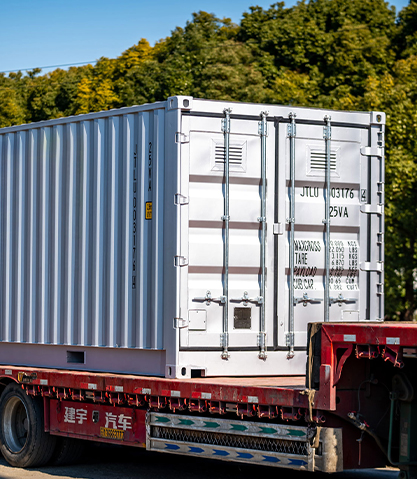
A solar power container is a self-contained, portable energy generation system housed within a standardized shipping container or custom enclosure. These turnkey solutions integrate solar panels, inverters, batteries, charge controllers, and monitoring systems into a single transportable unit that can be deployed rapidly to provide electricity in diverse locations. The containerized design protects sensitive electrical components from environmental conditions while offering a plug-and-play power solution that requires minimal on-site installation compared to traditional solar installations. Solar power containers typically range from 10-foot to 40-foot standard shipping container sizes, with power generation capacities from 10 kW to over 500 kW depending on configuration and application requirements.
The modular architecture of solar power containers makes them exceptionally versatile for applications including remote site electrification, disaster relief, military operations, construction sites, telecommunications infrastructure, agricultural operations, and temporary event power. Unlike conventional solar installations that require extensive planning, permitting, and construction timelines spanning months, containerized systems can be manufactured off-site in controlled factory environments and deployed within days or weeks. This portability enables relocation as project needs change, recovery of capital investment when sites close, and rapid scaling by adding multiple containers in parallel. The self-contained design also simplifies maintenance, as technicians can service standardized components with familiar layouts across multiple installations.
Core Components and System Architecture
Understanding the integrated components within a solar power container is essential for evaluating system capabilities, performance characteristics, and suitability for specific applications. Each subsystem plays a critical role in capturing solar energy, converting it to usable electricity, storing excess power, and managing distribution to connected loads. The quality, sizing, and integration of these components directly determine the system's reliability, efficiency, and operational lifespan.
Solar Panel Arrays
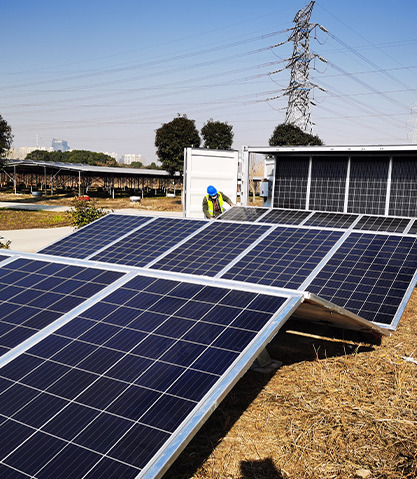
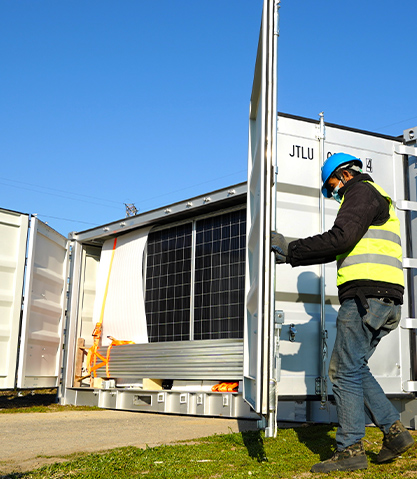
Solar panels mounted on the container roof, fold-out extensions, or separate ground-mounted arrays convert sunlight into direct current electricity. Container systems typically employ monocrystalline or polycrystalline photovoltaic panels with efficiencies ranging from 18% to 22%, with higher-efficiency monocrystalline panels preferred for space-constrained installations. Panel mounting configurations vary significantly based on container design, with roof-mounted installations maximizing portability while ground-mounted or deployable arrays increase generation capacity. Some advanced designs feature hydraulically-actuated fold-out panel wings that expand the solar collection area by 3-5 times the container footprint when deployed, then fold compactly for transport. Solar tracking systems, either single-axis or dual-axis, can increase energy capture by 20-35% compared to fixed installations by following the sun's movement throughout the day, though they add mechanical complexity and maintenance requirements. Panel specifications, total array wattage, and deployment mechanisms fundamentally determine the maximum power generation capacity of the containerized system.
Battery Energy Storage Systems
Battery banks store excess solar generation for use during nighttime hours, cloudy conditions, or peak demand periods, with storage capacity typically measured in kilowatt-hours. Lithium-ion battery technologies dominate modern solar containers due to superior energy density, cycle life exceeding 3,000-6,000 cycles, faster charging capabilities, and reduced maintenance compared to traditional lead-acid batteries. Lithium iron phosphate (LiFePO4) chemistry is particularly popular for stationary storage applications due to enhanced safety characteristics, thermal stability, and 10-15 year operational lifespans. Battery capacity sizing depends on the intended application, with systems designed for continuous 24-hour operation requiring 4-6 times the daily load in storage capacity, while grid-connected or daytime-only applications may employ minimal or no storage. Sophisticated battery management systems monitor individual cell voltages, temperatures, and state of charge to optimize performance, prevent damage from overcharging or deep discharge, and balance cells for maximum longevity. Thermal management through HVAC systems maintains battery temperatures within optimal ranges of 15-25°C to preserve capacity and extend service life.
Power Conversion and Conditioning
Inverters convert direct current from solar panels and batteries into alternating current suitable for standard electrical equipment, with sizing typically 20-30% above peak load requirements to handle surge currents and future expansion. Modern solar containers employ hybrid or multi-mode inverters that can operate in grid-tied, off-grid, or hybrid modes, seamlessly switching between solar power, battery power, grid power, or backup generator input as conditions require. Pure sine wave output is essential for sensitive electronics and motors, with total harmonic distortion below 3% meeting utility-grade power quality standards. Maximum power point tracking (MPPT) charge controllers optimize solar panel output by continuously adjusting voltage and current to extract maximum available power under varying irradiance and temperature conditions, improving energy harvest by 15-30% compared to basic PWM controllers. Power conditioning equipment also includes surge protection, ground fault detection, arc fault protection, and isolation transformers to ensure electrical safety and protect connected equipment from damage.
Monitoring and Control Systems
Advanced monitoring systems provide real-time visibility into system performance, energy production, consumption patterns, and equipment status through local displays and remote connectivity. Modern containers incorporate programmable logic controllers or dedicated energy management systems that automate load prioritization, generator start/stop sequences, grid import/export management, and battery charging strategies based on configurable parameters and time-of-use schedules. Remote monitoring via cellular, satellite, or internet connectivity enables operators to track performance metrics, receive fault notifications, adjust operating parameters, and diagnose issues without site visits. Data logging capabilities record historical performance for analysis of energy patterns, system efficiency, and compliance reporting. Some advanced systems incorporate weather forecasting integration to optimize battery charging and load management based on predicted solar availability. User interfaces range from simple LED indicators to full-color touchscreens with intuitive graphics showing system topology, real-time power flows, and operating status of all major components.
Common Applications and Use Cases
Solar power containers serve diverse applications across industries and scenarios where conventional grid power is unavailable, unreliable, cost-prohibitive, or where mobility and rapid deployment provide strategic advantages. Understanding typical use cases helps identify opportunities where containerized solar solutions offer compelling benefits compared to diesel generators, grid extensions, or traditional fixed solar installations.
- Remote site electrification for mining operations, oil and gas exploration, research stations, and remote communities provides reliable power where grid connections are impossible or prohibitively expensive. Solar containers eliminate the logistics, fuel costs, and maintenance requirements of diesel generators while reducing noise and emissions in sensitive environments. These installations typically incorporate substantial battery storage for 24-hour operation and may include backup generator integration for extended low-sun periods. System sizes range from 50 kW for small outposts to multi-megawatt installations using multiple containers for mining camps or industrial facilities.
- Disaster relief and emergency response deployments provide critical power infrastructure following hurricanes, earthquakes, floods, or other events that damage electrical grids. The rapid deployment capability, typically 24-48 hours from arrival to operation, makes containerized solar ideal for establishing communications hubs, medical facilities, water treatment systems, and emergency shelters. Military and humanitarian organizations maintain pre-configured containers ready for immediate deployment to crisis zones. Ruggedized designs withstand harsh conditions and rough transport, while autonomous operation minimizes personnel requirements in chaotic post-disaster environments.
- Telecommunications infrastructure including cell towers, microwave relay stations, and fiber optic network nodes increasingly employ solar containers to reduce operating costs and improve reliability in areas with unstable grid power. Telecom-specific configurations prioritize high reliability with redundant components, robust battery backup for multi-day autonomy, and remote monitoring capabilities. The transition from diesel generators to solar-battery systems eliminates fuel delivery logistics, reduces site visits for maintenance, and cuts operational expenses by 40-70% over system lifetime. Modular designs allow capacity increases as network traffic grows without complete system replacement.
- Construction site power for remote projects, temporary facilities, or areas without grid access provides clean, quiet electricity for tools, lighting, trailers, and equipment charging. Solar containers eliminate diesel generator noise that violates local ordinances or disturbs nearby residents, reduce fuel theft and spill risks, and demonstrate environmental responsibility that enhances project reputation. Construction companies increasingly adopt solar containers as reusable assets deployed across multiple projects, recovering capital costs through eliminated fuel expenses and generator rentals over 3-5 years.
- Agricultural applications including irrigation pumping, cold storage, processing facilities, and greenhouse operations benefit from containerized solar systems that reduce energy costs and improve sustainability credentials for organic or eco-certified operations. Solar-powered irrigation systems eliminate diesel costs while enabling water pumping during peak sunlight hours when plant water demands are highest. The mobility of containerized systems allows relocation between seasonal fields or redeployment as farm operations evolve, protecting the investment compared to permanent infrastructure.
- Event power for festivals, outdoor venues, film productions, and temporary installations provides clean, silent electricity that enhances attendee experience without generator noise and fumes. Event organizers increasingly face pressure to reduce carbon footprints and demonstrate sustainability commitments, making solar containers attractive alternatives to diesel generation. Scalable configurations handle loads from small events requiring 20-30 kW to major festivals deploying multiple containers for hundreds of kilowatts capacity. The professional appearance of modern solar containers aligns with high-end event aesthetics better than industrial generators.
Sizing and Capacity Considerations
Properly sizing a solar power container requires careful analysis of energy requirements, usage patterns, geographic location, and operational constraints. Undersized systems fail to meet load demands or require excessive backup generation, while oversized systems waste capital on unused capacity. A systematic sizing approach balances initial investment against performance requirements and future flexibility.
Load Assessment and Energy Consumption
The foundation of proper sizing is comprehensive load assessment documenting all electrical equipment, power requirements, operating schedules, and usage patterns. Critical loads requiring continuous power receive priority in sizing calculations, while non-critical or deferrable loads may be scheduled during peak solar production or shed during low battery conditions. Detailed load profiles should account for startup surge currents that can be 3-7 times running power for motors and compressors, requiring inverter capacity margins beyond steady-state loads. Daily energy consumption measured in kilowatt-hours determines minimum solar array and battery capacity, with typical calculations adding 25-40% margin for system losses, component inefficiencies, and suboptimal weather conditions. Seasonal variations in load profiles, such as heating in winter or cooling in summer, must be considered in climates with significant seasonal changes. Load growth projections for 3-5 years inform whether to size for current needs with expansion capacity or implement full anticipated capacity from initial installation.
Solar Resource Evaluation
Geographic location dramatically affects solar system performance, with available solar irradiance varying from 3-4 peak sun hours daily in northern latitudes to 6-7 hours in optimal equatorial locations. Accurate solar resource data from sources like the National Renewable Energy Laboratory's NSRDB database or NASA POWER provides monthly average insolation values for specific locations. Designers must account for worst-case scenarios, typically sizing for lowest solar availability months unless seasonal load variations offset reduced generation or backup generation supplements winter production. Shading analysis identifies obstructions including trees, buildings, terrain, or temporary structures that reduce available sunlight, with even partial shading severely degrading panel output. Tilt angles and orientation optimization maximizes annual energy production, with fixed installations typically oriented toward the equator at angles approximating site latitude, while tracking systems automatically optimize positioning. Soiling losses from dust, pollen, or snow accumulation reduce output by 2-8% depending on location and cleaning frequency, requiring periodic maintenance consideration in sizing calculations.
Battery Storage Capacity
Battery capacity sizing depends on required autonomy days, depth of discharge limits, and operating temperature ranges. Autonomy days represent how long the system must operate on stored energy without solar charging, typically ranging from 1-3 days for grid-connected or generator-backed systems to 5-7 days for critical off-grid installations. Lithium-ion batteries safely discharge to 80-90% depth of discharge, while lead-acid batteries are typically limited to 50% to preserve cycle life, directly affecting required capacity. Temperature derating factors account for reduced capacity and performance in extreme cold or heat, with lithium batteries losing 10-20% capacity below 0°C and lead-acid suffering even greater degradation. The relationship between solar array size and battery capacity should be balanced, with sufficient solar capacity to fully recharge batteries during available sunlight hours while meeting simultaneous loads. Oversized battery banks relative to solar capacity never reach full charge, degrading battery health, while undersized batteries cannot store excess solar production, wasting generation potential.
Installation and Deployment Process
The installation and commissioning process for solar power containers is significantly streamlined compared to conventional solar installations, though proper site preparation, positioning, and setup procedures remain critical for optimal performance and safety. Understanding deployment requirements enables realistic project planning and ensures systems achieve rated performance from the outset.
Site Preparation Requirements
Site preparation begins with selecting a location offering maximum solar exposure, structural stability, and proximity to electrical loads. Ground-mounted containers require level, compacted surfaces capable of supporting concentrated loads of 25,000-40,000 pounds for standard 20-40 foot containers plus equipment weight. Concrete pads, compacted gravel, or engineered foundation systems prevent settling and maintain proper drainage, with pad dimensions extending 1-2 feet beyond container perimeter. Sites should be evaluated for flood risk, drainage patterns, and seasonal water accumulation that could undermine foundations or damage equipment. Access routes must accommodate container delivery via truck or crane, with overhead clearances, turn radii, and ground bearing capacity verified for transport equipment. Perimeter security fencing, lighting, and monitoring systems deter theft and vandalism in remote or high-risk locations. Environmental factors including wind loads, snow loads, seismic activity, and corrosive atmospheres inform structural anchoring and protective coating requirements. Utility interconnection points for grid-tied systems require coordination with local utilities for metering, disconnect requirements, and connection details.
Physical Installation and Setup
Container delivery and positioning typically utilizes flatbed trucks with crane offloading or specialized container transport vehicles with self-unloading capability. Precise positioning ensures solar panel orientation toward optimal azimuth, adequate clearance for fold-out panels or access doors, and convenient cable routing to load panels or grid connections. Structural anchoring prevents container displacement from wind loads or seismic activity, with methods ranging from simple anchor pins for temporary installations to engineered foundation connections for permanent deployments. Containers with fold-out solar arrays require hydraulic system activation, panel deployment, and locking mechanisms engagement following manufacturer procedures. External solar arrays or tracking systems require separate mounting structure assembly and electrical interconnection to the container's charge controller inputs. Grounding systems establish proper electrical safety through ground rods, bonding all metal enclosures, and verifying ground resistance below code requirements of typically 25 ohms. Battery systems require proper ventilation activation, particularly for lead-acid installations that generate hydrogen gas during charging, while lithium systems need thermal management system commissioning.
Commissioning and System Activation
System commissioning verifies all components function correctly and safely before energizing connected loads. Initial inspections confirm proper battery connections, inverter wiring, panel connections, and circuit protection devices are correctly installed. Voltage measurements at each system point verify design voltages and identify any wiring errors or component failures before full power operation. Inverter programming configures battery charging parameters, voltage setpoints, grid interconnection settings if applicable, and monitoring system communications. Load testing gradually introduces connected equipment to verify proper operation under various power conditions while monitoring voltage stability, frequency regulation, and thermal performance. Solar array testing under actual sun conditions confirms expected power output, proper MPPT operation, and absence of shading or connection issues. Battery testing verifies proper charging operation, state of charge accuracy, and thermal management effectiveness. Remote monitoring system validation ensures data transmission, alarm notification, and remote control functions operate reliably. Final documentation including system diagrams, equipment specifications, operating procedures, maintenance schedules, and contact information for technical support provides operators with resources for ongoing system management.
Cost Analysis and Economic Considerations
Understanding the complete economic picture of solar power containers requires examining upfront capital costs, ongoing operational expenses, potential revenue or savings, and comparing alternatives over the expected system lifetime. While containerized solar systems typically require higher initial investment than diesel generators, the total cost of ownership often proves favorable over multi-year operational periods.
| System Size | Solar Capacity | Battery Storage | Estimated Cost | Typical Applications |
| Small | 10-25 kW | 30-80 kWh | $40,000-$80,000 | Small telecom sites, Remote offices, Residential backup |
| Medium | 50-100 kW | 150-300 kWh | $120,000-$250,000 | Construction sites, Agricultural operations, Small communities |
| Large | 150-250 kW | 400-800 kWh | $300,000-$600,000 | Mining camps, Large events, Industrial facilities |
| Extra Large | 300-500+ kW | 1-2+ MWh | $700,000-$1,500,000+ | Microgrids, Military bases, Island communities |
Capital Costs and Financing Options
Initial capital costs for solar power containers range from $2,000-$4,000 per installed kilowatt depending on system size, component quality, battery capacity ratio, and customization requirements. Larger systems benefit from economies of scale with lower per-watt costs, while highly customized or ruggedized designs command premium pricing. Battery storage represents 30-50% of total system cost, with lithium-ion pricing of $300-$600 per kWh installed depending on battery chemistry and system integration complexity. Solar panel costs have declined dramatically to $0.30-$0.50 per watt for modules alone, though mounting hardware, wiring, and integration add substantial cost. Inverters and power electronics contribute $0.20-$0.40 per watt, while the container structure, HVAC systems, and monitoring equipment add fixed costs of $15,000-$40,000 regardless of capacity. Financing options include direct purchase, equipment leasing, power purchase agreements where third parties own and maintain systems while selling electricity to users, and project financing for large installations. Federal investment tax credits providing 30% of system costs, accelerated depreciation, and state-level incentives significantly improve project economics where available.
Operating Costs and Maintenance
Operational expenses for solar containers are dramatically lower than diesel generation, typically totaling $0.01-$0.03 per kWh produced compared to $0.30-$0.50 per kWh for diesel power including fuel, maintenance, and equipment depreciation. Solar systems require minimal maintenance beyond periodic panel cleaning, electrical connection inspection, battery monitoring, and occasional component replacement. Annual maintenance costs typically run 1-2% of initial system cost, or $800-$3,000 for most installations. Panel cleaning frequency depends on local conditions, ranging from monthly in dusty environments to twice yearly in clean locations, with costs of $100-$500 per cleaning for professional service. Battery replacement represents the largest long-term expense, with lithium-ion batteries requiring replacement after 10-15 years at costs of 30-50% of initial battery investment. Inverter replacement typically occurs after 10-12 years at costs of $5,000-$15,000 depending on system size. Remote monitoring and cellular connectivity fees run $200-$600 annually. Insurance costs vary based on system value and location, typically 0.25-0.5% of system value annually. These modest operating costs enable substantial savings compared to generator operation, with payback periods of 3-7 years common for diesel replacement applications.
Return on Investment Calculations
ROI analysis compares the total lifecycle costs of solar containers against alternatives including grid power, diesel generation, or traditional solar installations. For diesel replacement applications, annual savings equal avoided fuel costs plus reduced maintenance expenses minus solar system operating costs, typically yielding $20,000-$100,000 in annual savings for medium to large systems. Simple payback periods of 4-6 years are common when replacing diesel generation in remote locations with fuel costs exceeding $2.50 per gallon delivered. Internal rate of return calculations accounting for tax benefits, incentives, and system residual value often exceed 15-20% for well-designed systems. Grid-connected applications benefit from demand charge reduction, time-of-use arbitrage, and utility incentive programs, with economics heavily dependent on local electricity rates and program structures. The mobility and reusability of containerized systems provide additional value compared to permanent installations, as systems can be relocated to new projects or redeployed after initial sites close, protecting capital investment. Resale values for well-maintained systems remain substantial, with 5-year-old containers retaining 50-60% of original value in active secondary markets.
Advantages Over Traditional Solutions
Solar power containers offer numerous advantages compared to diesel generators, grid extensions, and conventional solar installations in specific contexts. Understanding these benefits helps identify applications where containerized solar provides optimal value and performance characteristics.
- Rapid deployment capability enables project timelines measured in days or weeks rather than months required for conventional solar installations or grid extensions. Pre-engineered, factory-built systems arrive on-site substantially complete, requiring only positioning, electrical connections, and commissioning. This speed-to-power provides critical advantages for disaster response, temporary projects, and situations where time constraints make traditional approaches impractical. The ability to establish power infrastructure quickly can be project-enabling for remote developments where extended construction timelines are unacceptable.
- Mobility and relocatability protect capital investment by allowing system redeployment as project needs change. Construction companies deploy containers across multiple temporary sites, mining operations relocate systems to new extraction areas, and event companies move containers between venues, recovering full system value through extended utilization. This flexibility contrasts sharply with permanent infrastructure that becomes stranded assets when sites close or projects complete. The option to sell or lease used systems creates active secondary markets that further enhance financial flexibility.
- Predictable operating costs eliminate the volatility of diesel fuel prices that can swing from $2 to over $5 per gallon, creating budget uncertainty and exposing operations to commodity market fluctuations. Solar energy costs are fixed at the time of system installation, providing stable electricity costs for 20-25 year system lifetimes. This predictability enables accurate long-term financial planning and protects against fuel price spikes that can severely impact operational budgets for remote sites.
- Eliminated fuel logistics remove the complexity, cost, and risk of transporting diesel to remote sites. Fuel delivery to isolated locations can cost $5-$15 per gallon delivered when accounting for transport, storage, and handling. Theft risks, spillage environmental liability, and storage requirements add further complications and expenses. Solar containers eliminate these issues entirely, operating autonomously without consumable inputs beyond sunlight. The reduction in site traffic, noise, and activity benefits operations in sensitive environments or areas with restricted access.
- Environmental benefits including zero direct emissions, no noise pollution, and eliminated spill risks enhance corporate sustainability credentials and enable operations in environmentally sensitive areas where diesel generators face restrictions. Organizations increasingly face pressure from stakeholders, regulators, and customers to reduce carbon footprints and demonstrate environmental responsibility. Solar containers provide tangible evidence of sustainability commitment while delivering practical emission reductions. The silent operation of solar-battery systems contrasts dramatically with diesel generator noise that disturbs workers, wildlife, and nearby communities.
- Reduced maintenance requirements free personnel from routine generator servicing including oil changes, filter replacements, coolant maintenance, and mechanical repairs. Remote sites often lack qualified technicians, making generator maintenance challenging and expensive. Solar systems require primarily electrical expertise for occasional troubleshooting rather than ongoing mechanical maintenance. The reduced site visits and maintenance downtime improves operational continuity and reduces labor costs, particularly valuable for unmanned or remotely managed facilities.
Limitations and Challenges
Despite numerous advantages, solar power containers face limitations and challenges that must be carefully evaluated against application requirements. Understanding these constraints helps set realistic expectations and identify situations where alternative solutions may be more appropriate.
Weather Dependency and Seasonal Variation
Solar generation depends entirely on sunlight availability, creating performance variability from weather conditions and seasonal cycles. Cloudy or stormy weather reduces output by 50-90% compared to clear-sky conditions, potentially requiring days of battery autonomy or backup generation for reliable power. Winter months at high latitudes may provide only 3-4 hours of effective solar generation daily compared to 7-8 hours in summer, necessitating larger solar arrays or acceptance of seasonal generator supplementation. Extended overcast periods lasting several days can exhaust battery reserves, causing system outages if no backup exists. Applications requiring absolute power reliability in all weather conditions must integrate backup generators or grid connections, adding cost and complexity. Sites should be evaluated for worst-case solar availability scenarios rather than average conditions to ensure adequate power supply during challenging periods.
Higher Initial Capital Investment
Solar containers require substantially higher upfront investment compared to diesel generators, with $100,000-$300,000 typical costs for systems replacing $30,000-$60,000 generators. Organizations with limited capital or short-term projects may find initial costs prohibitive despite favorable long-term economics. The payback period of 4-7 years means solar systems primarily benefit projects with multi-year operational horizons, making them less attractive for 1-2 year temporary applications. Financing options help address capital barriers but add interest costs and require creditworthiness. Small organizations or projects may struggle to secure financing for solar investments. Budget cycles and approval processes for large capital expenditures can delay solar implementation compared to purchasing or renting generators from operating budgets.
Space and Weight Requirements
Solar containers require significant space for the container itself plus solar panel deployment area, with fold-out systems needing clearance of 20-40 feet beyond container edges. Ground-mounted separate arrays multiply space requirements by 3-5 times the container footprint. Congested sites or areas with limited available land may not accommodate solar system spatial needs. The substantial weight of loaded containers, ranging from 25,000-40,000 pounds, requires solid foundations and limits placement options on weak soils, rooftops, or structures. Transport logistics for oversized loads can be complex in areas with bridge weight limits, narrow roads, or overhead clearances, potentially requiring specialized permits and transportation arrangements that add cost and delay deployment.
Temperature Extremes and Environmental Conditions
Extreme temperatures affect both solar generation efficiency and battery performance, with panels losing 0.3-0.5% output per degree Celsius above 25°C and batteries suffering capacity losses and shortened lifespan in heat. Arctic conditions below -20°C severely degrade battery performance and may require heated enclosures that consume significant energy. Coastal environments with salt spray accelerate corrosion of electrical connections and metal structures despite protective coatings. Dusty or sandy environments require frequent panel cleaning and aggressive air filtration to protect electronic components. Extreme wind zones require enhanced structural anchoring and may necessitate stowing fold-out panels during high winds, reducing generation. Each environmental challenge can be addressed through appropriate system specification and design but may add 10-30% to system costs for specialized components and protective measures.
Integration with Existing Power Systems
Solar power containers frequently integrate with existing electrical infrastructure including utility grids, diesel generators, or conventional solar installations to create hybrid systems offering enhanced reliability and flexibility. Proper integration design ensures seamless operation, optimizes energy flows, and maximizes the value of all system components.
Grid-Tied Configurations
Grid-connected solar containers can export excess generation, import power during low solar periods, and provide backup power during utility outages when equipped with appropriate transfer switches and islanding capabilities. Net metering arrangements allow solar exports to offset grid imports, effectively using the utility connection as infinite storage. Time-of-use tariff structures enable economic optimization by consuming solar power during expensive peak periods while drawing grid power during low-cost off-peak hours. Grid interconnection requires compliance with utility technical requirements including voltage regulation, frequency control, anti-islanding protection, and power quality standards defined by IEEE 1547 and local utility codes. The approval process for grid interconnection can take weeks to months depending on utility responsiveness and project complexity. Advanced inverters provide grid support functions including reactive power control, voltage support, and frequency regulation that may qualify for utility incentive payments in some jurisdictions.
Hybrid Solar-Diesel Systems
Combining solar containers with diesel generators creates robust hybrid systems that leverage the strengths of both technologies while minimizing weaknesses. Solar provides zero-fuel power during sunny periods, while generators ensure reliability during extended low-sun conditions or peak demands exceeding solar capacity. Sophisticated control systems manage the operating sequence, typically prioritizing solar and battery power while automatically starting generators only when batteries reach minimum charge levels or loads exceed solar capability. Proper sizing limits generator runtime to 20-40% of total hours, capturing most fuel savings while maintaining backup reliability. Generators can be downsized compared to standalone generator systems since they supplement rather than provide all power, reducing both initial cost and fuel consumption during operation. Paralleling multiple generators with solar containers enables modular scaling and N+1 redundancy for critical applications. The system controller prevents simultaneous solar charging and generator operation at low loads to avoid inefficient generator operation, instead allowing generators to run at optimal loads to charge batteries quickly before shutting down.
Microgrid Applications
Multiple solar containers can be integrated with various distributed generation sources, storage systems, and loads to create microgrids serving communities, industrial facilities, or military installations. Microgrid controllers coordinate multiple energy sources, manage load priorities, optimize power flows, and enable autonomous operation when disconnected from utility grids. The modular nature of containerized systems simplifies microgrid scaling by adding containers as demand grows rather than oversizing from initial installation. Advanced microgrid implementations incorporate demand response programs that adjust controllable loads based on generation availability, effectively expanding system capacity without adding hardware. Energy management systems optimize battery charging and discharging to minimize demand charges, maximize renewable utilization, and provide grid services when interconnected. The resilience of microgrids with multiple distributed resources provides superior reliability compared to single-point-of-failure grid connections, particularly valuable for critical facilities.
Future Trends and Technology Evolution
The solar power container industry continues evolving rapidly with technological advances in components, system design, and integration capabilities. Understanding emerging trends helps inform long-term planning and identify opportunities for competitive advantage through early adoption of innovative approaches.
Battery technology advancement promises higher energy densities, longer cycle lives, improved safety, and lower costs. Solid-state batteries entering commercialization offer 30-50% higher energy density than current lithium-ion technologies, enabling more storage capacity within container space constraints or reduced battery footprint for equivalent capacity. Flow batteries with decoupled power and energy capacity provide ultra-long duration storage for applications requiring multi-day autonomy without solar charging. Sodium-ion batteries using abundant materials promise significant cost reductions compared to lithium-based chemistries while offering acceptable performance for stationary applications. These advancing battery technologies will enable smaller, lighter, more capable solar containers at lower costs, expanding the range of economically viable applications.
Artificial intelligence and machine learning integration enables predictive operation, optimized energy management, and proactive maintenance. AI algorithms learn load patterns and optimize battery charging strategies to minimize utility costs in grid-tied applications or extend battery life in off-grid systems. Weather forecasting integration allows systems to preemptively adjust battery reserve levels and load scheduling based on predicted solar availability. Predictive maintenance algorithms analyze operational data to identify developing issues before failures occur, enabling proactive component replacement that prevents costly downtime. Remote diagnostics powered by AI reduce service costs by identifying problems and guiding technicians toward efficient resolution without expensive site visits. These smart system capabilities transform solar containers from passive generation assets into actively managed, continuously optimizing energy resources.
Modular and scalable architectures increasingly employ standardized interfaces allowing seamless integration of containers from different manufacturers and mixing container types for specific capabilities. Plug-and-play electrical and communications standards enable rapid system expansion by simply adding containers without extensive engineering or custom integration work. Containerized battery systems can be added to existing generator installations, while solar containers supplement conventional solar arrays, creating flexible hybrid systems that evolve with changing needs. Industry standardization efforts through organizations like the Solar Energy Industries Association promote interoperability that benefits end users through reduced costs and increased flexibility. The trend toward modularity and standardization makes solar containers increasingly accessible to smaller organizations and applications while simplifying procurement and reducing technical risk.
Renewable hydrogen production integration represents an emerging opportunity for solar containers in applications with seasonal energy storage requirements or synthetic fuel production needs. Electrolyzers powered by excess solar generation produce hydrogen for storage and later conversion back to electricity through fuel cells or direct use in hydrogen-powered equipment. This approach addresses the fundamental limitation of battery storage duration, enabling seasonal energy storage where summer solar excess provides winter fuel. Remote sites with both electrical and thermal loads can use hydrogen in combined heat and power systems for higher overall efficiency. The developing hydrogen economy and declining electrolyzer costs make this integration increasingly practical for large-scale solar container installations serving industrial facilities or remote communities with complex energy requirements.
