

 en
en  English
 中文简体
中文简体 عربى
عربى
Content
- 1 Why IP67 Protection Changes the Deployment Equation for C&I ESS
- 2 Peak Shaving and Valley Filling: The Core Economic Case
- 3 Factory Backup Power: Keeping Production Lines Running
- 4 AC Grid Expansion Without New Transformer Investment
- 5 Off-Grid Emergency Power Supply for Industrial Sites
- 6 How Senta's Battery ESS Container Integrates All Five Capabilities
Why IP67 Protection Changes the Deployment Equation for C&I ESS
Most discussions of commercial and industrial energy storage focus on capacity, chemistry, and cost per kilowatt-hour. The enclosure rating rarely gets the attention it deserves—until a system fails six months into outdoor deployment because moisture infiltrated the battery management electronics during a heavy rainstorm.
IP67 is not a marketing suffix. Under the IEC 60529 ingress protection standard, the "6" confirms complete dust-tightness—no particulate enters the enclosure under any conditions. The "7" confirms the system can be temporarily submerged in one meter of water for thirty minutes without ingress. Together, these two digits define a system that can be installed in open factory yards, rooftop plant rooms, coastal industrial parks, or sites prone to seasonal flooding without requiring additional sheltering infrastructure.
For C&I operators, this matters because the total cost of a storage project includes site preparation. A system requiring a weatherproof enclosure, raised concrete pad, or covered installation bay adds cost and complexity before a single kilowatt-hour is stored. An IP67-rated battery ESS container solution for industrial and commercial sites deploys directly to the operating environment, reducing civil works and shortening commissioning timelines meaningfully.
Peak Shaving and Valley Filling: The Core Economic Case
Electricity bills for factories and commercial facilities are not structured the same way as residential tariffs. A significant share of the bill is driven not by total consumption but by peak demand—the highest power draw recorded in any short interval during the billing period. Research from the National Renewable Energy Laboratory estimates that demand charges account for 30 to 70 percent of a typical C&I customer's electricity bill, depending on the utility tariff structure and operational profile.
Peak shaving addresses this directly. The C&I ESS charges during off-peak hours when grid electricity is cheap and available capacity is high. When site demand begins climbing toward its daily peak—typically during production hours or commercial opening periods—the system discharges, suppressing the demand spike that would otherwise appear on the utility meter. The grid sees a flatter, lower demand profile. The operator pays a lower demand charge.
Valley filling is the complementary strategy. Rather than simply avoiding peaks, the system actively stores cheap low-tariff electricity during nighttime or weekend hours and deploys it during high-tariff peak windows. For sites in markets with significant peak-to-off-peak price differentials, the arbitrage value alone can justify a meaningful portion of the system's cost. When peak shaving and valley filling are combined in a single energy management system, the economic case for a C&I energy storage system becomes considerably more robust than either function delivers independently.
| Function | Charging Behavior | Discharging Trigger | Primary Value |
|---|---|---|---|
| Peak Shaving | During low-demand periods | When site demand approaches peak threshold | Demand charge reduction |
| Valley Filling | During low-tariff (off-peak) hours | During high-tariff (peak) hours | Energy arbitrage savings |
| Combined EMS Strategy | Optimized across both cycles | Intelligent schedule via EMS | Maximum bill reduction |
Factory Backup Power: Keeping Production Lines Running
A production line that stops unexpectedly does not simply lose the output of the downtime hours. It loses setup time on restart, may produce scrap material during the interruption event, and in some processes—injection molding, continuous chemical processing, cold-chain logistics—an unplanned outage can damage equipment or compromise product batches worth far more than the lost energy itself.
A C&I energy storage system configured for backup power maintains a reserved state-of-charge allocation for critical loads. When the grid supply drops below acceptable voltage or frequency parameters, the system transitions to island mode—disconnecting from the grid and supplying the designated critical loads from stored energy. In well-configured systems, this transition occurs within milliseconds, fast enough that sensitive manufacturing equipment and control systems continue operating without interruption.
The IP67 enclosure is particularly relevant here. Backup power events often occur during or after severe weather—precisely the conditions when lower-rated enclosures are most likely to admit moisture. A system that provides the most protection value during storms must be capable of operating through those same storms without degradation. An IP67 system delivers both: the environmental resilience to withstand the weather event and the operational reliability to supply backup power through it.
AC Grid Expansion Without New Transformer Investment
One of the less-discussed but practically important applications of C&I energy storage is capacity expansion—specifically, allowing a site to draw more power at peak than the existing transformer or grid connection would otherwise permit.
Many factories and commercial facilities are constrained not by their total energy needs but by their peak power ceiling. A distribution transformer sized years ago for a different production profile becomes a bottleneck when new equipment is added or production schedules intensify. Upgrading the transformer connection formally—applying for higher grid capacity, installing new infrastructure, and waiting for utility approval—can take months and cost significantly more than the power capacity itself is worth.
A C&I ESS configured for AC grid expansion operates differently. It charges during periods when total site demand is comfortably below the transformer limit, building a stored energy reserve. During brief periods when production requirements push demand above the grid capacity ceiling, the system discharges to supplement grid supply, allowing total site power delivery to exceed what the grid connection alone could provide. From the utility's perspective, demand never exceeds the contracted ceiling. From the operator's perspective, the production constraint disappears—at a fraction of the cost of a formal grid upgrade.
Off-Grid Emergency Power Supply for Industrial Sites
Not every C&I application has reliable grid access to begin with. Remote industrial sites—mining operations, quarries, agricultural processing facilities, infrastructure construction camps—routinely operate in areas where grid connectivity is either unavailable or so unstable that it cannot be relied upon as the primary power source.
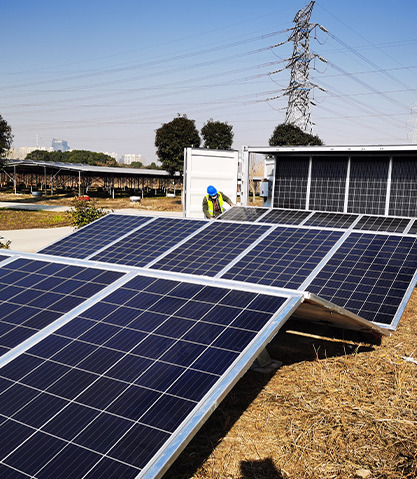
In these environments, a C&I ESS paired with generation sources—solar PV, diesel generators, or both—provides a complete off-grid power platform. Solar generation charges the storage system during daylight hours. The ESS supplies the site load through evenings and nighttime periods, and covers periods when solar output is insufficient due to cloud cover. Diesel generation can be integrated as a backup source, but a well-sized ESS can dramatically reduce the runtime hours required from diesel, lowering fuel costs and maintenance frequency simultaneously.
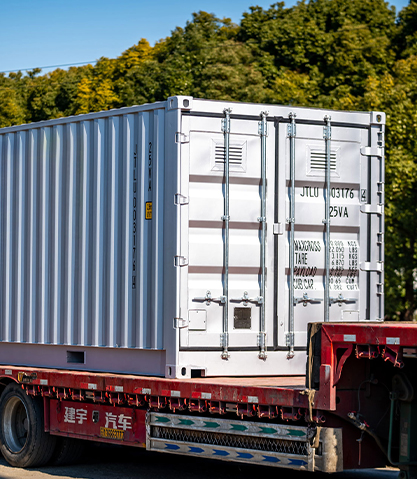
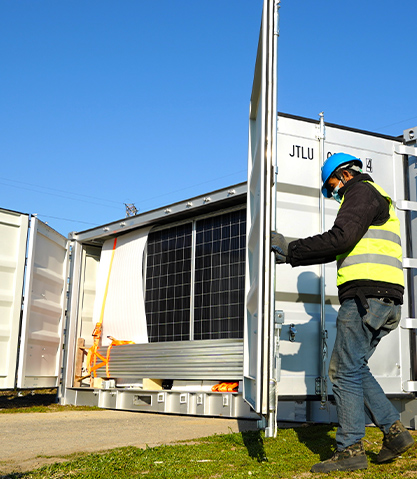
For temporary industrial deployments that need emergency power on short notice, the containerized format of an IP67-rated ESS provides a further advantage: the system can be transported to the site, connected, and commissioned rapidly without civil infrastructure preparation. Solar power container systems for hybrid on-grid and off-grid energy can be combined with the ESS container to create a complete self-contained energy platform that arrives as a deployable unit rather than a construction project.
How Senta's Battery ESS Container Integrates All Five Capabilities
The five functions described above—peak shaving, valley filling, factory backup power, AC grid expansion, and off-grid emergency supply—are not five separate products. They are five operating modes of a single well-engineered C&I energy storage system, managed by an intelligent EMS that allocates stored capacity according to the priority logic set for each site.
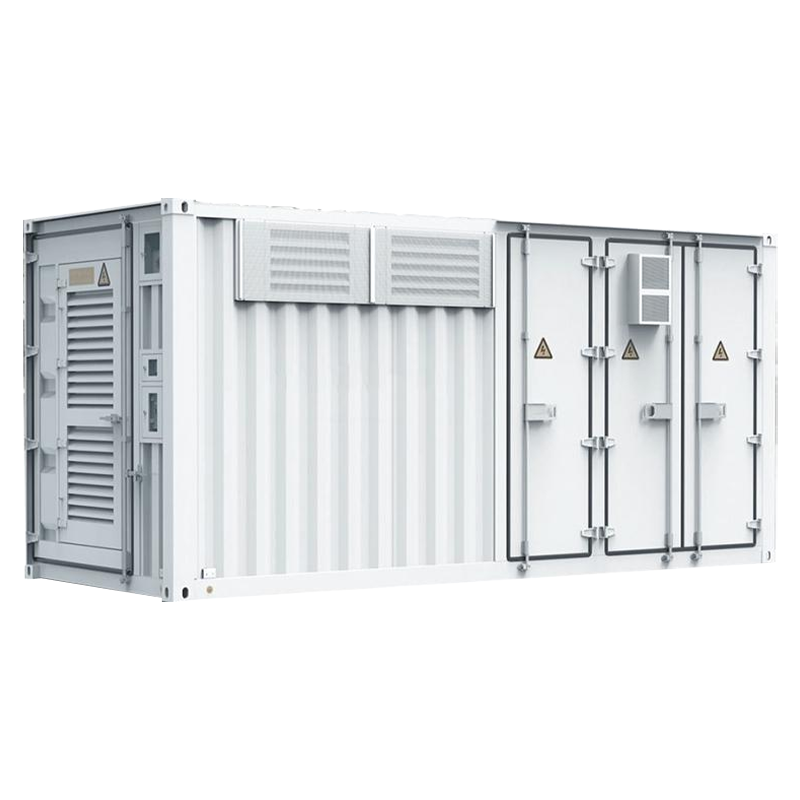
Senta Energy's Battery ESS Container is designed around exactly this multi-function architecture. The IP67 enclosure supports direct outdoor deployment across the full range of industrial environments where these applications are most needed. The integrated BMS, thermal management system, and fire protection systems operate within the container, reducing the site infrastructure required before commissioning. The modular format means capacity can be scaled by adding units as operational requirements grow—without redesigning the base system.
For facilities that want to understand how these capabilities apply to their specific load profiles, tariff structures, or site constraints, project cases across industrial and remote deployment environments demonstrate how the platform has been configured for a range of real-world conditions. The right starting point is always the site's actual energy demand pattern—and from that, the system configuration that delivers the best combination of cost reduction, reliability improvement, and operational flexibility.
