

 en
en  English
 中文简体
中文简体 عربى
عربى
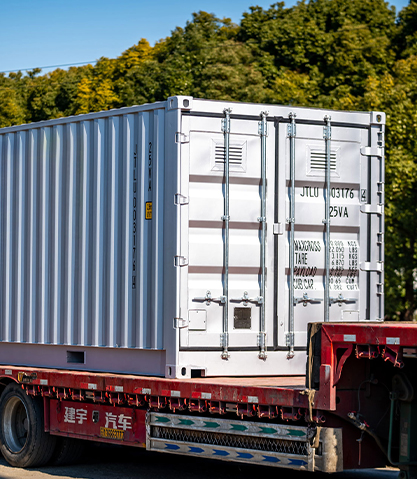
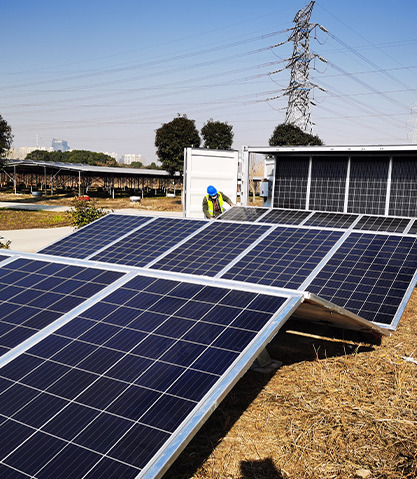
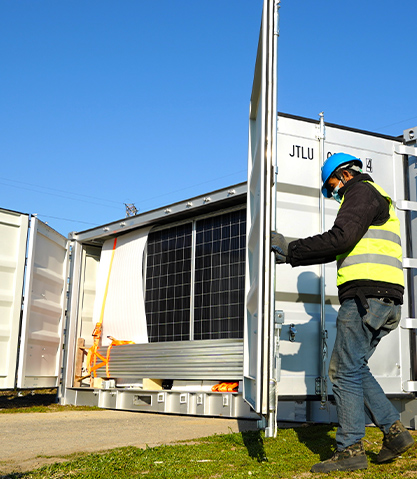
A mining contractor operating a new extraction site in West Africa faced a problem that is routine for the industry: the site was 340 kilometers from the nearest grid connection. Diesel generators were the default answer — expensive to run, difficult to refuel across that distance, and sensitive to supply disruptions. The alternative was a solar power container, deployed within days of arrival and running the site's equipment, lighting, ventilation, and communications from the first morning of operation.
That scenario is no longer exceptional. For remote mine operators across Africa, Latin America, Southeast Asia, and Central Asia, the solar power container has become a practical first choice rather than a niche experiment — and the economics behind the shift are straightforward.
Content
The Real Cost of Running a Remote Mine on Diesel
Diesel is the default power source for off-grid mining because it works everywhere and starts immediately. But the cost structure is punishing at scale. According to the SRK Report (October 2024), diesel haulage and fuel-related activities account for up to 56% of mining operational costs at sites where grid power is unavailable. Energy expenses overall represent 30–40% of total operational outlay for a typical mining project.
In 2026, that exposure has become acute. Geopolitical disruptions have caused oil prices to spike sharply, with iron ore mining costs potentially rising around 20% and copper around 16% for every significant oil price increase, according to BMO Capital Markets analysis. For remote operations, the delivered price of diesel — factoring in long-haul transport to the site — is often two to three times the pump price in the nearest city.
The case for solar is not primarily ideological. It is a cost and risk management decision: locking in a significant share of site power at predictable, near-zero marginal cost while eliminating diesel logistics as a single point of failure.
Why a Container Format Works for Mining Specifically
Mine sites create power requirements that conventional solar installations struggle to meet. The location changes as extraction moves. The timeline is defined by the orebody, not by a grid connection schedule. Equipment loads are heavy and irregular — crushers, conveyors, ventilation fans, and pumps generate high surge demands on startup. And the environment is hostile: dust, vibration, temperature extremes, and limited access to skilled labor for maintenance.
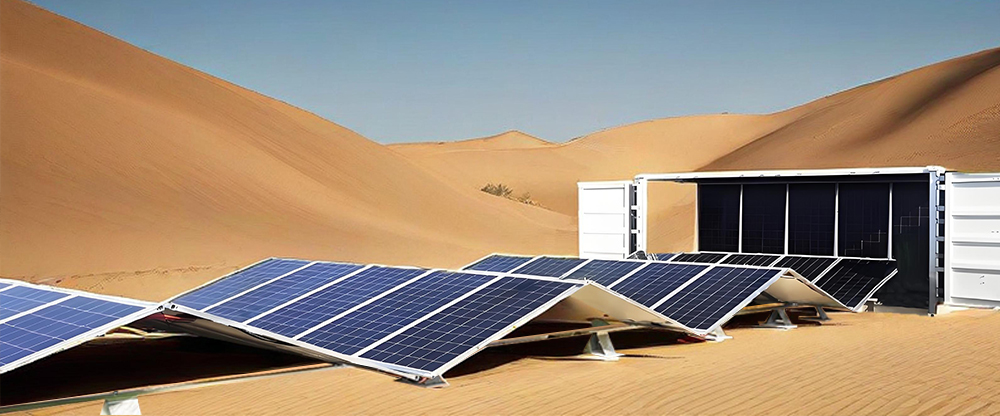
A containerized solar power station addresses all of these constraints in a way that fixed ground-mounted solar cannot. The system arrives pre-assembled, pre-tested, and pre-wired. It ships as a standard ISO container — by truck, rail, or vessel — and can be repositioned when the site layout changes. Deployment does not require civil foundation work or specialized on-site installation crews. The panels fold out from the container structure on rail or wheel-mounted brackets; commissioning time for a single unit is measured in hours, not weeks.
Senta Energy's solar power container range is built specifically around these demands, covering output configurations from 20 kWp (8-foot GP container) up to 200 kWp (40-foot HQ container), with integrated battery ESS variants providing storage capacity from 20 kWh to 430 kWh. All systems are factory-assembled and tested before dispatch, with complete unfolding achievable by four people in 60–180 minutes depending on container size.
What a Solar Container Powers at a Mine Site
The load profile at a remote mining operation is broader than most buyers initially assume. Beyond the obvious — powering drilling equipment and crushers — solar containers are routinely used to supply:
- Lighting systems across the working area, access roads, and worker accommodation
- Ventilation equipment, including fans for underground workings and dust suppression systems
- Water pumping and treatment, covering both process water and potable supply for the camp
- Communication infrastructure, including remote telecommunication bases and radar stations that require stable, uninterrupted power
- Worker camp facilities — offices, canteens, medical stations, and charging points for mobile equipment
- Environmental and safety monitoring systems, including SCADA, RTUs, and gas detection equipment
In practice, a solar container with integrated battery storage can displace diesel generation for the majority of these loads around the clock. Diesel backup — either a generator or a hybrid inverter configuration — handles peak surge loads and extended low-irradiance periods, but the base load runs on solar and stored energy. Industry data from comparable deployments indicates diesel consumption reductions of up to 70% in well-configured hybrid systems.
Container Configurations for Mining Applications
Senta Energy offers both PV-only and integrated solar-plus-storage (ESS) container variants. For mining applications where overnight power continuity is required — and where refueling a backup generator is logistically expensive — the Solar ESS Container (Rail Type) is the more capable choice. Key configurations relevant to mining scale requirements include:
- SC20GP-M-60K215: 60 kWp solar, 215 kWh battery storage, 20-foot GP container
- SC20HQ-M-75K215: 75 kWp solar, 215 kWh storage, 20-foot HQ container
- SC40GP-M-140K215: 140 kWp solar, 215 kWh storage, 40-foot GP container
- SC40HQ-M-150K430: 150 kWp solar, 430 kWh storage, 40-foot HQ container — the highest-capacity single-unit option
Multiple containers can be deployed in parallel to scale output as the site expands or as additional loads come online, without redesigning the power system. The standalone Battery ESS Container can also be added to an existing PV container deployment to increase storage capacity independently of generation.
For sites where mobility is a priority — moving with the extraction face or relocating between phases of an open-pit operation — the Wheel Type container variants allow repositioning without crane or heavy lift equipment.
Deployment, Support, and What Buyers Need to Know
Senta Energy provides end-to-end project support from initial specification through to commissioning — covering project planning and consulting, ODM system design for non-standard requirements, on-site installation guidance, and one-stop logistics to the buyer's factory or project site. The company holds more than 60 patents and operates across 20+ countries, with prior deployments covering mining, oil field exploration, and remote telecommunication infrastructure.
For procurement teams evaluating a solar container for a specific mine site, the key inputs for system sizing are: peak load in kW, daily energy consumption in kWh, average peak sun hours at the site location, and the acceptable backup autonomy period in hours. Senta's engineering team can provide configuration recommendations and generate a project proposal based on these parameters.
To discuss requirements for a specific mining project, contact Senta Energy at the project inquiry page or directly via WhatsApp at +86 181 5153 0169 or email at sales@sentaenergy.com.
