

 en
en  English
 中文简体
中文简体 عربى
عربى
Content
Introduction to Mobile Solar Power Containers
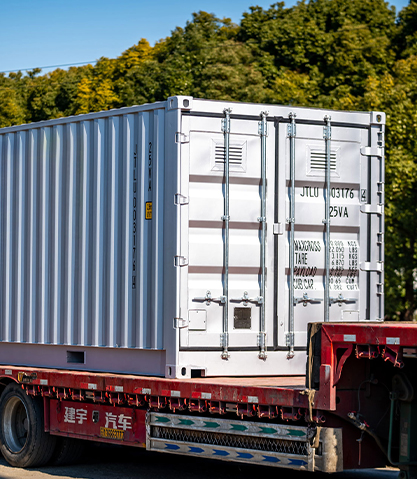
Mobile solar power containers provide a flexible and efficient solution for generating and distributing electricity in remote locations. These systems integrate solar panels, energy storage, and power management equipment within a transportable container, allowing rapid deployment and self-contained operation. They are increasingly used in off-grid construction sites, disaster relief operations, remote communities, and temporary events where reliable energy access is essential.
Key Components of Mobile Solar Power Containers
Understanding the components of a mobile solar power container is critical for evaluating its performance and suitability for different applications. A typical system combines solar modules, inverters, batteries, and monitoring equipment within a standard shipping container frame.
Solar Panels
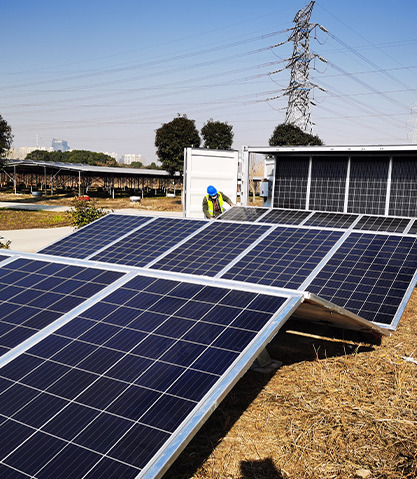
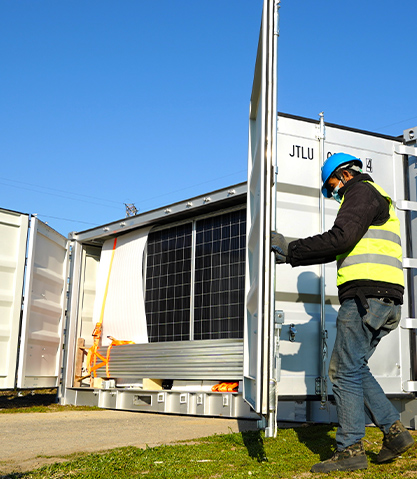
Solar panels mounted on the container or integrated into folding arrays capture sunlight and convert it into electricity. The panels are usually high-efficiency monocrystalline or polycrystalline modules designed to withstand harsh environmental conditions.
Energy Storage
Energy storage systems, typically lithium-ion or lead-acid batteries, store electricity generated during daylight hours for use during periods of low sunlight. Proper sizing of the battery bank ensures stable power supply and continuous operation for critical loads.
Power Management and Inverters
Power management equipment, including inverters, charge controllers, and distribution panels, converts DC electricity from solar panels and batteries into usable AC power. Smart controllers optimize energy flow, prevent overcharging, and protect system components, ensuring efficient operation and longevity.
Advantages of Mobile Solar Power Containers
Mobile solar power containers offer multiple advantages over traditional energy solutions, particularly in remote and off-grid applications. Their design combines portability, scalability, and environmental benefits, making them a preferred choice for temporary and permanent installations.
- Rapid Deployment: Containers are pre-assembled and can be transported via truck or shipping vessel for quick installation.
- Portability: Standard container dimensions allow easy relocation between sites without extensive logistical requirements.
- Scalable Capacity: Solar arrays and battery banks can be customized to match site-specific energy demands.
- Environmentally Friendly: Solar power reduces reliance on diesel generators, lowering greenhouse gas emissions and fuel costs.
- Self-Contained Design: Integrated systems protect sensitive components from weather and reduce on-site assembly time.
Applications of Mobile Solar Power Containers
Mobile solar power containers are suitable for a wide range of applications where conventional grid access is unavailable or unreliable. Their adaptability and reliability make them a practical solution for both temporary and long-term projects.
Remote Construction Sites
On off-grid construction sites, mobile solar containers provide stable power for tools, lighting, and office equipment. They reduce the need for diesel generators, minimize noise, and lower fuel transportation requirements.
Disaster Relief and Emergency Operations
In disaster-affected areas, rapid deployment of solar power containers can supply electricity for medical facilities, communication equipment, and temporary shelters. Their portability allows responders to deliver energy where it is most needed without infrastructure constraints.
Remote Communities and Off-Grid Installations
Mobile solar containers provide electricity to rural or isolated communities, supporting lighting, refrigeration, and basic infrastructure. They are often deployed as temporary solutions before permanent renewable installations are established.
Technical Considerations When Selecting a Mobile Solar Container
Choosing the right mobile solar power container requires careful evaluation of energy needs, environmental conditions, and system capabilities. Key factors include solar panel efficiency, battery capacity, inverter rating, and overall container durability.
| Feature | Consideration | Recommendation |
| Solar Panel Type | Monocrystalline vs polycrystalline | High-efficiency monocrystalline recommended for limited space |
| Battery Capacity | Based on peak and continuous loads | Sized to support at least 24–48 hours of backup power |
| Inverter Rating | Continuous and surge power needs | Rated slightly above peak load for safety margin |
| Container Durability | Environmental exposure and transport conditions | Weatherproof and reinforced container recommended |
Conclusion
Mobile solar power containers are a versatile and sustainable solution for delivering electricity to remote or off-grid locations. By combining solar generation, energy storage, and integrated management systems within a portable container, they provide reliable power for construction sites, emergency operations, and temporary installations. Proper selection based on load requirements, environmental conditions, and system components ensures optimal performance, durability, and energy efficiency in any deployment scenario.
