

 en
 English
 中文简体
 عربى

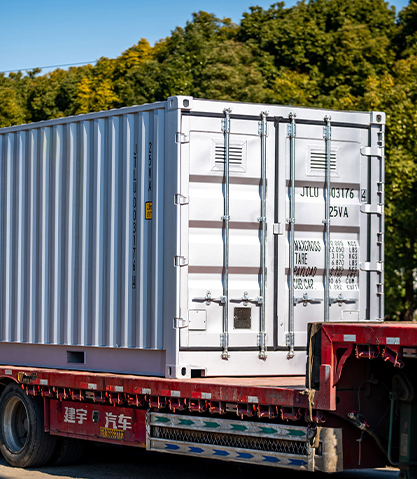
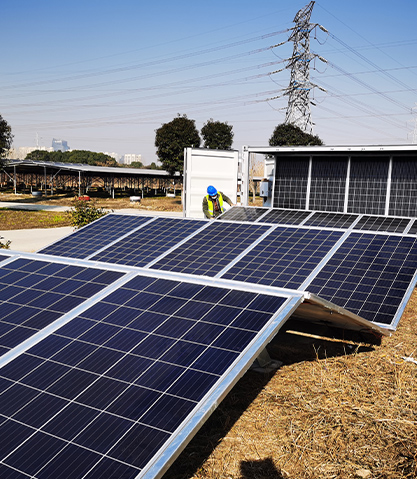
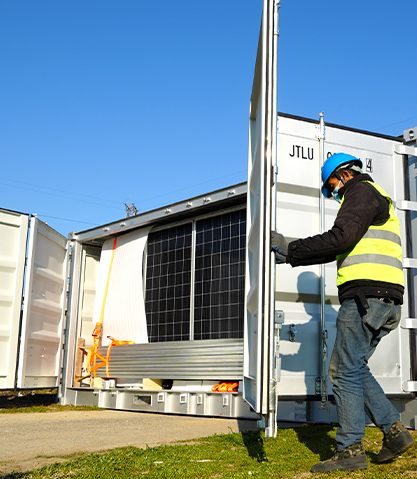
A 40-foot container rolls out of a yard in Jiangyin with sixty panels folded flat against its roof, a 200 kWh lithium bank bolted inside, and no grid connection waiting at the other end. Nothing about that shipment is passive. That is exactly why the passive-versus-active question deserves a better answer than "one has moving parts and the other does not."
Short answer: passive solar shrinks the load before it exists — orientation, glazing, thermal mass and shading — at almost zero operating cost, but it produces nothing you can meter. Active solar creates usable energy through collectors, pumps, inverters and batteries, and that energy can be measured, exported and dispatched after dark.
For any project above roughly 20 kW, the sequence matters more than the choice: passive first to cut demand, active second to meet whatever remains.
Both approaches burn the same fuel. The real difference is where the capital lands — in the building envelope or in hardware — and whether the owner needs a number on a meter at the end of the month.
Content
Where the Two Systems Physically Diverge
Passive solar is a property of the building rather than a product you buy. Active solar is an assembly of equipment you specify, wire, protect and maintain. That single distinction drives cost structure, failure modes and retrofit feasibility.
Envelope measures
Orientation within about 15° of true south, glazing sized at 7-12% of floor area, thermal mass matched to the diurnal swing, overhangs calculated against the June and December solar altitude. No pumps, no controllers, nothing to fail.
Active collection
PV or thermal collectors on racking, string design checked against the inverter's MPPT window at record low temperature, soiling and cable losses budgeted from the start.
Balance of system
Inverters, DC and AC protection, earthing, monitoring. This is where thin quotes hide their margin and where a disproportionate share of field failures actually originates.
Storage and dispatch
LFP banks, BMS, thermal management. Storage is the only reason active solar can answer a night shift, a hospital load or a port berth.
On the active side, topology usually settles the rest of the design. A three-phase hybrid inverter sits between array, battery and load, and its MPPT window effectively decides how many panels you can string before clipping eats the gain. Our eph-412ktl is built for exactly that middle position in commercial systems.
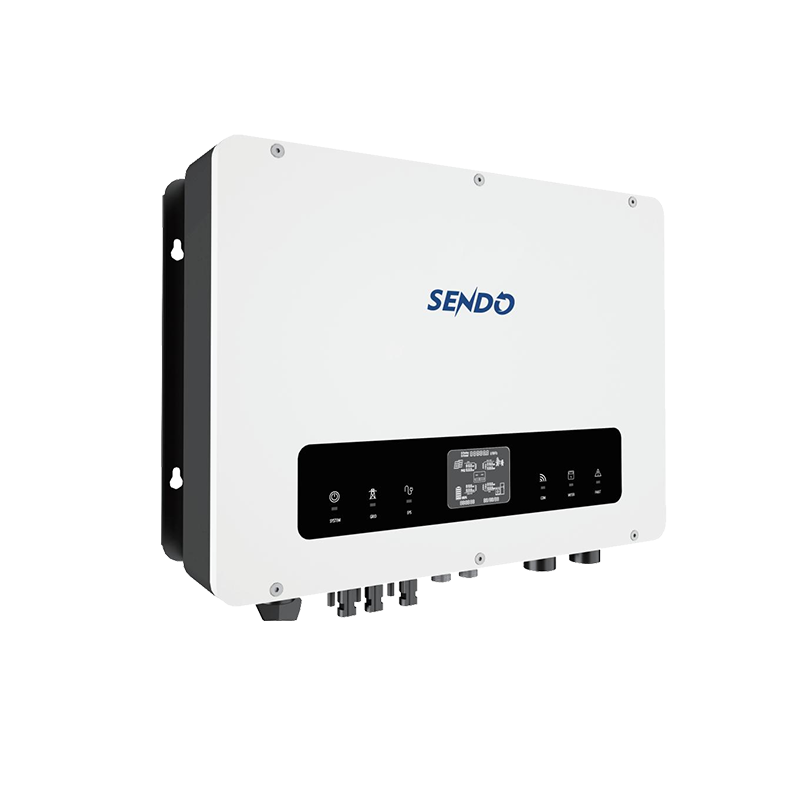 EPH 4-12KTL Three-Phase Hybrid InverterA three-phase hybrid inverter for commercial systems, with dual MPPTs, LFP battery integration and a 200–850 Vdc MPPT range.View Product →
Two practical consequences follow. Passive measures never appear as a line item on a bill — only as a smaller bill. And active systems are frequently oversold against loads that passive design could have removed for a fraction of the hardware cost.
Cost, Output and Retrofit: Side by Side
Numbers travel better than adjectives. The comparison below reflects commercial-scale projects; ranges shift with freight, duties, site access and labour.
Table note: ranges reflect 2026 equipment pricing for commercial projects and move with freight, duties, labour rates and site access.
The Numbers That Stay Out of the Sales Deck
Normalised against a best-case index of 100, the profile below shows why the two approaches are rarely substitutes. Passive wins on load reduction; active wins on everything the meter can see.
Chart note: index scores, 0-100. Light bars are passive measures, dark bars are active systems, both assessed against the same commercial load profile.
Three costs rarely make it into a quote. Inverter replacement lands around year 10-12 and is not optional. Battery capacity fades 2-3% a year, so a 200 kWh bank is a 160 kWh bank by year twelve. And soiling on dusty sites quietly removes 3-8% of yield unless a cleaning cycle is written into the O&M contract.
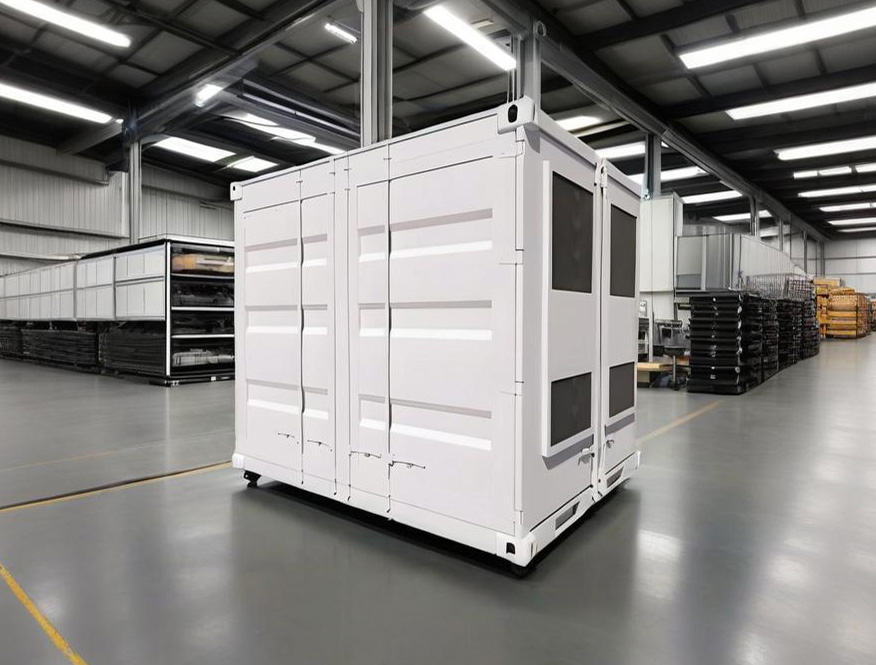 Containerised Battery Energy Storage SystemsCompare containerised ESS models from 1 to 5.9 MWh for industrial and commercial peak shaving, backup and grid-support duties, with IP67 protection.View Product →
Containerised storage changes that arithmetic only if the thermal management is real. A battery ESS container that keeps cells inside their comfort band for a decade is a different asset from a rack in a shed, and the price difference is usually smaller than the replacement cost it avoids.
Where Each Approach Wins by Sector
Across containerised and off-grid deployments, demand clusters into a handful of applications. The split below is a working distribution rather than a market forecast, but it matches what arrives on the order book.
- Disaster relief and rescue — 26%
- Infrastructure works — 22%
- Mining and exploitation — 18%
- Military affairs — 14%
- Port and shore power — 12%
- Self-provided supply — 8%
Passive logic still applies inside every slice. A relief camp laid out with shading and cross-ventilation cuts its cooling load before the first panel is unfolded. A mining camp oriented against prevailing wind loses less heat at night. In self-provided power supply projects, the passive measures are what make a smaller, cheaper active system viable.
Above 100 kW the trade-off usually disappears. Passive design trims the peak; active generation and storage cover the residual; the two together beat either alone on cost per delivered kWh.
Selection and Deployment Sequence
The order below is the one that survives contact with real projects. Skipping step two is the most expensive mistake we see.
Fix the load profile first. A 24-hour curve beats an annual total every time: a site peaking at 18:00 needs storage, a site peaking at noon may not.
Take the passive measures before sizing hardware. Every kilowatt removed by shading, insulation and orientation is a kilowatt of inverter and battery you never buy.
Size generation against the worst month, not the average. December irradiance on a 30° tilt can sit 40-50% below June at mid-latitudes.
Choose topology deliberately: on-grid where interconnection is reliable, hybrid where outages are routine, off-grid where there is no line at all.
Plan transport and siting before ordering. Turning radius, compacted ground and crane access decide whether a container can be placed at all; folding arrays must be deployed within the wind limit stated in the manual.
Commission with documents: insulation resistance, string IV curves, battery capacity test, as-built single-line diagram and a shading survey that gets revisited after the first growing season.
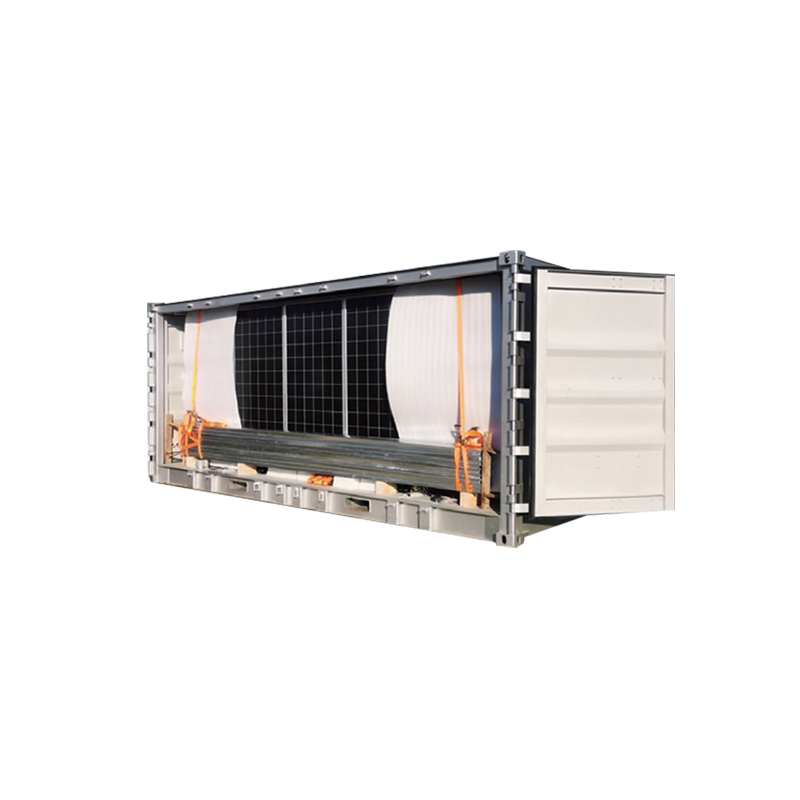 Foldable Solar Power Container for Rapid DeploymentA transportable solar-plus-storage container for remote or unstable-grid sites, designed for rapid unfolding, array layout and backup power.View Product →
For sites that move, the deployment question flips: it is no longer where the array goes, but how fast it can be folded, moved and re-erected. That is the practical difference covered in our comparison of movable plants and fixed installations.
Maintenance, Compliance and Handover
Whatever the design, the paperwork and the maintenance schedule decide whether the system still performs in year eight.
- Battery transport and safety: UN 38.3 test summaries for shipping, IEC 62619 for industrial cells, and a documented fire-fighting approach agreed with the site insurer.
- Electrical compliance: local grid interconnection agreements, rapid-shutdown or isolation requirements, and protection settings signed off by the utility, not just the installer.
- Structural checks: wind and snow loads on racking and container roofs, plus roof loading in kg/m² when retrofitting onto an existing building.
- Passive verification: an air-tightness test and a recorded shading survey, repeated after vegetation grows or a neighbouring structure appears.
- O&M rhythm: quarterly cleaning in dusty climates, annual thermal imaging of connections, torque checks on terminations, and a battery capacity test at years three and five.
Hand over with an as-built drawing set, a string layout map and a battery test report. When those three documents exist, a change of maintenance contractor costs a day; when they do not, it costs a survey of the entire site.
