

 en
 English
 中文简体
 عربى

A 20 kW load pulls roughly 97 A on a 230 V single-phase supply and roughly 32 A per conductor on a 400 V three-phase supply, at a power factor of 0.9. That one ratio explains most of the buying decision, most of the cable cost, and most of the reasons a generator that looks "big enough" on paper still trips its breaker on site.
The short version: below about 7–10 kW of continuous load, with few or only small motors, single-phase equipment is cheaper to buy, simpler to wire and easier to relocate. Above roughly 10–15 kW, or as soon as motors of 3.7 kW and larger enter the load list, three-phase wins on current per conductor, starting torque, cable size and voltage stability. The rest of this article is the reasoning, the numbers and the field implications behind that split.
Content
Single-phase, in one card
One live conductor plus neutral, 230 V or 120 V. Practical ceiling around 7–10 kW per unit. Best fit for lighting, electronics, small pumps, hand tools, telecom cabinets and residential backup.
Purchase price and switchgear are typically the lowest of the two options.
Three-phase, in one card
Three live conductors plus neutral, 400/415 V line-to-line. Frames run from about 10 kW to several megawatts. Best fit for motors, HVAC, welding, irrigation pumps, workshops, shore power and continuous duty at load.
Higher unit price, but far less copper and far better starting behaviour per kW delivered.
How the Two Outputs Actually Differ
The distinction is not cosmetic. It changes the alternator frame, the winding layout, the switchgear, and the way a motor behaves at the moment of start.
Single-phase: pulsing power, larger frame per kW
With one live conductor and one neutral, instantaneous power falls to zero twice per cycle. The alternator carries the whole load on a single winding, so it needs a larger frame for the same output, and the prime mover sees a torque ripple. In practice this shows up as a noticeable voltage dip when a compressor or pump starts, and a heavier, more expensive set for the same kilowatts.
Three-phase: constant power, smaller conductors
Three windings displaced by 120° deliver essentially constant power across the cycle. The rotating field lets induction motors self-start with higher torque per ampere, which is why a 5.5 kW pump that struggles on a single-phase set starts comfortably on a three-phase one of the same rating.
The formulas worth checking before you sign a quotation
Single-phase power is P = U × I × cos φ. Three-phase power is P = √3 × U (line-to-line) × I × cos φ. Working backwards from a required kW gives the current, and the current sets the cable cross-section, the breaker rating, the socket type and ultimately the alternator cost.
The Numbers Side by Side
Hidden Cost Indicators Most Buyers Miss
Purchase price is often only a third of lifetime cost. The four indicators below tend to shift the comparison, and they rarely appear on a one-page quotation.
Copper mass index
Voltage dip at start
Neutral current, non-linear loads
Switchgear and cabling cost
Dark bars: single-phase. Light bars: three-phase. Index values scaled to the same 20 kW load.
The neutral point deserves particular attention. In a balanced three-phase system with linear loads, neutral current nearly cancels. Add variable frequency drives, LED drivers, IT power supplies or inverter chargers and the triplen harmonics stop cancelling and add together in the neutral instead. A neutral sized at 100% of the phase conductor can then run hotter than the phases themselves, which is one reason mixed electronic loads should be assessed before choosing a set rating.
Two more practical points. A three-phase alternator loaded on a single phase only delivers roughly one-third of its frame rating, and voltage regulation suffers while it does. And a single-phase set paralleled with another single-phase set requires synchronising equipment that many small packages simply do not include.
Where Single-Phase Still Dominates
Across small generator installations, single-phase units remain the majority by count. The distribution below reflects typical project portfolios rather than a single market.
The pattern is consistent: single-phase survives wherever loads are small, scattered and intermittent. The moment a site runs a 7.5 kW pump, a workshop with three motors, or a shore connection for a vessel, three-phase becomes the cheaper engineering answer even though the set itself costs more.
From Diesel Set to Hybrid Supply: Where the Phase Choice Really Bites
Most modern installations are no longer a generator standing alone. The set is combined with PV, battery storage and an inverter, and the inverter's phase configuration constrains everything upstream. A three-phase hybrid inverter can accept single-phase PV strings and still rebalance output across phases; a single-phase inverter cannot feed a three-phase distribution board without an imbalance that the generator then has to absorb.
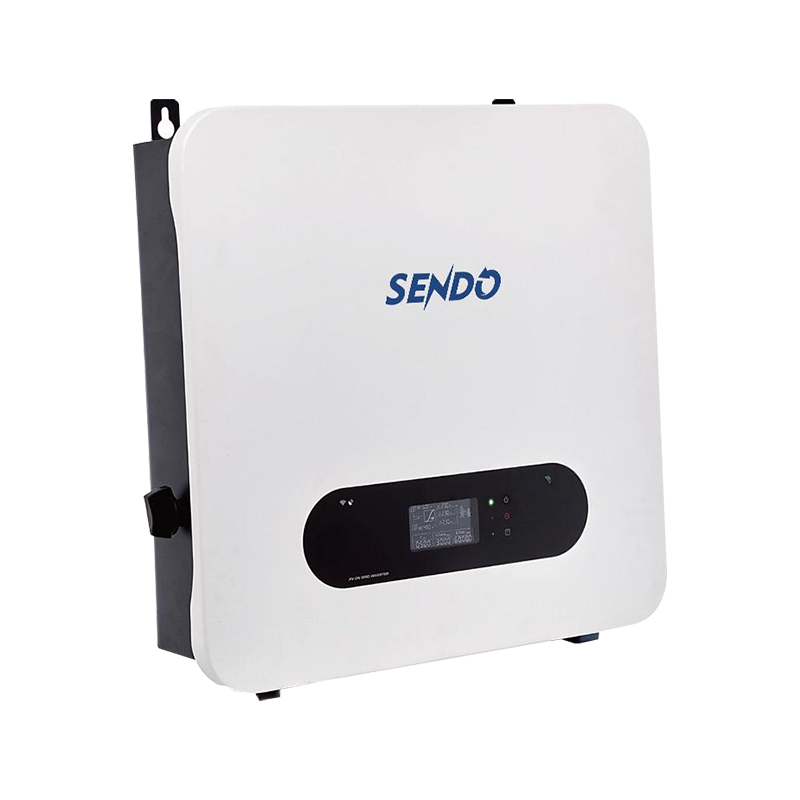
 EPL3000-10KTL Single-Phase Hybrid Inverter SeriesCompact wall-mounted single-phase hybrid inverter for residential and small commercial PV-plus-battery systems, with monitoring options and backup capability for small remote loads.View Product →
For a small remote site, a single-phase hybrid inverter paired with a modest PV array and battery bank covers lighting, communications and refrigeration without ever asking the diesel set to run at part load for hours. Where the load list includes pumps, compressors or a workshop, the three-phase equivalent is the correct starting point.
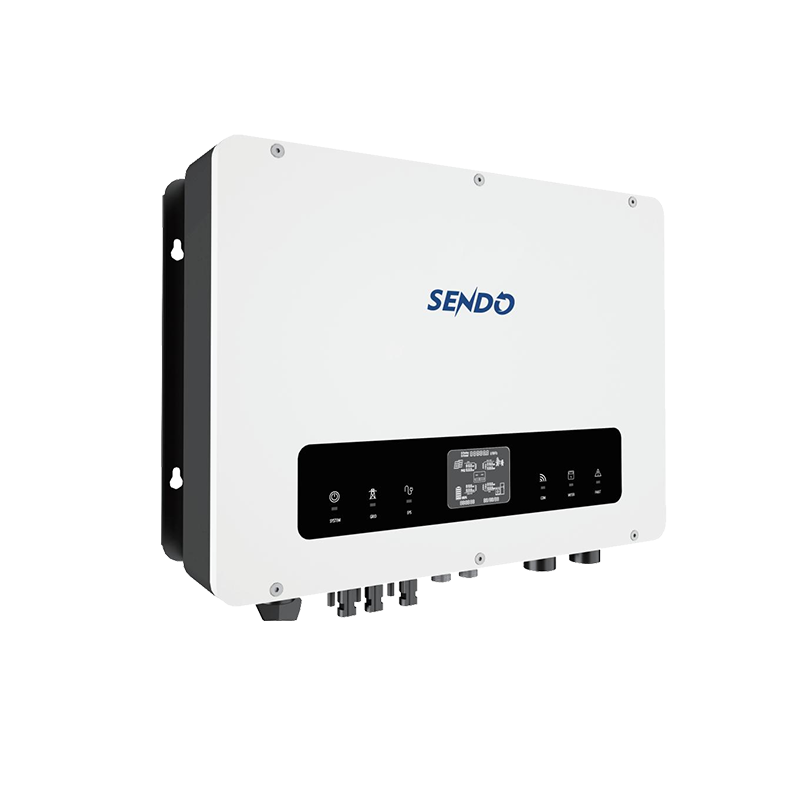 EPH 4-12KTL Three-Phase Hybrid Inverter SeriesThree-phase hybrid inverter for residential and commercial solar storage, with high-voltage Li-ion battery input and grid-friendly output, suited where three-phase loads require balanced supply.View Product →
Sites that need grid-quality three-phase output for continuous duty — mining camps, port berths, temporary infrastructure — usually pair a three-phase set with a grid-tie inverter and a battery container rather than a hybrid unit. Shore connections and off-grid mining supply are both covered in more detail in the project pages for port and shore power and for remote extraction sites.
 TP4-10KTL and TP10-25KTL Three-Phase On-Grid InvertersThree-phase on-grid solar inverter series for medium to large residential and commercial PV installations, offering remote monitoring and protection features for grid-tied operation.View Product →
The rule of thumb that holds across all of these configurations: choose the phase of the inverter first, then size the generator to match, not the other way round. Retrofitting phase later means new switchgear, new cabling and often a new alternator.
A Six-Step Selection and Commissioning Sequence
- Build a load list with running kW, starting method and simultaneity factor. Motors started direct-on-line need three to six times running current for a few seconds, and that figure — not the running total — sizes the alternator.
- Check the largest single motor. Above about 3.7 kW, three-phase is almost always the better economics; below that, single-phase with a soft starter may be sufficient.
- Split the load across phases if going three-phase, keeping the imbalance within roughly 15% between phases, and re-check after installation because site loads never stay where the drawing put them.
- Size cable and protection from the calculated current, allowing for derating in enclosures, ambient temperature and grouping — factors that routinely add 20% to the conductor size on a hot site.
- Decide the earthing arrangement. A generator used as a separately derived source needs a clearly defined neutral-earth bond and, in three-phase changeover, a switched neutral pole.
- Commission with measurements, not assumptions: phase rotation, insulation resistance, earth loop impedance, load step response and voltage dip at full motor start.
Maintenance and Compliance Notes
Once the phase decision is made, the maintenance regime is what protects it. A few checks repay their cost quickly:
- Log load current on every phase at least twice a year on three-phase sets; an imbalance that starts at 8% often drifts past 30% within a year of site changes.
- Record neutral current separately where electronic loads dominate, and consider a neutral conductor sized above the phase conductors.
- Verify insulation resistance and earth continuity after every relocation, particularly on mobile and container-mounted equipment.
- Follow the relevant performance class — ISO 8528 G1 to G3 — for the application, and confirm the alternator complies with IEC 60034-1 for voltage and frequency tolerance.
- Match protection and changeover arrangements to the local wiring code; in three-phase installations the neutral switching and bonding rules are the most frequent source of inspection failures.
Choose single-phase for small, scattered and mostly resistive loads. Choose three-phase when motors, cable distance or load growth point that way. In both cases, size the system against measured starting current rather than the label on the plate, and the generator you buy will be the one that keeps running.
