

 en
en  English
 中文简体
中文简体 عربى
عربى
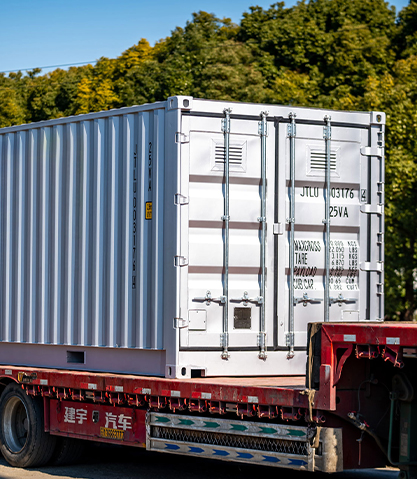
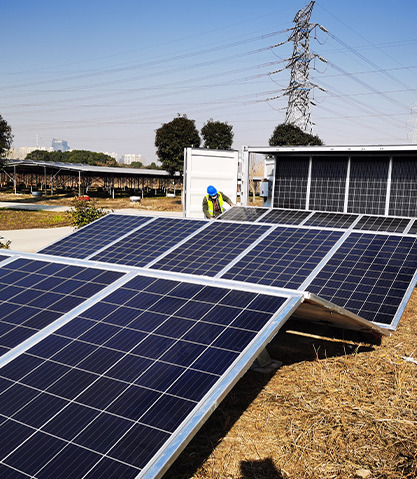
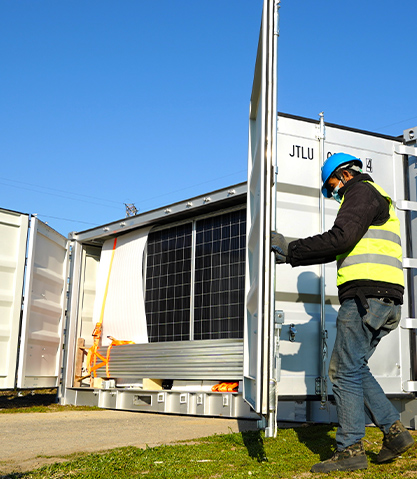
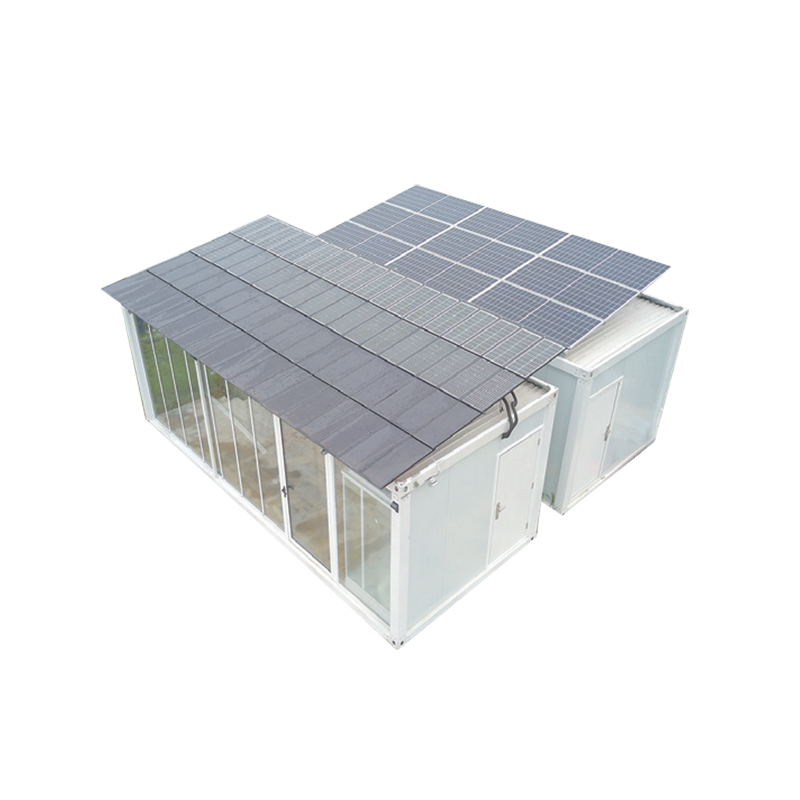
A solar living container achieves true off-grid independence not through a single technology, but through the system-level integration of photovoltaic generation, electrochemical storage, and intelligent dispatch logic. The defining characteristic of this architecture is that it does not merely reduce reliance on external utilities—it eliminates that reliance entirely. Photovoltaic panels laminated or rack-mounted on the container's roof and deployable folding arrays convert solar irradiance into electrical energy, which is then stored in lithium iron phosphate battery banks housed in a dedicated energy storage cabin. An intelligent control system continuously monitors the state of charge, the real-time load demand, and the available solar resource, then dispatches power accordingly. When the system is correctly sized for its geographic latitude and the intended occupancy load, the container produces more energy over the course of a year than it consumes, achieving the status of a "positive energy building" that feeds surplus power back into its own storage reserves or to external loads.
This energy autonomy extends beyond electricity. The solar living container concept encompasses thermal management—solar thermal collectors or photovoltaic-thermal hybrid panels can provide hot water and space heating—as well as intelligent water systems that harvest, filter, and recycle water. The EB container variant adds a cold chain capability, using the available photovoltaic energy to power a constant low-temperature environment for food or medical storage. The result is a modular, transportable unit that can be deployed rapidly to remote locations, disaster relief zones, or off-grid residential sites, and become fully operational within hours of arrival, without waiting for grid connection, fuel deliveries, or water infrastructure to be established.
Content
Photovoltaic Integration and Energy Generation Capacity
The energy generation capability of a solar living container is determined by the total installed photovoltaic capacity, the panel efficiency, and the available solar resource at the deployment location. A standard 20-foot container offers a roof area of approximately 14 to 15 square meters, which can accommodate roughly 2.5 to 3.5 kWp of monocrystalline photovoltaic panels assuming panel efficiencies in the range of 21 to 23%. This base capacity is augmented by deployable folding arrays—hydraulic or manually actuated wing structures that unfold from the container sides to expose additional panel area. When fully deployed, a 20-foot container can achieve a total installed capacity of 8 to 12 kWp, depending on the number of folding layers and the panel technology selected.
The daily energy yield depends on the peak sun hours available at the site. In a region with an average of 5 peak sun hours per day, a 10 kWp system will generate approximately 40 to 45 kWh per day after accounting for system losses including inverter efficiency, wiring losses, and temperature derating. This is sufficient to power the container's internal loads—lighting, climate control, water treatment, and refrigeration—with a substantial surplus for electric vehicle charging or tool operation. The table below summarizes the generation potential across different container configurations and solar resource levels.
| Container Size | Total Installed PV Capacity | Peak Sun Hours (Location Example) | Daily Energy Yield (Approx.) |
|---|---|---|---|
| 20-foot (Roof Only) | 3 kWp | 4.0 (Northern Europe) | 10 - 12 kWh |
| 20-foot (Full Deployment) | 10 kWp | 5.0 (Southern Europe) | 42 - 48 kWh |
| 40-foot (Full Deployment) | 20 kWp | 6.0 (Middle East/North Africa) | 100 - 115 kWh |
| 40-foot (Roof Only, High Efficiency) | 6 kWp | 5.5 (Australia) | 28 - 32 kWh |
The photovoltaic panels on a solar living container must be selected for durability in transport as well as stationary performance. Panels mounted on folding arrays experience repeated mechanical cycling and must use reinforced frames and flexible junction boxes that resist fatigue cracking. The panel interconnects use weatherproof MC4 connectors with locking sleeves to prevent accidental disconnection during high winds. For containers deployed in coastal or marine environments, the panel frames are specified in anodized aluminum with a minimum 15-micron oxide layer to resist salt spray corrosion, and the solar cells are encapsulated with a double-layer of ethylene-vinyl acetate and a fluoropolymer backsheet that prevents moisture ingress even at 85% relative humidity and 85°C, the standard damp heat test condition.
Energy Storage Architecture and Battery Cabin Design
The energy storage cabin is the heart of the solar living container's off-grid capability, and its design must balance capacity, safety, and thermal management. Lithium iron phosphate chemistry is the dominant choice because of its inherent thermal stability and cycle life exceeding 4,000 to 6,000 cycles at 80% depth of discharge. A typical 20-foot container configuration includes a battery bank with a usable capacity of 20 to 40 kWh, sized to provide at least 24 to 48 hours of autonomy without solar input, covering periods of heavy cloud cover or nighttime loads. The battery modules are mounted in a dedicated, fire-rated compartment with active ventilation and a battery management system that monitors individual cell voltages, temperatures, and state of health.
The intelligent control cabin performs the critical function of real-time dispatch and load management. It processes data from the photovoltaic inverters, the battery management system, the environmental sensors, and the individual load circuits within the container. When the battery state of charge is high and solar generation exceeds the immediate load, the controller diverts surplus energy to secondary priorities: heating water, running the EB container's compressor to pre-cool the thermal mass, or charging external devices. During peak grid pricing periods, if the container is grid-connected as a backup, the controller can switch to battery power to avoid drawing expensive electricity, then recharge during off-peak hours—a strategy known as peak shaving that directly reduces operating costs.
Thermal Management and the Solar EB Container Function
The Solar EB Container represents a specialized variant of the solar living container concept, where the available photovoltaic energy is directed toward maintaining a constant low-temperature environment for shelf life extension. This function is critical for pharmaceutical supply chains in remote areas, food preservation in off-grid agricultural settings, and temporary morgue facilities in disaster response. The refrigeration system is typically a variable-speed DC compressor directly powered from the battery bank, bypassing the inverter stage to improve overall system efficiency by 10 to 15% compared to an AC compressor arrangement. The temperature inside the EB container can be maintained at 2 to 8°C for pharmaceutical storage or -20°C for frozen goods, with the setpoint adjustable through the intelligent control interface.
The thermal envelope of the EB container is engineered for minimum heat gain. The walls, floor, and ceiling are insulated with closed-cell polyurethane foam or vacuum insulation panels to achieve an R-value of R-30 to R-40, which is substantially higher than a standard shipping container's uninsulated steel shell. This insulation, combined with the photovoltaic-powered compressor, enables the EB container to maintain its internal temperature even when external ambient temperatures exceed 45°C, a condition common in the arid regions where solar resource is most abundant and cold chain infrastructure is most needed. The intelligent control system monitors door openings and adjusts compressor speed proactively to recover the cold air lost during access, minimizing temperature excursions that could compromise stored products.
Water Independence and Integrated Resource Management
A solar living container's claim to offshore capability—meaning independence from external resource inputs—rests heavily on its water management system. The container integrates atmospheric water generation, rainwater harvesting from the roof and deployed panel surfaces, and multi-stage filtration to produce potable water without a piped connection. Atmospheric water generators condense moisture from the air using the same photovoltaic energy that powers the rest of the container, with typical production rates of 20 to 50 liters per day depending on ambient humidity and temperature. Rainwater collected from the large surface area of the deployed solar arrays is directed into a storage tank through a first-flush diverter and sediment filter, then treated through activated carbon, ultrafiltration, and ultraviolet disinfection stages.
Greywater from sinks and showers is recycled through a biological treatment module, typically a membrane bioreactor, and returned to the non-potable water system for toilet flushing and irrigation of any integrated hydroponic growing modules. This closed-loop approach reduces the daily water requirement from a typical household consumption of 150 to 200 liters per person to a net input of 30 to 50 liters per person, all of which can be met by the atmospheric and rainwater collection systems. The intelligent control cabin monitors tank levels, water quality parameters, and pump status, alerting occupants to any anomalies and automatically switching between water sources based on availability and quality.
Rapid Deployment and Modular Expansion Logic
The solar living container's value as an offshore rapid assembly house derives from its self-contained deployment sequence that requires no external equipment beyond a standard container handling vehicle. Upon arrival at the site, the container is positioned on a prepared level surface—compacted gravel, concrete pads, or screw-pile foundations. The folding photovoltaic arrays are deployed manually or hydraulically, and the electrical system performs an automated self-test that verifies panel output, battery voltage, and inverter synchronization before energizing the internal circuits. From arrival to full operational readiness, the deployment timeline is typically 2 to 4 hours for a trained crew of two people, with no requirement for electricians, plumbers, or fuel deliveries.
Multiple containers can be interconnected to form a larger living or working complex. The intelligent control systems in each container communicate via a wireless mesh network, enabling coordinated energy dispatch across the entire cluster. If one container's battery bank reaches full charge while another is still drawing power, the control system routes surplus generation to the container with the deficit, optimizing the collective state of charge. This modularity means that a solar living container installation can start small and expand incrementally—a single container serving as a medical clinic, a second added as staff quarters, a third as an EB cold storage unit—without outgrowing the energy infrastructure, because each new container brings its own photovoltaic generation and storage capacity with it.
