

 en
en  English
 中文简体
中文简体 عربى
عربى
Content
AC or DC Coupled: A Site Engineer's Dilemma
A facility manager at a mining site in North Africa just bought a 120 kW solar array. The diesel gensets still run 15 hours a day, and the question from the installer is simple but consequential: should the battery connect to the DC side or the AC side of the system? The answer determines how much energy is wasted as heat every day, and whether future battery expansion requires a full inverter replacement.
With AC coupling, the PV inverter feeds the AC bus and a dedicated battery inverter moves power into and out of the battery through that same AC bus. With DC coupling, the solar array and the battery share a common DC bus, and one hybrid inverter handles both energy streams. This architectural choice affects overnight efficiency, the equipment list, the thermal load, and the path to grid code certification.
Conclusion first: For a new solar-plus-storage build that cycles daily, DC coupling is the better choice. It delivers 93-96% round-trip efficiency, about 4-7 percentage points higher than an AC-coupled equivalent, and keeps power electronics in a single enclosure. AC coupling is the right choice when you are retrofitting an existing PV inverter that is still under warranty, or when future battery expansion is a known requirement. Most failed decisions come from ignoring daily cycle count and existing inverter age.
How the Two Architectures Move Energy
Coupling determines where the battery sits electrically, but the practical difference is the number of power conversions that occur for each unit of energy stored and released.
DC-Coupled Architecture
PV strings feed direct current into a DC bus at 600-1,000 V. A hybrid inverter has multiple input ports: one for PV, one for battery, and one AC output. Solar energy can charge the battery without ever leaving DC form. On discharge, the battery pushes DC onto the bus and the inverter converts to AC exactly once. One conversion per energy path minimizes round-trip losses.
AC-Coupled Architecture
The grid-tied PV inverter produces AC for the loads and grid. A separate battery inverter takes AC, rectifies it back to DC to charge the battery, and then converts it back to AC on discharge. Each energy direction involves two power conversion stages. In practice, this costs 4-7% of round-trip efficiency depending on inverter quality and load conditions.
System-Level Impact
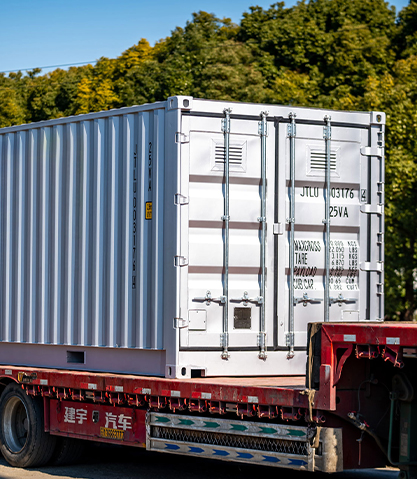
AC-coupled systems have two separate inverters that must communicate over Modbus or a similar protocol. This adds commissioning work and creates more potential failure points. DC-coupled systems keep all power electronics in one cabinet, simplifying service and reducing the number of components in the field. For containerized deployments at remote sites, fewer components means fewer truck rolls for maintenance.
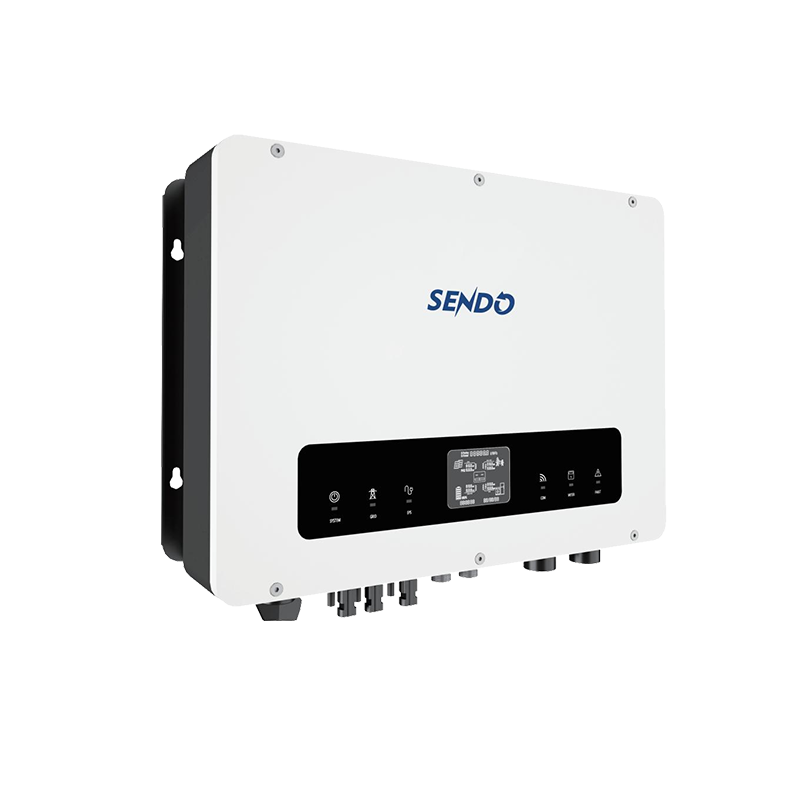 EPH 4-12KTL Three Phase Hybrid Inverter for DC-Coupled StorageThis hybrid inverter integrates with LFP batteries and simplifies power electronics into one cabinet, reducing maintenance and field service needs for remote containerized deployments.View Product →
Side-by-Side Comparison
The comparison below is a working summary. Use it as a starting point, then verify the numbers with your equipment supplier and local code requirements.
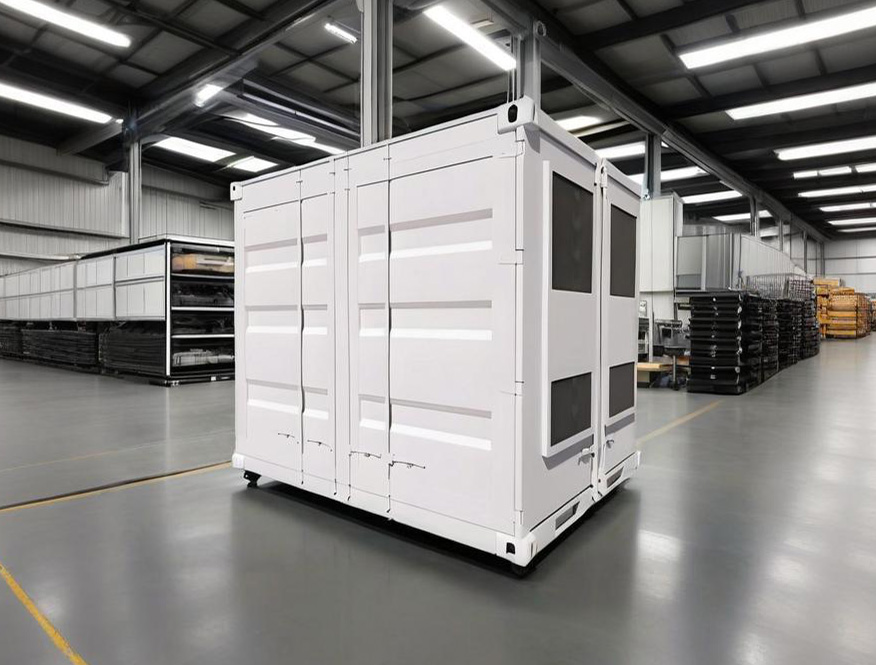 Battery ESS Container for Industrial and Commercial Energy StorageModular containerized storage system with IP67 protection, suitable for peak shaving, backup power, and grid expansion, offering scalable capacity from 1 to 5.9 MWh per unit.View Product →
The Hidden Cost: Annual Energy Loss
Efficiency percentages are abstract. Translate them into annual energy loss for a 100 kW system cycling 5 hours per day, and the difference becomes a line item in the budget.
10,950 kWh/yr
20,075 kWh/yr
25,550 kWh/yr
At $0.15 per kWh, the gap between the best and worst case is $2,190 per year. Over a 20-year asset life, that adds up to roughly $43,800, often more than the entire cost difference of the equipment itself. For high-throughput commercial and industrial sites, the efficiency advantage of DC coupling is not academic; it is a recurring operating expense.
Industry Application Distribution
Solar plus storage deployments are not evenly spread across sectors. Each application area shows a clear preference based on its operating profile.
Residential: 30% of installs
Commercial & Industrial: 25%
Off-Grid & Remote: 20%
Utility-Scale: 25%
Residential
AC coupling holds about 60% of the residential retrofit market because most homes already have a grid-tied PV inverter. New home builds are increasingly DC-coupled, especially when the home also has a backup battery.
Commercial & Industrial
Nearly even split. C&I sites need heavy daily cycling for peak-shaving, where DC efficiency wins. But they often operate hybrid configurations with diesel gensets, where AC coupling makes integration with existing assets simpler.
Off-Grid & Remote
DC coupling takes about 70% of this segment. Off-grid sites typically start from scratch with no existing inverter, and every watt-hour matters when fuel delivery is expensive. Hybrid inverters are the standard choice.
Utility-Scale
Utility PV plants lean toward DC-coupled storage because the battery charges directly from the array, reducing the AC interconnection size and improving peak export performance. Large hybrid inverters manage hundreds of kW in one unit.
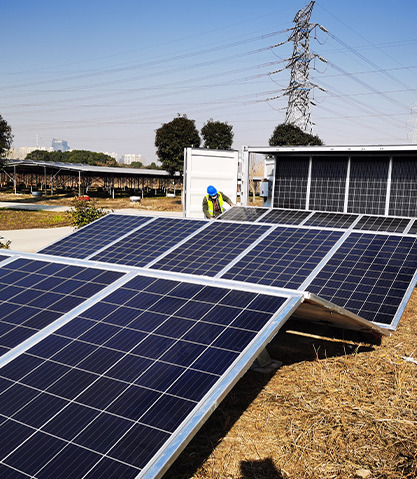
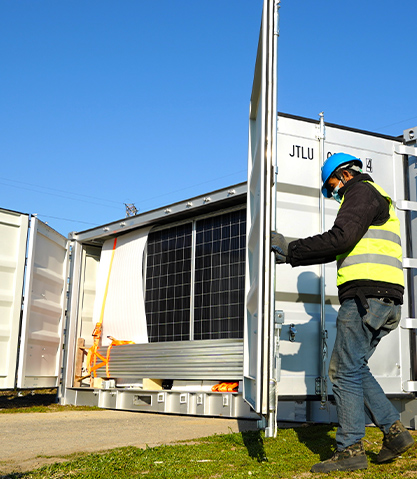
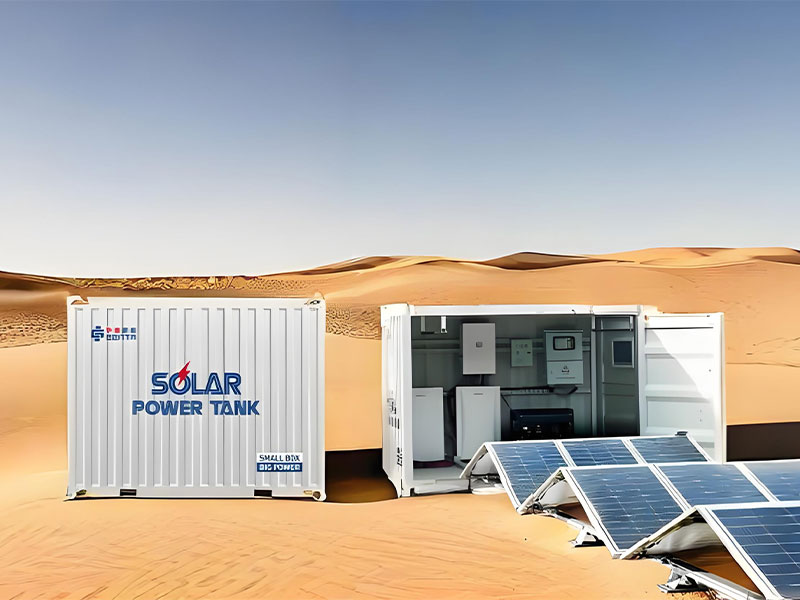 Solar ESS Container (Rail Type) for Rapid DeploymentPre-wired container integrating solar panels, batteries, and inverters, with quick unfolding and compact design, ideal for remote sites, agriculture, and temporary power needs.View Product →
A Five-Step Selection Framework
Use this process to determine which architecture fits your site. The decision is not about which technology is superior in theory; it is about which one aligns with your assets, cycle counts, and expansion plans.
Audit Existing Assets
How old is the current PV inverter? If it is under 5 years and still under warranty, AC coupling preserves that investment. If the inverter is nearing end-of-life, DC coupling gives you a clean rebuild with better efficiency.
Define Storage Value
Is the battery for emergency backup at a few cycles per year, or daily peak-shaving at 250+ cycles? High-cycle operation makes efficiency critical; low-cycle backup makes capital cost and simplicity more important.
Calculate Losses
For 50 kWh of daily throughput, a 5% efficiency gap costs about 2.5 kWh per day. Over 300 days, that is 750 kWh. At $0.15/kWh, DC coupling saves $112-157 per year. On a 20-year lifetime, this compounds to $2,250-3,150.
Plan for Expansion
If you will add a second battery pack 3-5 years from now, AC coupling on a shared AC bus is simpler to extend. DC coupling needs the hybrid inverter sized for the final battery capacity upfront, which can raise initial capital.
Verify Grid Requirements
Check utility interconnection rules. Some markets mandate specific inverter certifications and impose export limits. Confirm the hybrid inverter model you select is listed as compliant with your local grid code before committing.
For high-cycle industrial users, the efficiency gap makes a measurable difference to annual energy costs. This overview of battery ESS containers and industrial peak-shaving walks through the real-world numbers.
Maintenance and Compliance Considerations
Once the system is commissioned, the architecture continues to shape everyday operations. These are the practical items that separate a smoothly running site from one that keeps generating service tickets.
- Battery SOC management: DC-coupled hybrid inverters monitor string-level battery data through one controller. AC-coupled systems need the PV inverter and battery inverter to exchange data over a communication bus, adding setup overhead and potential failure points.
- Thermal management: The extra power electronics in AC-coupled systems add heat. For containerized installations, HVAC sizing must account for this difference. A 100 kW AC-coupled ESS container may need 10-15% more cooling capacity than an equivalent DC-coupled box.
- Electrical safety: Both architectures must satisfy IEC 62477-1 for power conversion equipment and IEC 62619 for battery safety. DC-coupled systems need rapid shutdown per NEC 690.12. AC-coupled systems must handle grid-forming behavior during islanding and require interlock logic between converters.
- Grid code compliance: AC-coupled battery inverters must pass utility interconnection tests, typically per IEEE 1547 or IEC 61727. DC-coupled hybrid inverters face equivalent requirements, and because the same unit manages both PV and battery, the certification process may be more extensive.
- Routine checks: Inspect bolted connections for corrosion, verify BMS firmware is current, test emergency disconnect functionality, and check the communication link between inverters in AC-coupled systems. This communication link is a common failure point in the field.
For project teams evaluating the full lifecycle, understanding how battery ESS containers differ from traditional storage systems helps clarify why integration quality often matters more than the coupling label.
